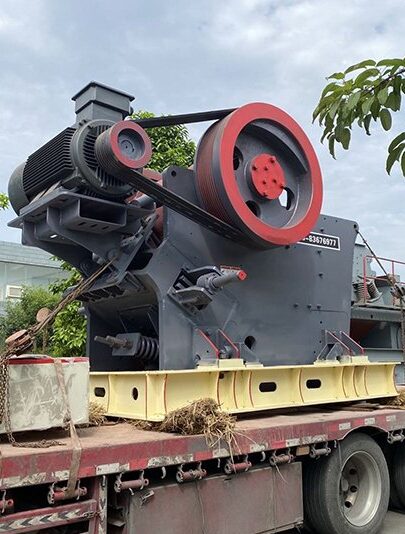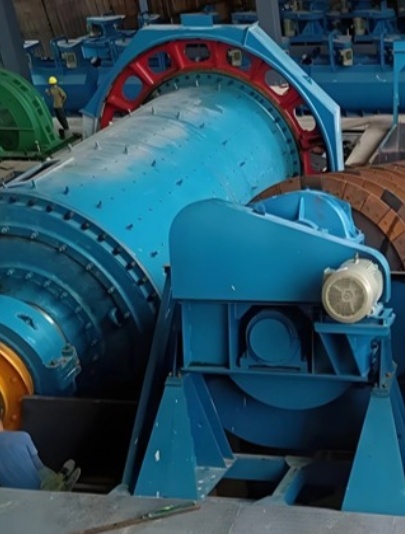

Crushed stone and gravel are essential raw materials for the construction and mining industries. Inappropriate materials not only affect the buyer’s use but also increase your processing costs. Sandreck, a factory specializing in ore processing equipment, will guide you through the differences between crushed stone and gravel, helping you save time and money in procurement.
1. Definitions of Crushed Stone and Gravel
1) Crushed Stone – Artificial
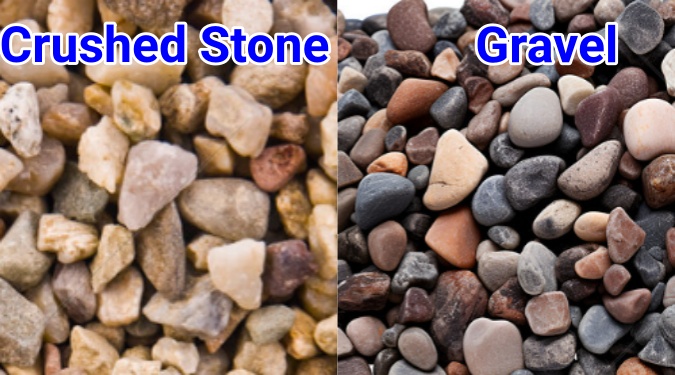
Crushed stone is obtained by crushing and screening natural rocks, river pebbles, or quarry waste. Its main characteristics are mechanical processing, rough surface, and sharp-edged particles. Screening equipment can be used to adjust the shape and gradation of artificial crushed stone.
2) Gravel – Natural
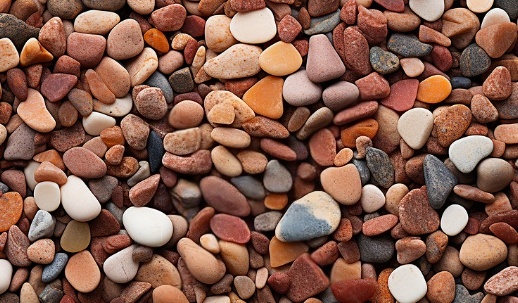
Gravel is an aggregate formed by natural processes (weathering, water erosion, sedimentation, etc.). It is a product of nature, such as river or sea pebbles, and its most distinctive feature is its smooth, rounded surface, free of sharp edges.
2. Differences between Crushed Stone and Gravel
1) Formation Process
Crushed Stone: This aggregate is produced through manual processing. It is typically produced using specialized mining machinery (jaw crusher, cone crusher, vertical shaft impact crusher). The entire process is manually controlled, producing crushed stone with uniform particle size and consistent gradation, as per your requirements.
Gravel: Gravel is formed from surface rocks through long-term weathering, water erosion, and sedimentation. Its formation is mainly influenced by the natural environment, and particle size and shape are difficult to predict.
2) Appearance and Physical Properties
Appearance: Crushed stone has sharp edges, a rough surface, and irregular particle shape. Gravel has a smooth surface and round particles.
Physical Properties: Gravel has the same hardness as the original stone, high compressive strength, good bonding strength with cement mortar and concrete, good toughness, and strong permeability. Smooth-surfaced gravel has weaker bonding strength with cement mortar and slightly lower particle strength.
3) Cost
Objectively speaking, the cost of natural gravel is lower than that of crushed stone.
Crushed Stone: Crushed stone processing requires jaw crushers, cone crushers, vertical shaft impact crushers, and other equipment. Equipment costs, energy consumption, transportation costs, and labor costs must be considered.
Gravel: Natural gravel can be directly mined and used after simple screening. Only the screening equipment and labor costs need to be paid.
4) Quality Control
Crushed Stone: The quality of crushed stone is easier to control. The desired particle size can be obtained by adjusting equipment parameters or changing screen specifications. Particle size distribution, needle-like and flaky particle content, and clay content can also be controlled, thus ensuring product quality stability.
Gravel: The particle size distribution and impurity content of natural gravel significantly affect the quality of the finished product. In some cases, washing and screening are required to meet different requirements.
5) Application Scenarios
Crushed Stone:
* Building Construction: Can be used for high-rise building foundations, concrete aggregate, and bridge pile foundations. High-strength crushed stone ensures the load-bearing capacity and stability of building structures.
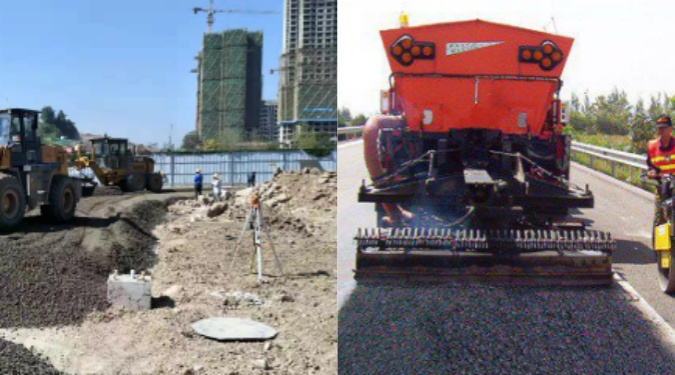
* Road Construction: Highway, roadbed, and railway ballast layers. The use of crushed stone can withstand vehicle compaction and abrasion, improving the load-bearing capacity of roads.
* Hydraulic Engineering: Construction of dams, riverbank protection, and breakwaters. The use of high-strength crushed stone can improve the erosion resistance of hydraulic facilities and extend their service life.
Gravel:
* Road Construction: Paving of sidewalks and rural roads. Gravel has excellent permeability, effectively preventing water accumulation on roads.
* Hydraulic Engineering: Gravel is used for wastewater filtration and as an impermeable base layer for artificial lakes. It filters impurities and promotes water flow.
* Landscape Engineering: It can be used for decorative landscaping in parks and courtyards, as well as for the construction of artificial hills. The decorative application of natural gravel enhances aesthetics.
3. Why Choose Crushed Stone Over Gravel?
Today, the demand for stone resources is constantly increasing across all industries. However, due to mining activities, natural gravel reserves are dwindling, making it difficult to meet market demand. Crushed stone reserves are abundant, and using it instead of gravel is not only more economical but also a future development trend.
1) Crushed Stone Has a More Stable Quality
Crushed stone undergoes standardized artificial processing, allowing for control of key parameters and ensuring more stable quality. Natural gravel exhibits greater quality fluctuations, often with excessive clay content, high impurity levels, and insufficient strength, potentially posing safety hazards to construction projects.
2) Crushed Stone Has Greater Adaptability
Crushed stone possesses high compressive strength and excellent wear resistance, making it suitable for high-intensity engineering scenarios. Furthermore, different grades and particle sizes of crushed stone can meet the needs of various projects such as construction, road building, and water conservancy projects. Gravel has insufficient strength and weak bonding, making it suitable for low-intensity, low-demand scenarios.
3) Crushed Stone Resource Supply Is More Stable
The mining of natural gravel is constrained by regional and environmental policies, leading to an unstable supply of raw materials. Crushed stone raw materials are widely distributed and can be obtained through local mining and processing. Production equipment and processes can be adjusted to achieve mass production.
4. How to Produce High-Quality Crushed Stone?
1) Jaw Crusher (Primary Crushing Equipment)
Jaw crushers can break ore into smaller particles and are capable of crushing hard rocks such as granite and basalt.
2) Cone Crusher (Medium and Fine Crushing Equipment)
After primary crushing, the rock is subjected to medium- and fine-grinding using a cone crusher. This equipment not only produces aggregate particles with a more uniform particle size but also improves aggregate quality.
3) Vibrating Screen (Classification Equipment)
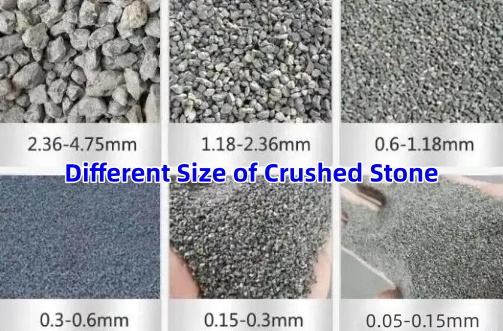
Vibrating screens employ high-frequency vibration, resulting in high screening efficiency, low clogging tendency, and an optimized aggregate particle size distribution. By changing different screen sizes, crushed stone can be classified into various particle sizes.
4) Impact Crusher (Sand Making and Shaping)
Impact crushers can be used for secondary shaping of stone or for sand-making.
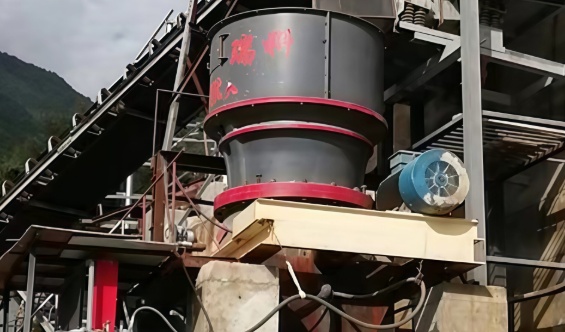
Crushed stone and gravel are core raw materials for mining operations and construction projects. A highly efficient, energy-saving, and finely sized crushing and screening system can maximize the value of aggregates.
Whether you need a stationary or mobile crushing plant, we can provide the right equipment to meet your needs. Please contact Sandrek Mining Machinery for more information.