
Steel is the most widely used metal, accounting for 95% of total metal consumption annually. It not only underpins industrial development but also has a profound impact on our lives. From everyday furniture to automobiles and bridge construction, steel is ubiquitous.
Iron ore is the raw material for producing steel products. As the manager of an ore processing plant, understanding the types of iron ore and the correct extraction methods is crucial for controlling costs and utilizing resources. Sandreck, a manufacturer of ore processing equipment, will introduce four 4 types of iron ore and discuss their extraction processes in this article.
Types of Iron Ore
1. Magnetite
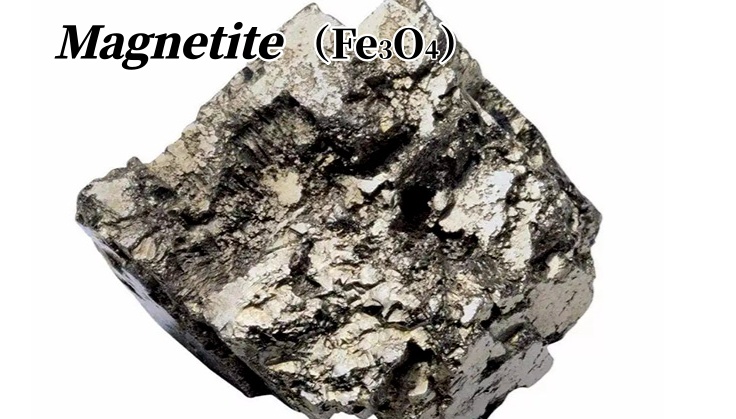
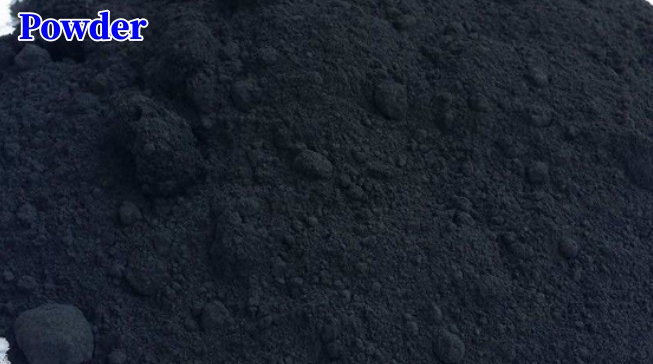
Magnetite (Fe₃O₄) has the highest iron content of all iron ores, reaching up to 72.4%. Therefore, it can be directly smelted to produce high-quality steel with few impurities. Magnetite also naturally possesses strong magnetism. Magnetic separation can yield high-quality concentrates with a grade exceeding 70%, resulting in the lowest beneficiation costs.
Magnetite is typically black and has a hardness between 5.5 and 6.5. Besides its widespread use in steelmaking, magnetite is also commonly used in the production of pigments, ceramics, and electronic materials. Australia, Brazil, North America, and Sweden possess abundant magnetite resources.
2. Hematite
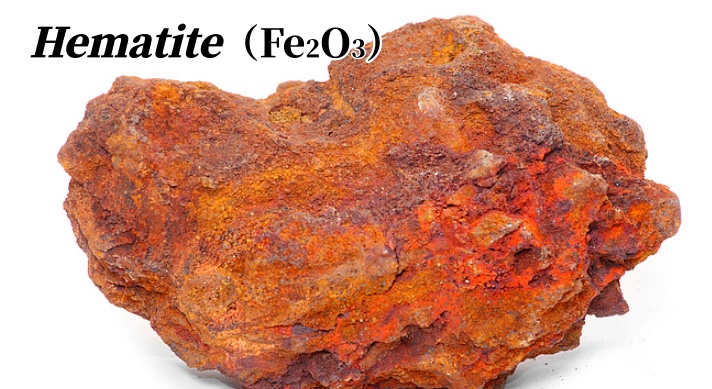
Hematite (Fe₂O₃) is an important iron ore with an iron content that can reach up to 70%, but it is not magnetic. When the iron content exceeds 60%, this hematite is called “direct shipment ore (DSO)” and can be used directly for smelting.
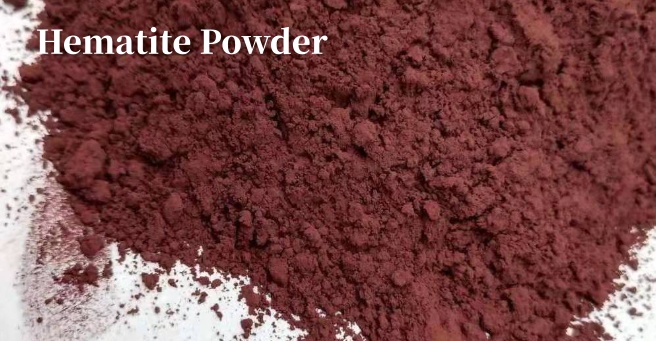
Hematite can be red, light red, or black in color, and its hardness is typically between 5.5 and 6.5. This ore can be used for iron smelting and is also widely used in the manufacture of pigments and jewelry. Hematite reserves are abundant and widely distributed, making it the world’s largest and most important iron ore. The world’s major hematite producing countries are Australia, Brazil, and India.
3. Limonite
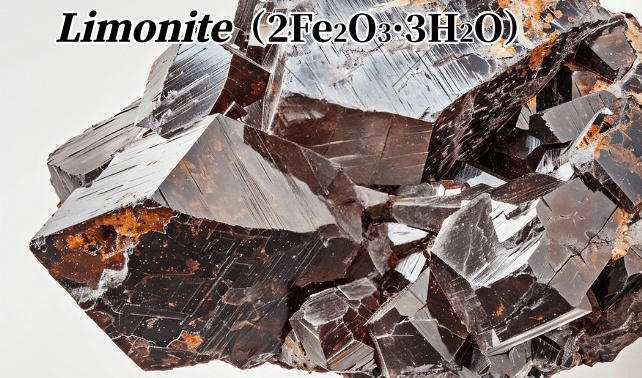
Limonite (FeO(OH)·n(H₂O)) is a mixture of various hydrous iron oxide minerals, such as acicular iron ore. Its iron content is relatively low, reaching a maximum of approximately 59.8%. Due to its high water content, limonite typically requires dehydration pretreatment before smelting.
Limonite comes in a variety of colors, such as yellowish-brown, dark brown, or dark gray. Its hardness is typically between 4 and 5.5. Despite its low grade, limonite is still used in iron smelting and is also used in the paint and construction industries. Limonite is widely distributed, but large mines are relatively rare.
Due to its low yield and high water content, limonite has historically been used as a low-grade iron ore. Direct smelting of this ore is inefficient and costly; it must first be pressed into briquettes before iron smelting.
4. Siderite
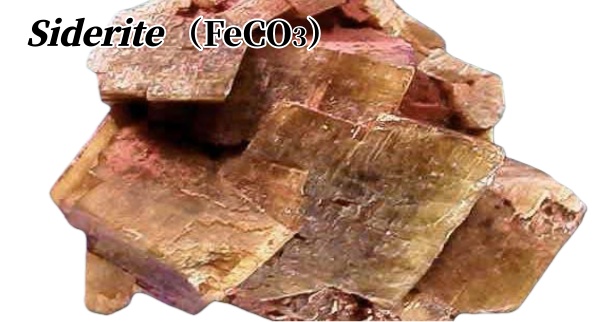
Siderite (FeCO₃) is a carbonate-bearing iron ore, often found in association with other minerals such as barite and quartz. Its iron content is relatively low, reaching a maximum of approximately 48.2%. It is the lowest grade among major iron ore types and is non-magnetic.
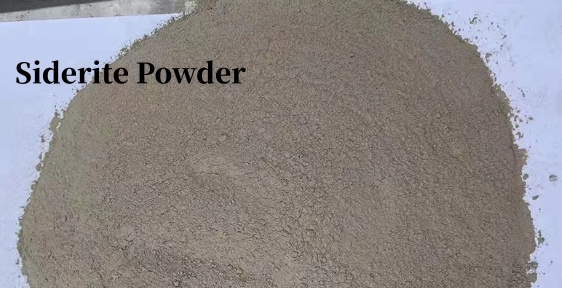
Siderite is mostly gray or yellowish-brown in color, with a hardness between 3.75 and 4.25. This ore can be used in iron and steelmaking. Due to its stable color and resistance to fading, it is also a good raw material for pigment production. Siderite deposits mostly form in sedimentary or hydrothermal geological environments.
The most important characteristic of siderite is its non-magnetic nature and the absence of harmful impurities such as sulfur and phosphorus, resulting in a high purity final product. This ore needs to be calcined to decompose the carbonates, thereby increasing its iron content.
5. Quick Comparison Chart
| Magnetite | Hematite | Limonite | Siderite | |
| Iron Content | 72.4% | 70% | 59.8% | 48.2% |
| Magnetism | Strong | Weak natural | Weak | Non-magnetic |
| Hardness | 5.5-6.5 | 5.5-6.5 | 4-5.5 | 3.75-4.25 |
| Color | Black | Red, Light Red | Yellowish-brown, Grayish-black | Gray, Yellowish-brown |
Iron Ore Extraction Processes
The type of iron ore determines the choice of extraction process, which is closely related to your economic benefits. Below are four recommended beneficiation processes for iron ore to help you achieve efficient extraction.
1. Magnetite Extraction
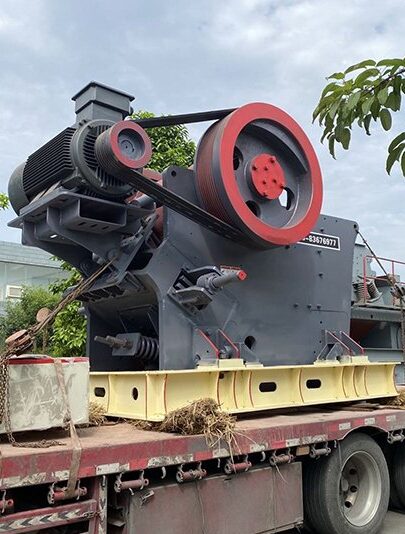
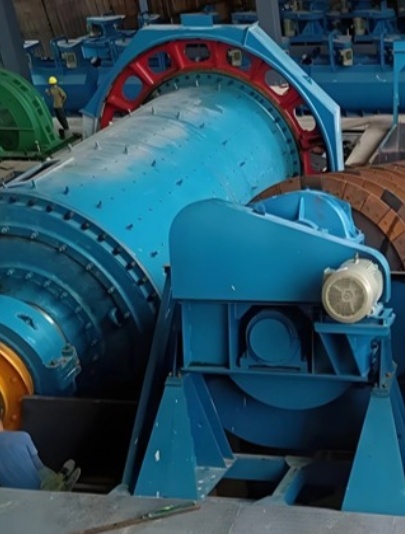
The raw ore is fed into a jaw crusher for coarse crushing, followed by a cone crusher for medium to fine crushing, yielding ore particles of 10-20mm. The crushed ore is then fed into a ball mill to grind to 0.074-0.2mm to ensure complete separation of magnetite particles. The qualified slurry is fed into a magnetic separator for magnetic separation to obtain a concentrate. Finally, after dewatering, a high-grade iron ore concentrate is obtained.
Core equipment
Crushing equipment: jaw crusher (coarse crushing), cone crusher (medium and fine crushing), vibrating screen (grading)
Grinding equipment: lattice ball mill, spiral classifier
Beneficiation equipment: magnetic separator (weak magnetism)
Dewatering equipment: high-frequency dewatering sieve, chamber filter press, thickener
2. Hematite Extraction
The raw ore is coarsely crushed by a jaw crusher, then finely crushed by an impact crusher, and finally ground in a ball mill to separate hematite from chondrite. After grinding and classification, lime is added to the slurry to adjust the pH. Then, water glass and tannin are added as inhibitors (to inhibit the formation of hematite). An ether-amine cationic precipitant is then added, and the mixture is thoroughly stirred to ensure uniform mixing of the precipitant and the slurry.
Finally, the slurry is fed into a mechanically stirred flotation machine to achieve efficient separation of hematite from gangue. The flotation concentrate needs to be filtered and dewatered to meet subsequent storage and transportation requirements.
Core equipment
Crushing equipment: jaw crusher, impact crusher
Grinding equipment: ball mill, hydrocyclone, high-frequency vibrating fine screen
Beneficiation equipment: slurry mixing tank, mechanical agitation flotation machine
Dewatering equipment: filter machine
3. Limonite Extraction
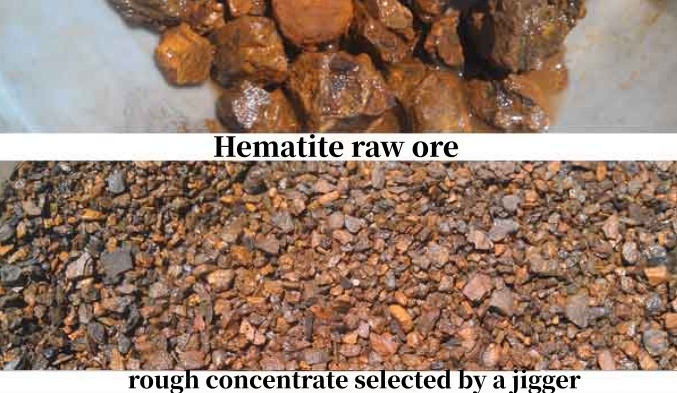
First, a wheel-type sand washer is used to remove mud and sand impurities from the limonite to prevent clogging of subsequent beneficiation equipment. Then, a vibrating screen is used to separate coarse ore (2-30mm) that meets the re-concentration standards. The coarse ore is fed into a jig to remove veins. At this point, a rough concentrate with a grade of approximately 45% is obtained.
The re-concentrated rough concentrate is then fed into a ball mill and ground to 0.074mm. A high-intensity magnetic separator is then used to recover the fine limonite particles, yielding a concentrate with a grade of 55-60%. Finally, the concentrate is dewatered using a filter press and is ready for use in iron and steelmaking.
Core equipment
Pre-treatment equipment: jaw crusher, wheel sand washer, self-centering vibrating screen
Re-election equipment: jigger
Grinding equipment: ball mill
Magnetic separation equipment: strong magnetic separator
Dewatering equipment: filter press, thickener
4. Siderite Extraction
The raw ore is crushed to a particle size of 8-15mm using a jaw crusher and a cone crusher. It is then fed into a rotary drum dryer to dry to a surface moisture content of ≤5% to prevent agglomeration during roasting, which would increase subsequent processing costs. After drying, the ore enters a vertical kiln to remove carbonates from the siderite and convert it into strongly magnetic magnetite. After cooling, the ore is extracted using the magnetite extraction process to obtain the finished iron ore concentrate.
Core equipment
Pre-treatment equipment: jaw crusher, cone crusher, drum dryer
Roasting equipment: shaft kiln
Grinding equipment: ball mill
Beneficiation equipment: magnetic separator
Dewatering equipment: filter press
For those responsible for mineral processing, identifying iron ore types is fundamental to determining the mining value and developing processing techniques. We hope that the four iron ore types and corresponding extraction process described in this article will help you improve resource utilization and mine efficiency.
If you have any questions about mine development or processing optimization, Sandreck is happy to assist you.