


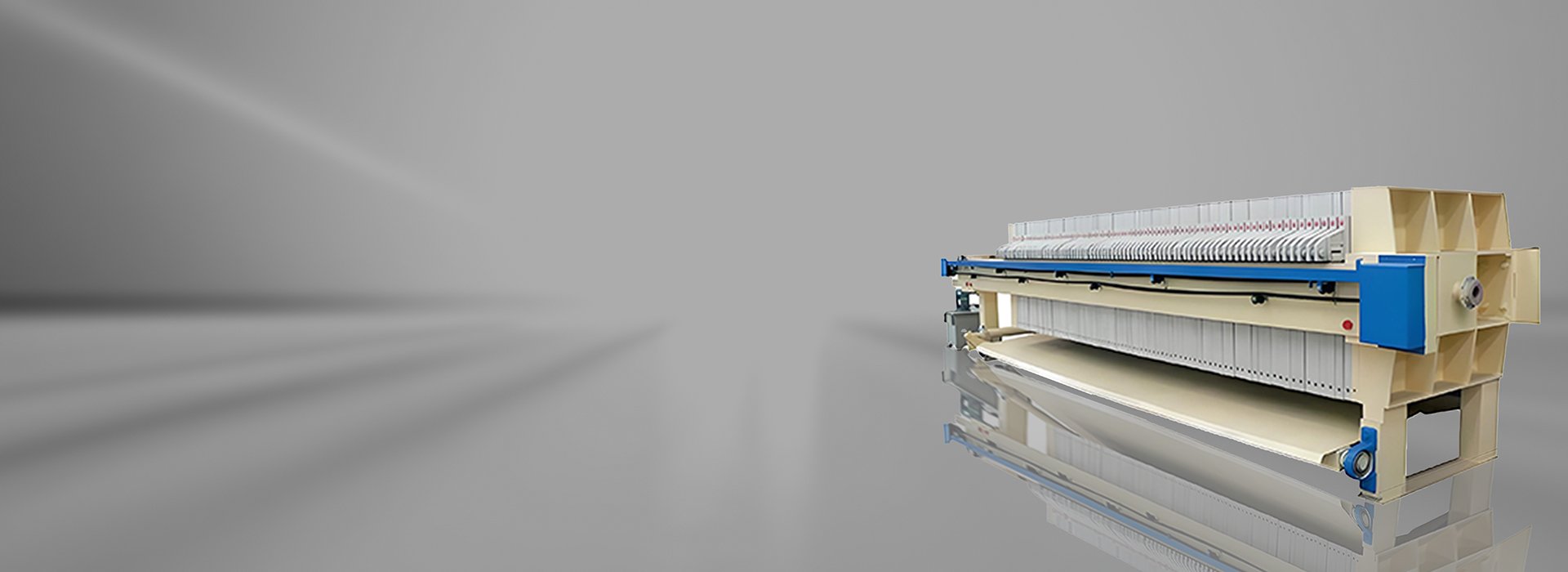
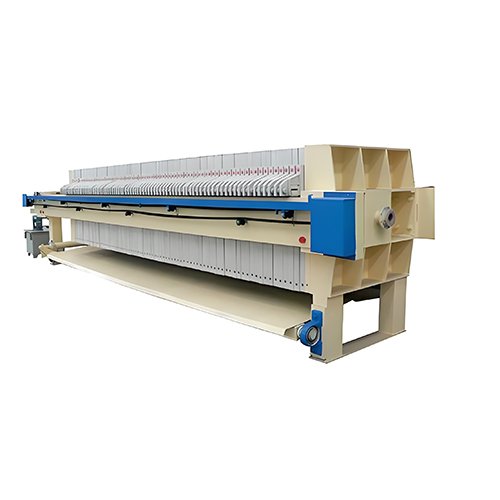
Industrial Filter Press
Sandreck’s filter press machine is used as intermittent pressurized filtration equipment for precise separation of suspensions by means of pressure drives.
- Sludge dewatering
- Extraction and purification of various liquids
- Filtration of injection solutions
- Separation of reaction products
Sandreck's Stable Mining Filter Press
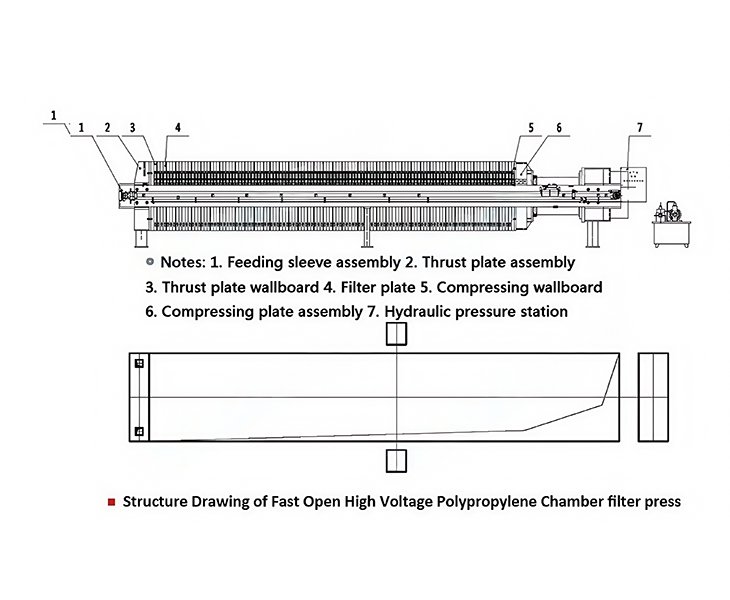
Plate-and-frame filter presses typically consist of filter plates, filter cloth, hydraulic cylinders, and transmission devices. Their core components include the filter plates, hydraulic system, and intelligent transmission device.
Sandreck filter presses have a wide range of applications, serving as solid-liquid suspension separation equipment in industries such as chemical, pharmaceutical, metallurgical, petroleum, light industry, ferrous metallurgy, and mining flotation.
Sandreck Filter Press Advantages

Filtration precision of 1-50 microns, solids recovery rate of more than 98%.

Modular design supports free combination of filtration area from 10-200 ㎡.

PLC system realizes a fully automatic cycle of pressing, holding, and unloading.

Energy saving of 40% compared with a centrifuge; energy consumption ≤ 0.8 kWh per ton of treatment.

Polypropylene filter plates are used, with a corrosion-resistant life of 8-10 years.

A totally enclosed structure realizes zero leakage and complies with the ISO14001 standard.
Filter Press Equipment Application
The filter press is an efficient intermittent solid-liquid separation equipment composed of filter plates, a frame, a hydraulic pressing system, and a filter cloth. Under high hydraulic pressure, slurry is fed into each filter chamber. The liquid permeates the filter cloth and exits as clear filtrate, while solid particles are retained within the filter cake.
Sandreck’s industrial filter press features high dehydration efficiency, low cake moisture, and stable separation performance and is widely used to treat mine tailings, sand washing sludge, chemical slurries, coal slime, and construction waste mud, achieving dry stacking of solid waste and the cyclic reuse of filtered water.
More About Our Company
- Technical Parameters
Model | Filter Plate Specification (mm) | Filter Area (m²) | Chamber Volume (m³) | Number of Cells | Feed Pressure (MPa) | Number of Cylinders | Cylinder Diameter (mm) | Hydraulic Station Motor Power(kw) | Puller Motor Power (kw) |
| 300 | 1500x1500x70 | 300 | 4.8 | 77 | ≤0.8-10 | 2 | Φ320 | 11 | 1.1 |
| 400 | 1500x1500x78 | 400 | 80 | 103 | ≤0.8 | 2 | Φ320 | 11 | 1.1 |
| 500 | 1600x1600x70 | 500 | 8 | 115 | ≤0.6 | 1 | Φ360 | 5.5 | 1.1 |
Slurry is pumped into filter chambers, liquid passes through filter cloth under high pressure, and solids are intercepted to form dry filter cakes.
It is commonly used for dewatering mine tailings, sand-washing sludge, coal slime, and industrial chemical waste slurries.
Clean the filter cloth regularly after each work cycle, and avoid feeding hard, sharp particles that may scratch it.