
Gravity separation is a widely used method in the mining sector, offering an efficient and cost-effective solution for mineral recovery. In this comprehensive guide, we will take an in-depth look at how to separate gold using gravity separation equipment.
1. Working Principle of Gravity Separation
The foundation of gravity separation relies entirely on specific gravity (density) differences between minerals:
Pure gold has a specific gravity of approximately 19.3, while common waste gangue such as quartz and feldspar only reaches 2.6 – 2.7. This huge density difference means gold particles sink much faster than gangue of the same size under water flow, vibration or centrifugal force.
Gravity separation produces no toxic pollutants, lowers environmental management costs and meets increasingly strict global mining environmental protection standards.
2. Working Process of Gravity Separation
Complete gold gravity separation cannot directly process raw ore. It requires a matched pre-processing system, graded separation, and concentrate cleaning. Every stage directly affects the final gold recovery rate. The gravity separation process can be broken down into the following steps:
2.1 Ore Crushing & Pre-Grinding
Raw hard rock gold ore transported from open-pit or underground mines contains large lumps mixed with rock, mud and impurities.
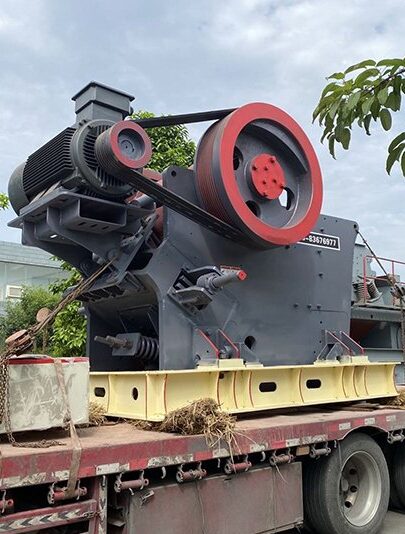
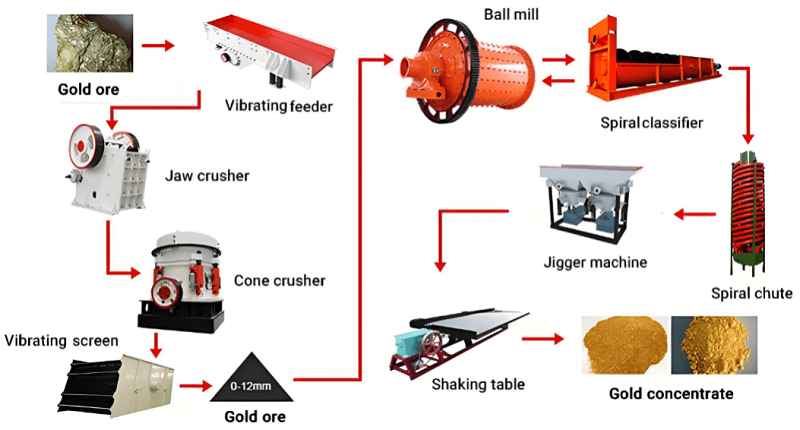
Large ore blocks are fed into a jaw crusher for primary coarse crushing.
Crushed materials are sent to a cone crusher for secondary fine crushing. Output particle size is controlled within 10–25 mm.
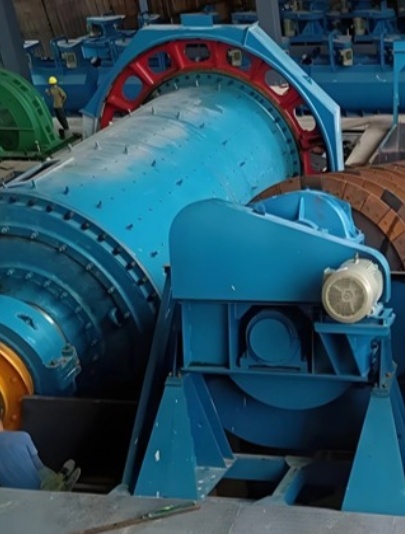
Crushed ore is fed evenly into a ball mill with water to form ore slurry.
Break massive rock into small particles to crack rock structures and expose gold grains wrapped inside gangue. If gold remains locked inside rock, gravity equipment cannot capture gold effectively.
2.2 Pre-Classifying
Spiral classifier screens ground ore slurry by particle size: oversized particles return to the ball mill for re-grinding, while qualified fine slurry moves to the gravity separation stage. This step ensures consistent feed conditions for downstream separation equipment.
2.3 Core Gravity Separation Recovery
Depending on gold grain size and ore characteristics, you can choose targeted gravity separation equipment to capture gold:
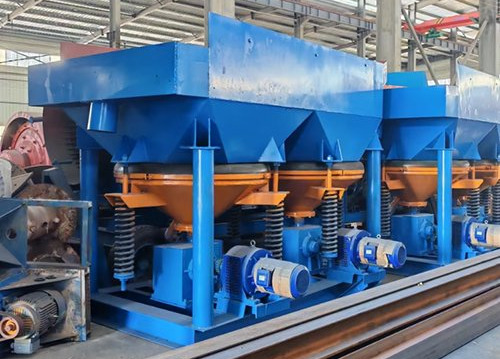
Jigging: A jig separator uses pulsating water currents to separate gold from lighter materials. Heavy gold particles sink to the bottom, while lighter materials are washed away.
Shaking Tables: A shaking table consists of a flat surface that vibrates to separate particles based on density. Gold, being heavier, stays closer to the table’s surface, while lighter materials move to the edges.
For fine gold grains: A spiral chute lets slurry flow down curved spiral troughs. Centrifugal force and gravity push heavy gold toward the inner trough wall for collection, and waste material exits the outer edge.
Centrifugal Concentrators: These machines use high-speed rotation to mimic gravitational forces, allowing fine gold particles to separate more efficiently.
Panning: A traditional method where ore is placed in a pan and agitated in water; gold settles at the bottom due to its density.
2.4 Concentrate Upgrading & Tailings Treatment
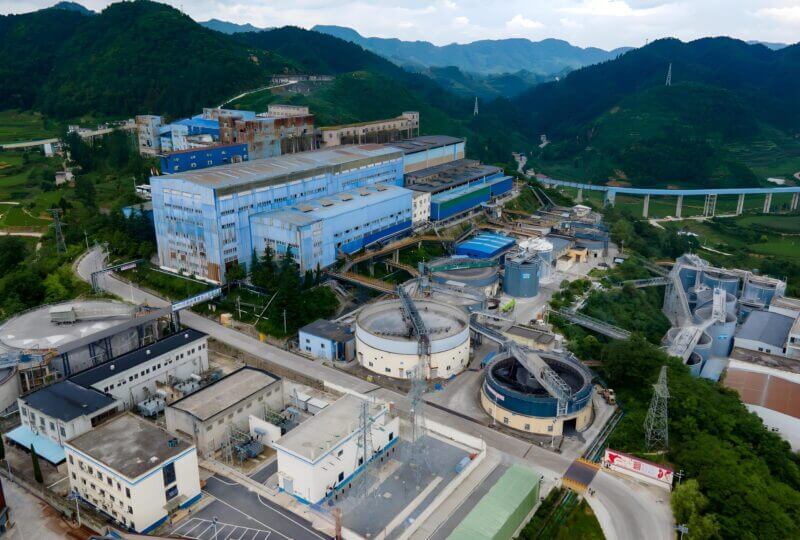
Crude gold concentrate from primary separation goes through re-cleaning on smaller shaking tables or mini centrifugal units to boost gold purity. Remaining tailings can go through secondary gravity scavenging or be sent to thickening and dewatering equipment for safe, compliant disposal.
3. Advantages and Limitations
Advantages:
- Cost-Effective: Gravity separation is relatively inexpensive, as it doesn’t require harsh chemicals or extensive infrastructure.
- Eco-Friendly: It avoids the use of toxic chemicals like cyanide or mercury, making it an environmentally friendly method.
- High Recovery Rate: Especially effective for coarse gold particles and free-milling ores.
- Flexible Scalability: Works for artisanal placer mining and industrial hard-rock gold mines alike.
Limitations:
- Not Effective for Fine Gold: Gravity separation struggles to recover very fine gold particles (smaller than 50 microns).
- Ore Characteristics: Works best with free gold (gold that is not bound to other minerals) and ores with significant differences in density between gold and gangue.
4. Common Troubleshooting Tips for Better Gold Recovery
- If gold recovery is low: Check if the ore is under-grounded (gold still locked in rock) or over-grounded (gold turned into unrecoverable slime).
- For spiral chute poor performance: Adjust slurry feed density and flow rate to keep stable particle stratification.
- For centrifugal concentrators: Regularly clean riffle grooves to avoid blockage that reduces gold trapping efficiency.
As a professional mining gravity separation manufacturer, Sandreck offers high-quality gravity separation equipment with end-to-end services including engineering design, equipment manufacturing, installation, and operational support. Please leave your contact information and tell us your requirements.