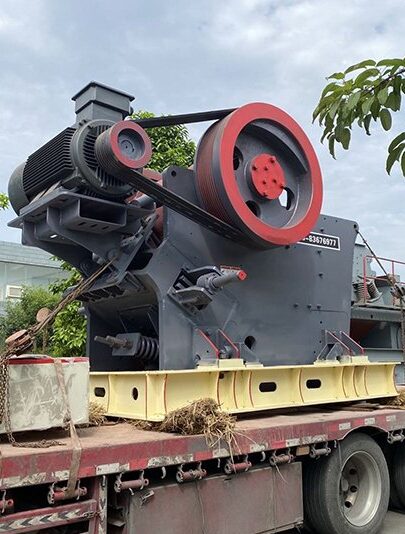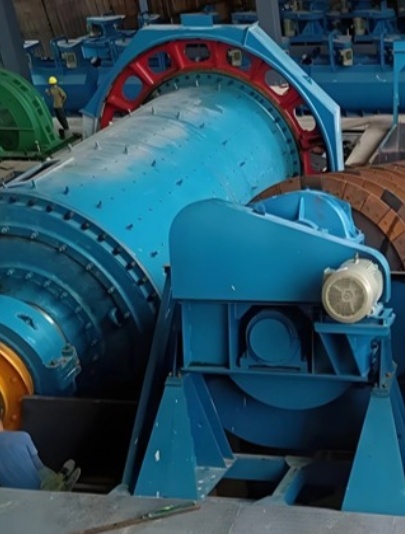

With the continued rise in international gold prices, a new wave of gold rush has swept the globe. Due to the diverse forms and properties of gold, the beneficiation processes for different gold ores vary greatly. For beneficiation plant owners, mastering eight common gold ores and their processing methods will help improve recovery rates and maximize economic benefits.
As a professional mineral processing equipment manfacturer in China, Sandreck will detail these 8 common gold ore types and their beneficiation and processing methods in this article.
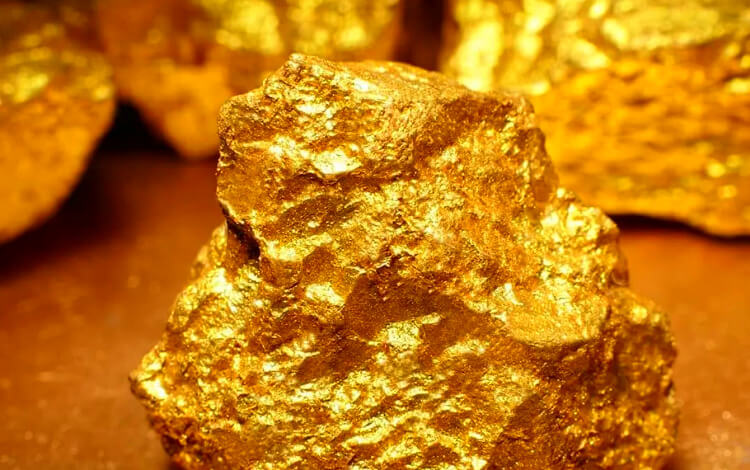
1. Quartz Gold Deposits
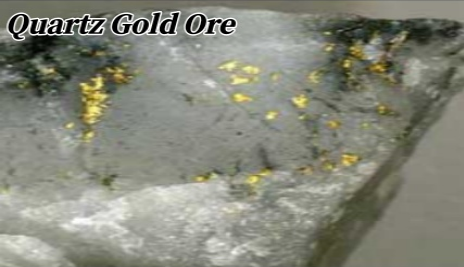
Quartz gold deposits are primarily composed of white to gray quartz. Gold is typically embedded within the quartz as visible grains or fine veins, making it easily identifiable, and the gold grade is relatively stable. This type of ore is commonly found in crustal fissures and fault zones, especially in the active Circum-Pacific volcanic belt.
Benefiting Key Points: First, the ore is crushed to a suitable particle size (usually less than 1-2 cm). Gold concentrate or gold particles are separated by gravity using jigs or shaking tables. This is the least expensive and fastest-return beneficiation method.
Process Flow: The preferred process is “crushing + cyanidation” or “crushing + gravity separation.”
First, the ore is crushed into small pieces using a jaw crusher, then ground even finer using a simple ball mill, thus releasing the gold. Afterward, gold can be recovered through chemical leaching using cyanidation, or separated using gravity equipment such as shaking tables or jigs.
2. Sulfide Gold Deposits
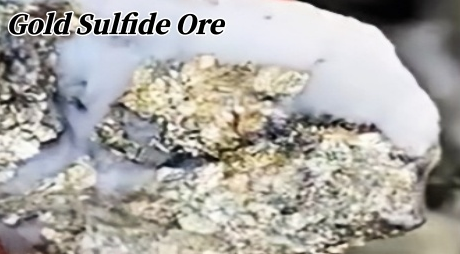
In this type of ore, gold is closely associated with sulfide minerals (such as pyrite). Gold typically exists in a microscopic form, making it difficult to observe with the naked eye. It is commonly found in metamorphic and volcanic rock areas, buried deep, and mostly requires underground mining.
Benefiting Key Points: Flotation offers the best cost-effectiveness. Its core principle is to first “break” the sulfide layer before extracting the gold.
Process Flow: First, the raw ore is crushed and finely ground to release the sulfide and gold components. Then, the concentrate is enriched through flotation. For concentrate processing, we offer three options:
① Roasting-cyanidation. This method is traditional and mature, but faces significant environmental pressures.
② Bio-oxidation-cyanidation. This method is more environmentally friendly, but has a longer processing cycle.
③ Pressure oxidation-cyanidation. This method is highly efficient, but requires a significant investment. You can choose according to your needs.
3. Gold and Silver Ore
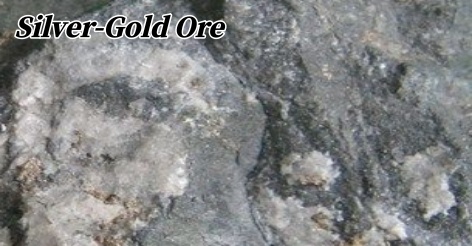
This ore is not a simple mixture of gold and silver, but a naturally occurring alloy. It typically exists as a natural alloy or as gold and silver sulfide minerals. The color of the ore depends on the gold-silver ratio and is usually pale golden yellow. The formation of gold and silver ore is closely related to volcanic activity and is commonly found at plate boundaries.
Process Flow: “Flotation + Cyanide” Process.
First, the gold and silver ore is crushed and ground into powder, then fed into a flotation cell. Next, specific reagents are added to the flotation cell to separate the gold and silver minerals from the gangue. After obtaining the concentrate, the gold and silver are leached using cyanide. This allows for the simultaneous recovery of gold and silver without wasting resources.
4. Telluride Gold Deposits
In telluride gold deposits, gold does not exist in its natural form but rather forms a compound with tellurium. Its appearance is indistinguishable from ordinary rock, and can only be confirmed through professional testing. Telluride gold deposits form during hydrothermal processes in the later stages of volcanic activity and are often associated with other rare minerals. This type of ore is rare but typically has a high gold grade and value.
Process Flow: A “flotation enrichment + small-scale smelting” approach is recommended.
First, the ore is crushed and ground, then gold-bearing telluride minerals are enriched using flotation cells to obtain a concentrate. However, subsequent smelting carries high risks and costs. You may consider selling the concentrate to a professional processing plant.

5. Copper-Gold Ore
If you see obvious copper spots or veins in your ore, or if the slurry turns blue rapidly during cyanidation, it indicates that your ore contains economically valuable copper in addition to gold. In this type of ore, gold is associated with copper minerals such as chalcopyrite. It is common in porphyry copper-gold deposits.
Process Flow: Choose the “flotation separation + separation and recovery” method. Process the mixed ore in stages to achieve dual gold and copper gains.
You can first use flotation equipment to preferentially separate copper minerals by adjusting the reagents. Then recover gold from the remaining slurry. If the scale is small, you can sell the copper-gold concentrate directly to a smelter for professional separation, thus avoiding the need to invest in complex beneficiation equipment yourself.

6. Oxidized Gold Ore
Oxidized gold ore is formed from primary gold deposits (especially sulfide gold deposits) through long-term weathering and leaching. This ore is loose and porous, yellowish-brown, brown, or reddish-brown in color, and typically has a honeycomb or colloidal structure. Ore bodies are particularly common in humid climates with intense weathering. During weathering, the sulfides encasing the gold are oxidized and destroyed, exposing most or all of the gold particles.
Process Flow:
① If the gold particles are large, a small jaw crusher can be used to break the ore into smaller pieces. Then, gravity separation equipment (such as shaking tables or jigs) can be used to directly separate the gold. This process is efficient and does not require the use of chemical reagents.
② If the gold particles are small, the ore is ground using a simple ball mill after crushing, followed by cyanide leaching.
③ If the ore has a high clay content, a simple desliming step is performed first to prevent clay from encapsulating the gold and affecting recovery efficiency.

7. Blue Clay Gold Ore
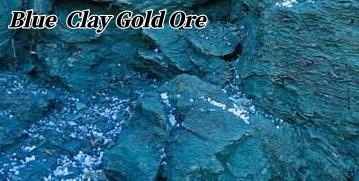
Gold typically exists as fine-grained, platy native gold, tightly encased or adsorbed by clay. It is primarily found in ancient riverbeds, lacustrine sedimentary areas, or weathering crust environments. The main components of this gold deposit are expansive clay minerals such as montmorillonite and illite, making mining challenging.
Process Flow: The expansive clay minerals in blue mud gold deposits form stable colloidal solutions upon contact with water. Therefore, a vigorous washing process using a drum scrubber or vibrating screen with water is first required to separate the gold particles from the clay. The coarse particles after washing can be separated by gravity using a sluice or shaking table. The fine clay particles can be leached by stirring. This will improve the gold recovery rate.
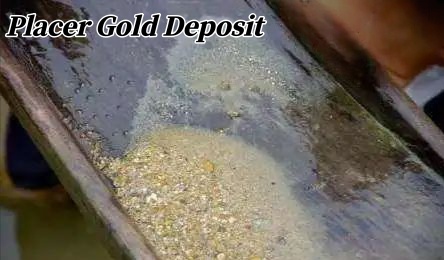
8. Placer Gold Deposits (Alluvial Gold)
The gold in placer gold deposits is not “rock or ore” in the traditional sense, but rather alluvial sediments from rivers and streams. These contain gold grains, flakes, and even nuggets. They are typically found in downstream sedimentary areas of rivers and streams or ancient riverbeds, and come in various types (alluvial placer gold, floodplain placer gold, terrace placer gold, glacial placer gold).
Benefiting Key Points: Purely physical separation, no crushing or chemical reagents required. Lowest cost and simplest operation.
Process Flow: Gold has a high specific gravity, making gravity separation suitable. Small-scale mining can use gold pans or sluices. Large-scale mining can first use jigs/spiral chutes/centrifugal concentrators for roughing, followed by shaking tables for fine selection. Finally, smelting and processing are carried out to obtain the finished product.
For concentrator owners, the first step in exploration and processing is understanding the ore type. Understanding gold ore types is crucial for developing efficient and economical beneficiation processes. We hope this guide to common gold ore types and beneficiation processes will help you recover more valuable minerals.
Please inform us today of your gold ore type and plant capacity, and Sandreck will tailor a gold ore beneficiation solution specifically for you!