
Tungsten is a strategic rare metal, relied upon by defense industries, aerospace, and precision manufacturing. Wolframite, also known as tungsten manganese iron ore. It is the primary source of metallic tungsten.
Wolframite contains a high tungsten content and has a moderate processing difficulty. If your mineral processing plant is preparing to process wolframite and wants to make efficient use of this resource, you might want to take a look at this practical processing guide.
I.Properties of Wolframite
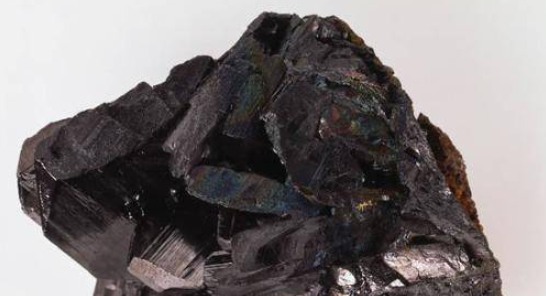
Wolframite is composed of ferberite and hübnerite, and is not a single mineral. It is commonly found in high-temperature hydrothermal quartz veins and often coexists with minerals such as cassiterite, molybdenite, and fluorite. When the MnWO₄ content in ferberite exceeds 80%, it can be defined as manganotungstite.
Category: Oxide mineral Chemical formula: (Fe,Mn)WO4. Iron (Fe) and manganese (Mn) ions can substitute for each other in the crystal structure in any proportion, and differences in their compositional ratios can slightly affect their physical properties.
Crystal system: Monoclinic. Crystals are mostly plate-like, blade-like, or short columnar.
Mohs hardness: 4-4.5
Specific gravity: 7-7.5
Color: Gray-black
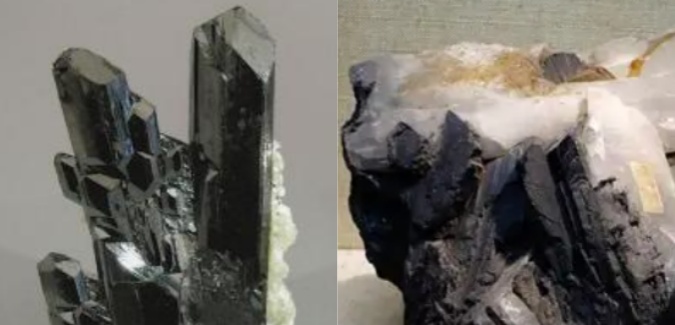
Special characteristics: Wolframite has weak magnetism. If the iron content in the ore is high, the magnetism will increase, and you can use magnetic separation to enrich the tungsten-manganese ore.
The melting point of wolframite is extremely high, reaching 3410℃ (6170℉).Among all non-alloy metals, it is one of the metals with the highest melting points , which is also the core reason why tungsten products have high-temperature resistance. Its chemical properties are stable, and it has strong resistance to acid and alkali corrosion. But it will decompose in high-temperature, high-pressure alkaline environments.
Ⅱ.Distribution of Wolframite
1.Distribution
The formation of wolframite is related to crustal movements, and its reserves are relatively concentrated. It is mainly distributed in the Circum-Pacific Metallogenic Belt and the Alpine-Himalayan Metallogenic Belt. China is the country with the richest tungsten resources in the world, with reserves accounting for more than 90% of the world’s total. The southern part of Jiangxi Province, the eastern part of Hunan Province, and the northern part of Guangdong Province are world-renowned tungsten-manganese mining areas, which account for about 60% of the global output.
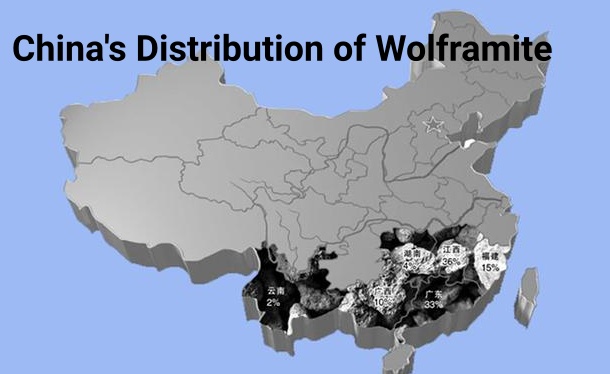
Beside China, tungsten-manganese ore is also found in Russia (Eastern Sayansky region), Canada (Mactung deposit in the Northwest region), Vietnam (Nui Phao polymetallic mine), Austria (Mittersill), Australia, Bolivia, North Korea, and Spain.
2.Price of Wolframite
The price of wolframite is influenced by its quality, market supply and demand. As of March 2026, black tungsten concentrate with a grade more than 65% averages 1,025,500 yuan per standard ton.Market transactions are mainly based on long-term contracts.Tungsten is a key strategic metal, and its price fluctuations will affect the global supply chain.
III.What Are the Uses of Tungsten?
The primary function of wolframite is to extract metallic tungsten. Processed tungsten products are widely used in industries, national defense, and high-end technology fields.
1.Tungsten carbide: Over 60% of tungsten is used in the production of tungsten carbide. Tungsten powder combined with carbon can be made into tungsten carbide (WC), which has extremely high wear resistance and hardness. It is usually used to manufacture cutting tools, mining drill bits, and precision molds, among other things.
2.Aerospace and Defense: Tungsten’s significance in the aerospace and defense sectors is paramount, due to its capacity to endure exceptionally high temperatures and pressures, a characteristic stemming from its considerable strength and elevated melting point. This material finds application in the production of high-temperature components, including those utilized in aircraft engines, rocket nozzles, and spacecraft shells. Furthermore, tungsten is employed in the fabrication of armor-piercing projectiles, cannon tubes, and gun barrels. It is importantto maintaining the security of the country’s defense.
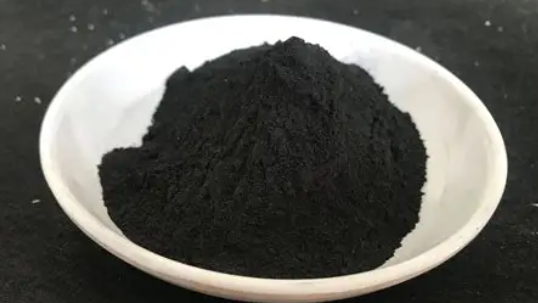
3.Electronics and New Energy: It has excellent electrical conductivity and high-temperature resistance, making it a key material for producing filaments and photography lamps. It is also widely used in the manufacturing of semiconductor chip components. In the field of new energy, tungsten can effectively enhance the conductivity of new energy vehicle batteries and extend the service life of wear-resistant components in wind power equipment.
4.Chemicals and Medicine: Tungsten compounds processed from tungstenite (such as tungsten disulfide and tungsten oxide) possess special chemical properties and can be used as catalysts or lubricants; tungsten can be used as a radioactive shielding material to protect patients and medical staff.
IV.Processing of Wolframite
High-grade tungsten concentrates are high-quality raw materials for tungsten smelting. The international tungsten price is at a high level, and the price of processed tungsten powder has doubled.So, there is a significant profit margin in processing black tungsten ore. You need to master the features of tungsten-manganese ore, remove gangue and associated minerals, and leave the valuable tungsten ore.
Crushing and Screening
The hardness of black tungsten ore is moderate, so you don’t need special equipment for initial crushing. You need to pay attention to controlling the ore particle size to decrease mineral loss.
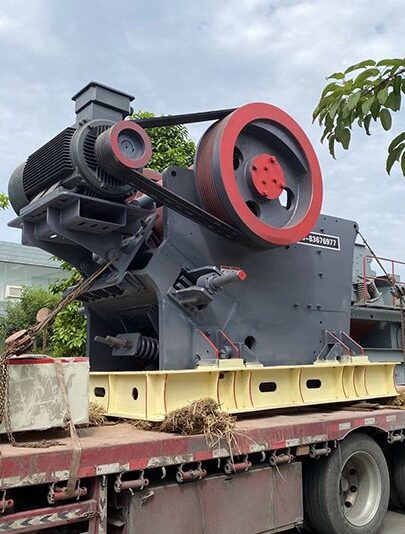
Three-stage crushing can initially separate minerals from gangue, meeting your subsequent processing needs. Use a jaw crusher for coarse crushing, controlling the particle size between 100-150mm; for medium crushing, use a cone crusher to crush the tungsten ore to 20-30mm; you can choose an impact crusher for fine crushing to obtain ore below 5mm.
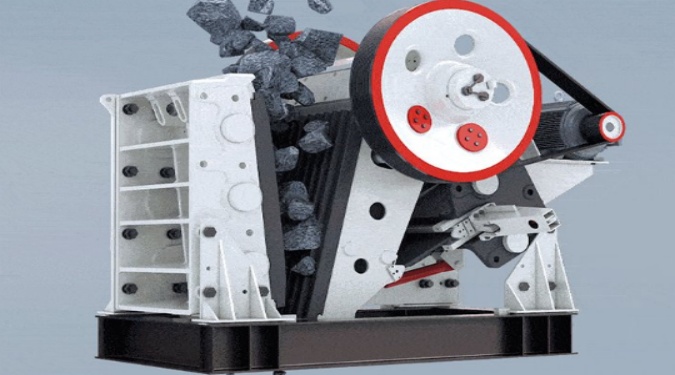
Next, use a vibrating screen to separate the oversized unqualified ore and send them back to the impact crusher for re-crushing.
Grinding and Classification
Grinding can fully separate the tungsten minerals from the gangue and other minerals, which is crucial for increasing the recovery rate of your subsequent beneficiation process.
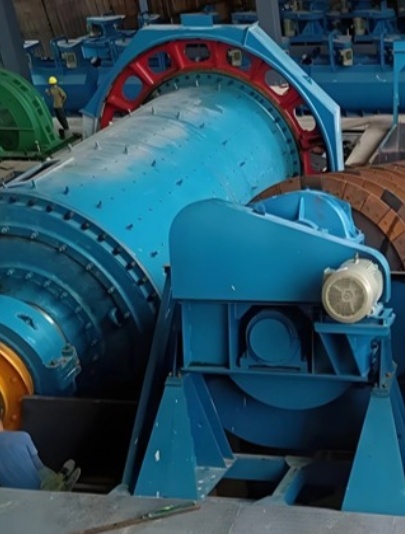
Commonly used equipment includes a mill + a spiral classifier/hydraulic cyclone to form a closed-circuit grinding system. You can choose a rod mill or a ball mill for the grinder. The over-grinding phenomenon in rod mills is relatively mild, so it is recommended for the coarse grinding stage of black tungsten ore. The ball mill can directly grind the ore into slurry. During the grinding process, it is necessary to control the slurry concentration and grinding time.
Concentration stage
The specific gravity of black tungsten ore is 7-7.5, while the specific gravity of gangue is usually less than 2.7. You can use this characteristic to recover most of the medium and coarse tungsten particles. Send the ground slurry into the shaking table, and the tungsten ore will settle at the bottom of the equipment. Then use a shaking table for further selection to remove impurities and obtain coarse concentrates.
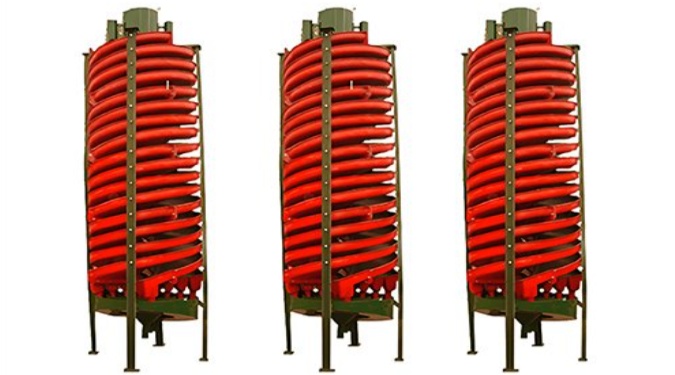
The flow velocity and vibration frequency should be controlled to ensure the efficient enrichment of wolframite.
2.Magnetic separation
Wolframite also has weak magnetism. Its magnetism will increase with the iron content of the mineral. You can use a weak magnetic separator to remove strongly magnetic impurities (such as magnetite) from the slurry, while also performing preliminary enrichment of tungsten ore. At this stage, you need to strictly control the magnetic field strength of the magnetic separator to avoid the magnetic field being too strong, which could affect the concentrate grade.
3.Flotation
Some wolframite have extremely fine particles, which are difficult to separate. You can use the flotation process to recover this part of the tungsten ore. Add collectors and modifiers to the flotation cell, so that the tungsten ore particles attach to the surface of the bubbles and rise with the bubbles to form flotation froth (rough concentrate). The flotation process requires strict control of the slurry pH value to ensure flotation efficiency.
Concentration and dehydration
You can re-concentrate to remove impurities from the coarse concentrate, while also improving the concentrate grade. Then, proceed to dewater your tungsten concentrate. We recommend using Thickening and Dewatering Equipment to remove moisture from the slurry, reducing the concentrate moisture content to below 10%.
Conclusion
Wolframite is a high-value, strategic mineral resource. With the continuous growth of market demand and the ongoing advancement of technology, black tungsten ore processing will become more efficient, energy-saving, and environmentally friendly. I hope this guide can help you improve the efficiency of your mineral processing plant.
If you want to learn about the relevant processing equipment, contact Sandreck immediately.

FAQs
Q: What is the difference between tungsten-manganese ore and tungsten-iron ore?
A: Their biggest difference mainly lies in the content of manganese and iron ions. In the ferberite series, if the MnWO₄ content is greater than 80%, it is manganotungstite; if the FeWO₄ content is greater than 80%, it is ferrotungstite. The ratio of iron to manganese content determines the strength of the mineral’s magnetism and also affects its processing methods in subsequent smelting.
Q: When processing black tungsten ore, what material should be used for the liners in crushers and mills?
A: We recommend using high manganese steel or alloy steel liners. Due to the brittleness and high density of tungsten ore, it generates strong impact forces during crushing. High-quality, wear-resistant liners can effectively reduce iron contamination and extend the equipment’s service life.
Q: Why is it recommended to use a rod mill in the grinding stage of black tungsten ore?
A: Due to the brittleness and over-grinding tendency of black tungsten ore, using a rod mill for open-circuit grinding or as the first stage of grinding can significantly reduce the generation of tungsten slime. The steel rods inside the rod mill make line contact during movement, selectively crushing coarse particles, and the over-grinding phenomenon is much less severe than in ball mills.
Q: How can environmental pollution be effectively reduced during the processing of black tungsten ore?
A: You can add auxiliary equipment to handle wastewater and collect dust. Control the dust and wastewater discharge during the grinding and sorting stages of the processing. Finally, there is the utilization of tailings; the processed tailings can be sold to building materials suppliers. Increase economic benefits while maximizing resource utilization.