
Nowadays, manufactured sand has become a vital raw material for construction, chemical engineering, road construction and other industries. Among various raw materials, limestone-based sand production offers the most cost-effective solution.
How can your mineral processing plant achieve maximum profitability? This article provides a guide to limestone sand making, and shares how to produce high value-added products.
I. Advantages of Limestone Sand Production
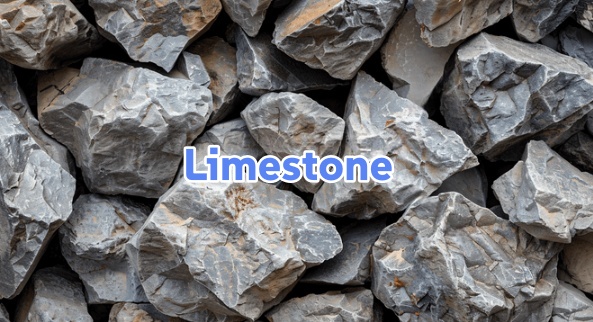
1. Limestone
Limestone is mainly composed of calcium carbonate (CaCO₃).It features a relatively soft texture with a Mohs hardness of 3-4. Combining chemical reactivity and physical durability, limestone is an indispensable global resource.
2. Advantages of Limestone Sand Production
Raw Material Advantage:The supply of limestone is steady and readily available because it widely exist.Reliable sand quality is ensured by its steady chemical and physical characteristics. Compared to granite or other ores, limestone is easier to process and uses less energy. In order to maximize financial gains, you can also use limestone waste produced by steel and chemical plant operations for sand manufacture.
Benefits to the environment: Limestone is naturally non-toxic. It is possible to recycle and reuse the wastewater and dust produced during the sand producing process. By reducing dependency on natural river sand, mechanically generated limestone sand promotes sustainable development.
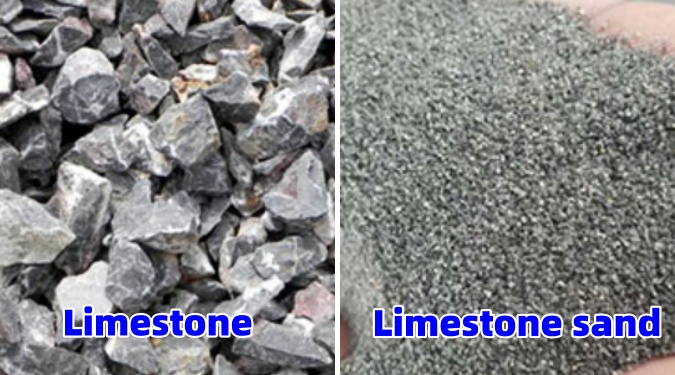
Easy to Process:Making limestone sand doesn’t require sophisticated mining machinery or mineral processing.It accommodates modular designs, meeting demands from small-scale operations to large mines. Sand production adapts to diverse engineering scenarios, with production lines easily reconfigured for strong adaptability.
Market Advantages: Limestone sand serves not only as construction aggregate but also meets substantial industrial demand. High-quality limestone powder functions as an ideal absorbent for wet flue gas desulfurization and is a common filler in plastics, rubber, and coatings industries. Further processing limestone into high-value-added products enables expanded profit models and significant revenue growth.
II. Applications of Limestone with Different Particle Sizes
When entering the limestone sand production industry, you must first consider what products your production line can manufacture. For your processing facility to have positive financial returns, we advise matching profitability with accurate grading. You may optimize the value of your goods by precisely matching limestone sand with varying particle sizes to certain application scenarios.
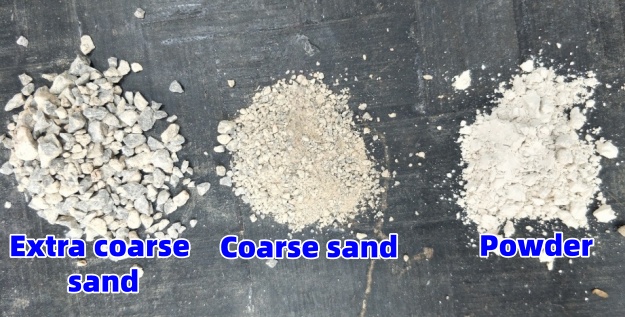
1.Extra Coarse Sand (5–10 mm): This crushed stone can be used as infill for railroad ballast or as a building foundation. It is appropriate for large-scale infrastructure projects while having the lowest processing cost.
2.Coarse Sand (2–5 mm): This type of sand is frequently utilized while building road bases and subbases. It may be used with fine sand to make aggregate for concrete. It is perfect for big-scale building projects, road and bridge construction, and other situations. Its market demand is steady and it can be produced in enormous quantities.
3.Medium Sand (0.5-2 mm): It functions as a premium aggregate for mortar and concrete. Particle size and clay content must be strictly controlled since limestone sand is the main commodity that generates profits. It naturally demands the highest market demand and is more expensive than the grades that came before it.
4.Fine Sand (0.1-0.5 mm): This particle size is utilized as a raw material for the paper industry as well as in cement mortar, tile bonding, and wall leveling. Your mineral processing plant’s profitability may be increased and resource waste can be decreased by using fine sand recovery equipment.
5.Powder (Particle Size < 0.1mm): This powder may be utilized as a plastic filler, desulfurization agent, and raw material for cement.Some applications include toothpaste and cosmetic fillers. Products of this particle size represent your source of high added value.
Ⅲ.Production of Limestone Sand
The four main phases in the manufacture of limestone sand are “crushing, sand making, screening, and sand washing.” Your final product’s quality and manufacturing efficiency are directly impacted by each phase.
1. Limestone Crushing
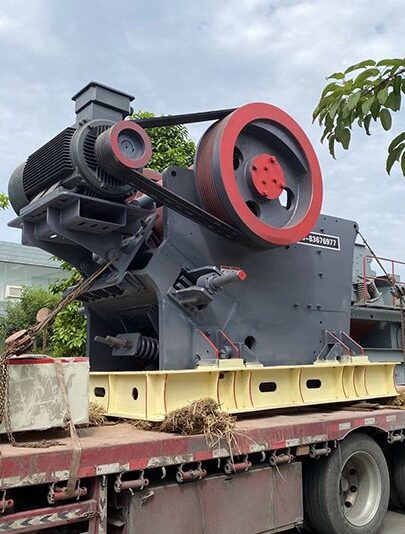
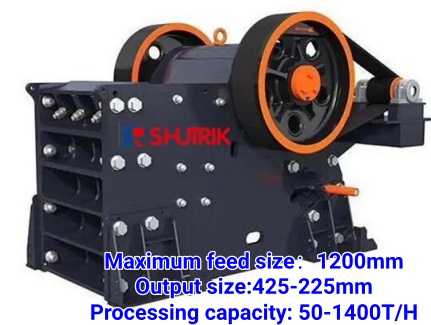
For primary crushing, feed big pieces of limestone into a jaw crusher. The jaw crusher is appropriate for initial limestone crushing in a variety of situations due to its straightforward design, big feed size capacity, and high throughput.
The medium and fine crushing step follows. For medium and fine limestone crushing, an impact crusher might be used. The impact crusher, which has a built-in “shaping” feature that creates well-formed output particles, uses the high impact energy of impact plates and counter plates to crush materials. For medium and fine crushing, a cone crusher can be used as an alternative. Although this equipment generates less uniform end particle morphologies and requires stricter feed size compliance, it offers cheaper operating costs and steady output.
If your limestone ore includes an amount of mud and impurities, it should be pretreated before crushing.
2. Limestone Sand Making
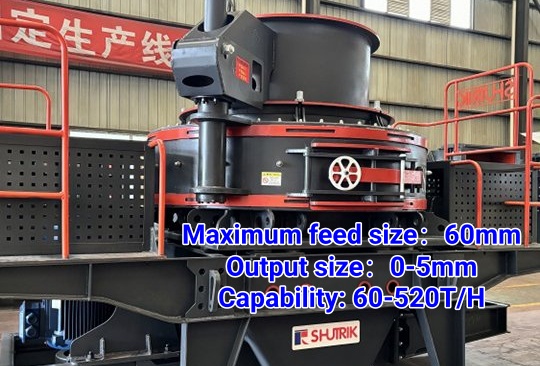
Sand making is the key process determining the price of finished sand. We recommend using a VSI Sand Making Machine. Before using the sand maker, you can first screen out extremely fine material with a vibrating screen to save energy consumption.
The impact crusher effectively eliminates sharp edges from the previous crushing step, producing final sand with a superior cubic form. This is critical for increasing concrete workability and strength. The completed sand’s fineness may be accurately controlled by regulating the rotor speed and feed rate, resulting in high-quality manufactured sand with outstanding gradation that satisfies national requirements. This crusher effectively eliminates stone powder (<0.075mm particles) from excessive grinding, addressing a major issue in limestone sand production: dust avoidance and use.
3. Limestone Screening
Limestone that has been crushed and sanded requires further grading. To achieve multi-stage grading and adapt to diverse application demands, employ a vibrating screen with double or triple layers of different-sized screens.
To avoid diminished screening efficiency, examine the screens on a regular basis and remove any buildup of material. Store the various graded final products separately to minimize mixing and economic losses.
4.Sand Washing
The primary goal of sand washing is to remove surface dirt, contaminants, and extra stone powder from sand and gravel, improving the purity and quality of finished limestone sand to satisfy high-end technical specifications. In addition, it recovers lost fine sand to decrease waste. Bucket wheel sand washers are appropriate for cleaning medium and fine sand, whilst spiral sand washers are good for coarse sand or silt-containing materials.
IV. High-value-added limestone products
Limestone sand production not only produces basic aggregates, but it also allows for the processing of limestone into high-value-added products (quicklime, slaked lime), which greatly increases total profitability. The following are two key high-value-added products:
1.Calcination produces quicklime (calcium oxide, CaO).
The process involves feeding uniformly sized limestone (usually 40-80mm) into a rotary or vertical kiln. Calcination at 900-1200°C generates carbon dioxide through breakdown, resulting in white lumpy quicklime.
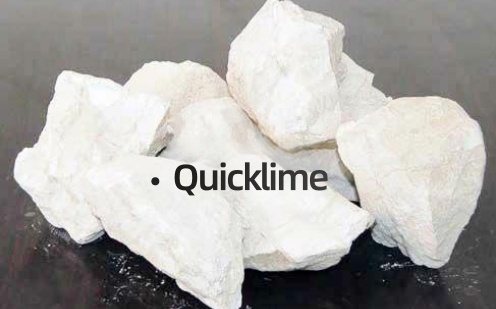
Quicklime is an important raw ingredient for the steel industry, calcium carbide manufacture, and environmental remediation (wastewater treatment). Its market price is usually many times greater than that of raw limestone ore.
2.Hydration leads to slaked lime (calcium hydroxide, Ca(OH)₂).
Quicklime is combined with water to cause a “digestion” process, resulting in powdered calcium hydroxide. Limestone is processed into 325-mesh slaked lime powder with more than 90% purity, resulting in a product priced 5-10 times more than raw ore.
The applications of slaked lime are more specialized and high-end.
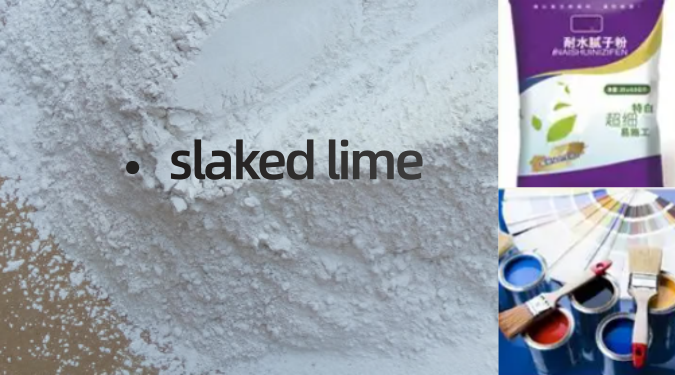
Environmental Protection: Used for neutralizing acidic wastewater, acid removal from incinerator flue gas, and sludge stabilization.
Construction: Used in producing plaster powder to enhance whiteness and adhesion; used in manufacturing aerated concrete blocks.
Chemical Industry: Used for pH adjustment and as a chemical raw material.
V. Limestone Sand Production Case Study
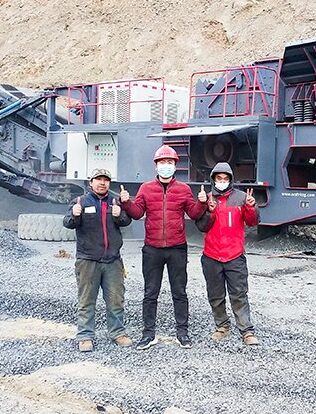
Russia—5 Million Tons/Year Large-Scale Limestone Aggregate Production Line
The limestone aggregate production line in Russia’s Far East primarily supplies federal infrastructure projects and ready-mix concrete plants.
Core Equipment: Jaw Crusher, Impact Crusher, Cone Crusher, VSI Sand Making Machine, Vibrating Screen
Final Product Specifications: 0.5mm manufactured sand, 5-10mm and 10-20mm crushed stone
Customer Feedback: “Manufactured sand output is stable with excellent product shape. This production line has been operating for 3 years, and the equipment quality has proven even more reliable than anticipated.”
Conclusion
Scientific processing flows and appropriate equipment significantly enhance the value of manufactured limestone sand. By controlling costs, improving product quality, and exploring new profit models, your mineral processing plant can achieve long-term, stable profitability.
If your limestone sand production line requires professional personnel and equipment support, contact us immediately.