
Hematite is widely distributed and abundant, with an iron content as high as 70%. It is a core raw material for the steel industry and a key mineral for investment and production in many mineral processing plants. A thorough understanding of hematite is beneficial for improving production efficiency and return on investment.
As a professional manufacturer of ore processing equipment, Sandreck will provide a detailed introduction to the characteristics, formation, classification, uses, and equipment required for the extraction and processing of hematite.
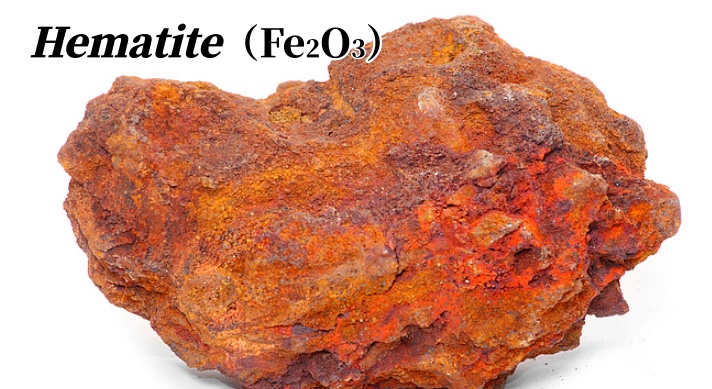
1. Composition and Properties of Hematite
1) Chemical Composition
The core component of hematite is iron oxide (Fe₂O₃). It contains 70% iron and 30% oxygen. Natural hematite usually contains impurities such as silica and alumina. These impurities affect ore grade and beneficiation processes.
High-grade ore (≥60%) is easy to process and has low processing costs. Ore with a grade between 20% and 35% is classified as low-grade ore and requires more complex beneficiation techniques.
2. Physical Properties
Color: Common colors include gray and dark red.
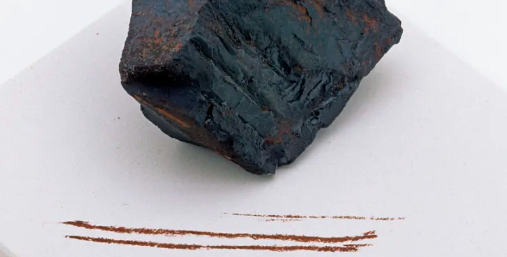
Stripe: Scratches on an unglazed porcelain plate will leave a cherry-red streak.
Crystal System: Hexagonal crystal system.
Hardness and Density: Hematite has a hardness of 5.5–5.6 and a density of 4.9–5.3 g/cm³. Therefore, it feels relatively heavy in the hand.
Magnetism: Hematite has weak magnetism, and some specimens are nonmagnetic.
2. Formation and Distribution of Hematite
1) Formation of Hematite
The core condition for hematite formation is an oxidizing environment. Iron combines with oxygen to form iron oxide, which then crystallizes to form hematite. Due to tectonic movements, volcanic eruptions, weathering, and sedimentation, the types and grades of hematite deposits vary across the Earth.
(1) Sedimentary Deposits: Hematite forms directly in shallow marine or lacustrine sedimentary environments. Iron oxide is deposited and enriched with sediments. Sedimentary hematite is concentrated, with clear stratification and a medium grade. However, it is often associated with quartz, clay, and other impurities, making separation difficult.
(2) Hydrothermal Metasomatism: High-temperature hydrothermal fluids carrying iron elements rise from deep within the Earth’s crust along fault zones, reacting chemically with surrounding rocks to form hematite. These deposits typically have a high grade, with iron content often exceeding 60%.
(3) Weathering and Sedimentation: Surface iron minerals (such as magnetite and limonite) undergo weathering and oxidation to form hematite.
2) Distribution of Hematite
Hematite is widely distributed worldwide. The Lake Superior region of North America and Canada is the world’s largest hematite-producing area.
Australia is the world’s largest exporter of hematite. The ore is mainly distributed in Western Australia. These deposits have a grade of 60%–65%, classifying them as high-grade ore.
Brazil is the world’s second-largest exporter of hematite, with its main deposits located in Minas Gerais. Brazilian hematite deposits have a grade of 55%–60% and are abundant.
Countries such as the United Kingdom, India, and South Africa also possess rich hematite reserves.
3. Classification of Hematite
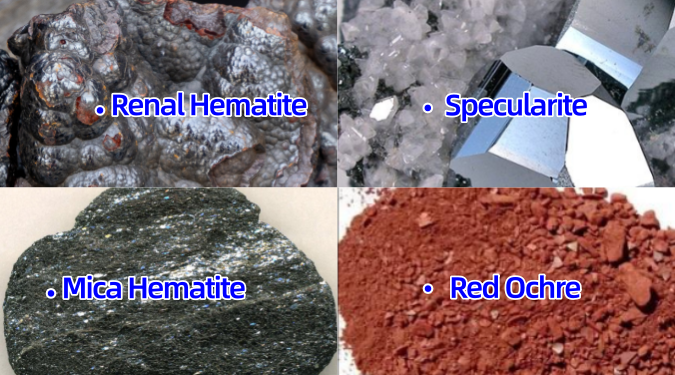
1) Kidney-shaped Hematite
Kidney-shaped hematite occurs as hemispherical or grape-like aggregates with a smooth surface. This morphology is caused by the precipitation of iron in aqueous solution due to bacterial action. It is commonly found in cavities within oxidation zones or hydrothermal deposits. When mixed with other iron ores, nodular hematite can exhibit magnetism.
2) Specular Hematite
Specular hematite forms in hydrothermal veins or through the action of volcanic gases. It is an aggregate of hematite, usually appearing as rose-like or layered aggregates. Its coarse grains range in color from steel gray to iron black.
3) Mica Hematite
Mica hematite occurs as fine, flaky aggregates. It has specific industrial uses, such as a functional filler in rust-preventive pigments.
4) Ochre
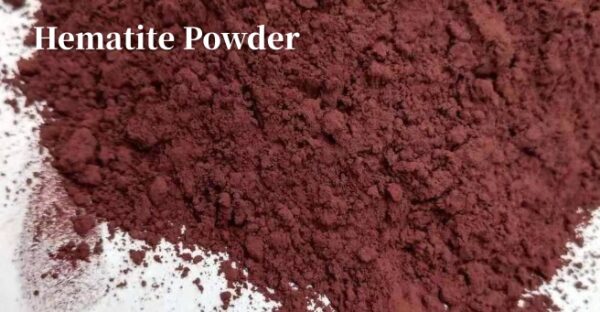
Ochre occurs as earthy or powdery aggregates with a bright color. As one of the most primitive forms of hematite, it is easy to grind and was among the earliest natural pigments used.
4. Uses of Hematite
1) Steel Industry
Hematite used in smelting typically requires a grade of 65% or higher, with SiO₂ ≤ 8%, Al₂O₃ ≤ 4%, and harmful elements such as sulfur and phosphorus not exceeding 0.05%. Failure to meet these standards will affect product quality.
2) Pigment Industry
After grinding, grading, and purification, hematite can be processed into iron oxide red pigment. This pigment has excellent lightfastness and alkali resistance, stable chemical properties, and low production cost. It is mainly used in construction, coatings, and artistic pigments.
3) Medicine
Processed and calcined hematite can be used to make the traditional medicinal ingredient “red ochre.” It can promote red blood cell production, improve blood circulation, and accelerate wound healing. It has a nourishing effect on the human blood and circulatory system.
4) Jewelry
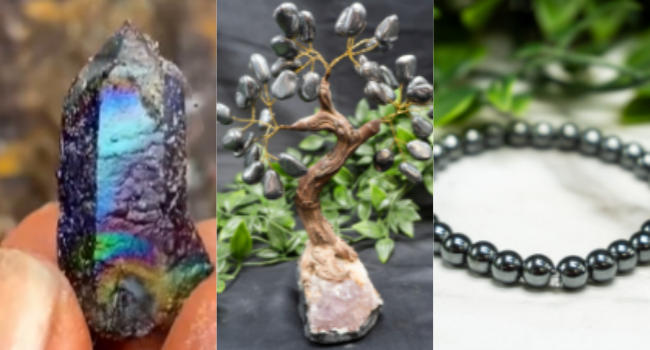
High-quality hematite, after cutting, polishing, and refining, can be used as ornaments or gemstone materials. Some hematite is set in jewelry, while others have collectible value.
5. Hematite Processing Equipment
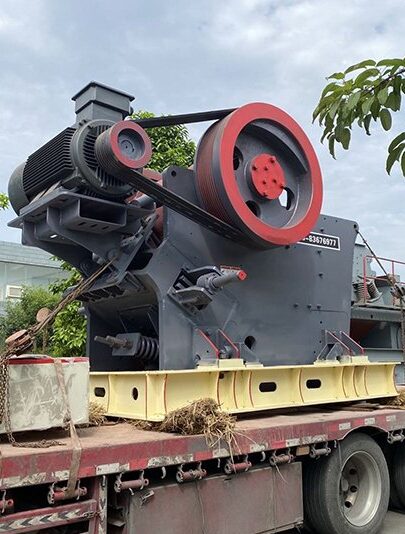
1) Cone Crusher:
The cone crusher has high crushing efficiency and produces a uniform particle size. It is suitable for medium-hard and hard hematite, especially massive hematite.
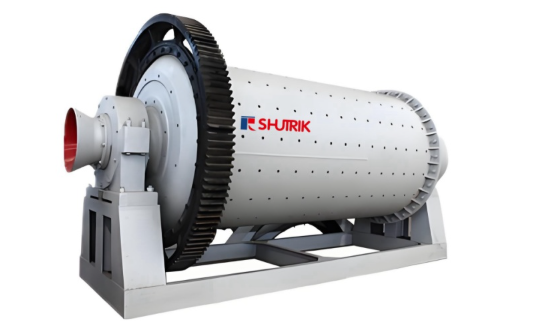
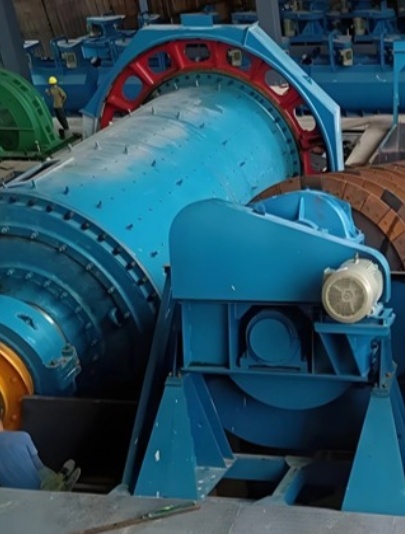
2) Ball Mill:
This grinding equipment can grind crushed ore into particles smaller than 0.074mm. Its advantages include high throughput and the ability to grind various types of hematite.
3) Flotation Machine:
The flotation machine is used to separate fine-grained, difficult-to-process hematite. It effectively separates valuable hematite particles and impurities. Its advantage lies in its high separation accuracy.
You should analyze the characteristics of different types of hematite based on actual operating conditions and select appropriate equipment. This will help improve the iron ore recovery rate. Sandreck is a professional supplier of mineral processing equipment with extensive experience. If you have ore processing needs, please contact us immediately.