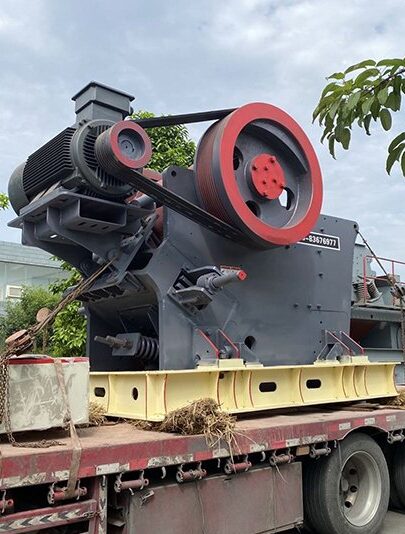

Frontline production data show that 80% of unplanned jaw crusher downtime stems not from component defects, but from improper feeding, wrong parameter settings, and minor issues building up into major failures.
This article analyzes easily missed hidden cascading faults in jaw crusher operation. It provides a practical on-site troubleshooting method to help maintenance personnel locate the root cause of failures.
Four Types of Recessive Faults
1. Progressive Reduction in Output
The jaw crusher production capacity has been gradually declining, and the finished aggregate is uneven in size. Upon disassembly and inspection of the jaw plates, the overall thickness was found to be acceptable, with severe wear observed only in a localized area on one side.
Reason: Uneven feeding. Material continuously falls on one side of the crushing chamber, causing one side of the jaw plate to bear the load and wear out.
Methods:
- Inspect the vibrating feeder and adjust the discharge position to ensure that the material falls into the crushing chamber in the center.
- Depending on the wear on the jaw plates, flip them promptly to make full use of the liners and extend their service life.
- For basalt and wet materials with high clay content—which are more likely to cause segregation and wear—the feed rate must be adjusted in advance.
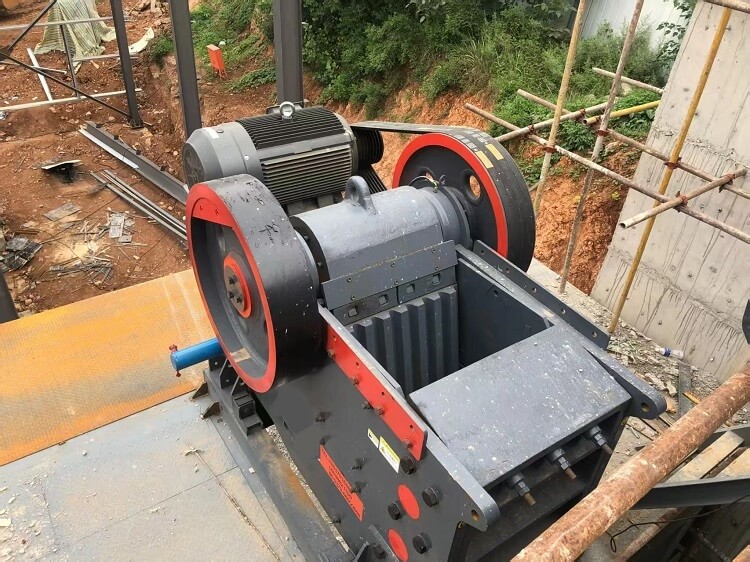
2. Persistent High Temperatures in the Bearings
The bearing temperature has been consistently high. After refilling with new grease, the temperature drops, but then rises rapidly again within a short period of time.
Reason: Abnormal spring tension in the elbow plate and tie rod causes additional load.
Methods:
- Shut down the machine to check the preload of the tie rod spring and confirm that the spring has not lost tension due to fatigue.
- Check the elbow plate shims for wear. Worn shims can generate additional axial loads, which continuously strain the spindle and cause the bearings to overheat.
3. Intermittent Chamber Blockage
Jaw crushers frequently suffer chamber blockages with damp, muddy feed and re-block soon after clearing.
Reason: Material bridging and cyclic buildup of fines.
Methods:
- Install pre-screening equipment at the front end to remove soil and fine particles in advance.
- Reduce the instantaneous feed rate, stabilize the material bed, and optimize the choke feed condition.
- When operating with wet material, periodically remove material buildup from the corners of the material chamber to prevent clumping.
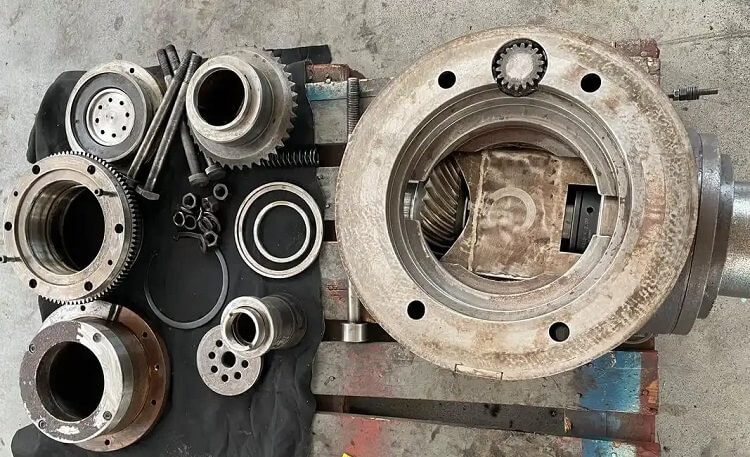
4. Frequent Fractures of the Olecranon
The newly replaced elbow pad ended up breaking shortly after installation.
Methods:
- Inspect the front-end iron removal equipment to prevent metal chunks from entering the crushing chamber.
- Check the discharge port dimensions and confirm that the CSS setting is too small.
- Check the levelness of the equipment base; foundation settlement and loose anchor bolts can introduce additional alternating stresses, leading to fatigue failure of the elbow plate.
Tiered Troubleshooting Method for Jaw Crusher Failures
Following a diagnostic sequence that begins with external factors and proceeds to internal factors:
- External System Inspection: Feeding system, drive belts, motor operating current, and tightness of equipment anchor bolts.
- Visual inspection of the crushing chamber: material buildup, jaw plate wear, and the condition of the cheek plates.
- Inspection of Core Components: Eccentric shaft condition, bearings, and tie rod spring assemblies.
Note: All inspection work must be performed with the machine shut down, the power disconnected, and a “Do Not Operate” tag posted, in accordance with on-site safety regulations.
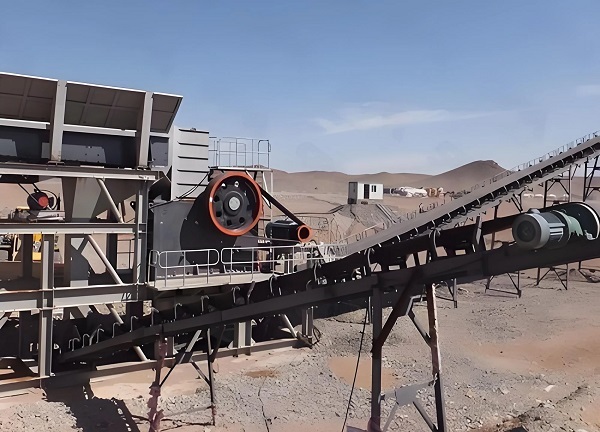
Common Misconceptions
1) Lubrication Maintenance Not Adjusted for Working Conditions
In humid and dusty conditions, dust easily mixes into the grease. Grease replenishment on a fixed schedule causes caking, which accelerates bearing wear.
2) CSS Adjustment by Estimation Without Actual Measurement
CSS adjustments are made by guesswork without feeler gauge measurement. Visual-only checks lead to inconsistent product size and chronic equipment overload.
3) Spare Parts Stocking Limited to Wear Parts Only
Only wear parts are stocked. Small auxiliary parts like shims and springs are overlooked; their failure triggers unplanned downtime and project delays.
The core of jaw crusher troubleshooting is to identify the root cause, not merely replace damaged parts. If your crusher encounters the above faults on the production line, feel free to contact the Sandreck technical team for targeted solutions.