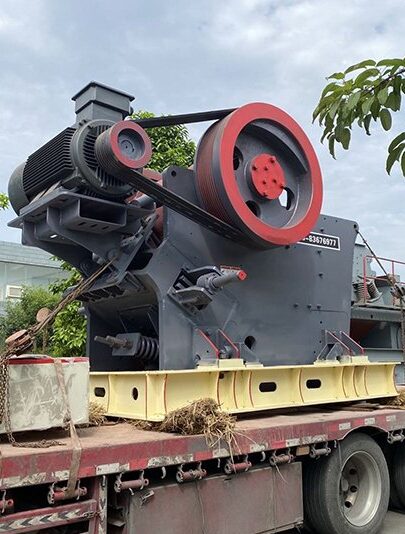

In mineral processing and powder production, Raymond mills and ball mills are two of the most widely used grinding machines. So in your project, which is more suitable? The answer depends entirely on your material properties, required fineness, production capacity, and operating budget.
In this article, we compare Raymond mills and ball mills from several key aspects, helping you select the most suitable grinding solution for your application.
1. Structure
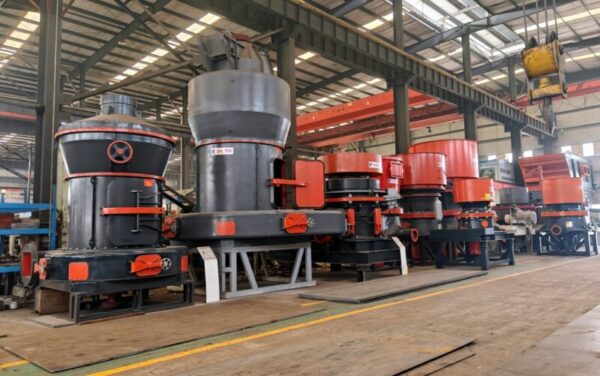
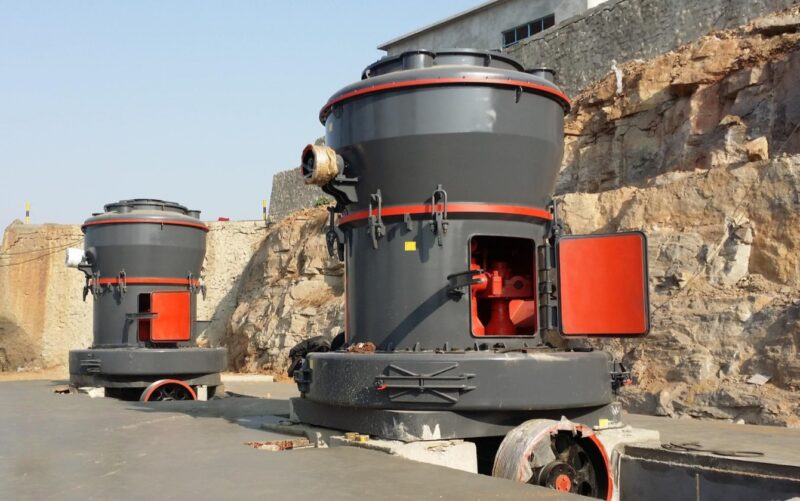
A Raymond mill features a vertical and compact structure, integrating crushing, drying, grinding, and classification into one system. Its small footprint makes it especially suitable for plants with limited space or projects aiming to reduce civil construction costs.
Our equipment utilizes a fully enclosed thin-oil bath lubrication system. Through precise control of the oil circuit, the system ensures the automatic, continuous supply of lubricant to core components without manual intervention. This system not only significantly reduces maintenance frequency and costs but also extends the service life of the mill’s components, thereby ensuring continuous and efficient production.
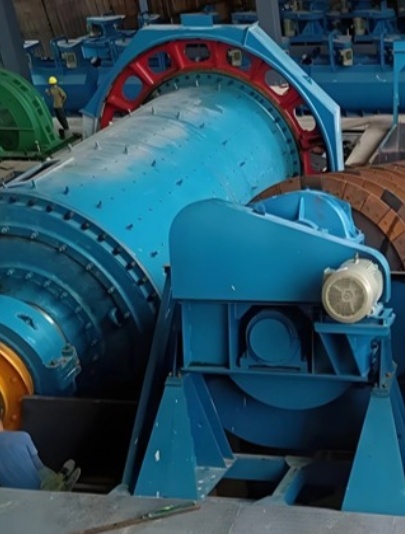
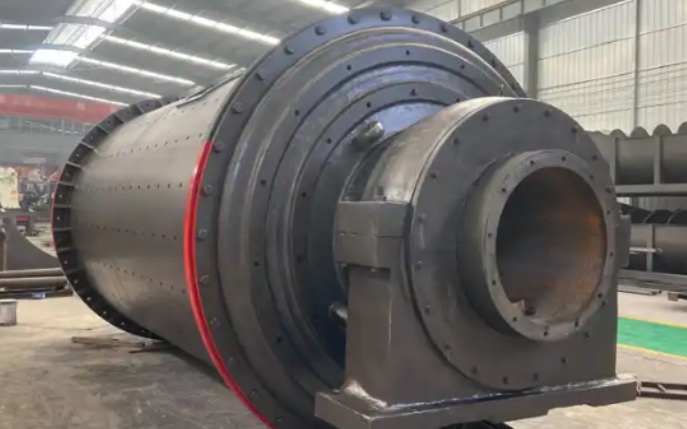
A ball mill is a cylindrical grinding machine consisting of a rotating drum partially filled with heavy grinding media (like steel or ceramic balls). As the cylinder spins, the balls are lifted and dropped, grinding the material through impact and friction.
2. Working Principle
The Raymond mill operates on the principle of centrifugal grinding: material enters the grinding chamber, and a rotating star frame drives the suspended grinding rollers, being pressed tightly against the stationary grinding ring by centrifugal force. Scrapers continuously lift the material and feed it into the gap between the grinding rollers and the grinding ring, where it undergoes repeated compression and grinding; A blower generates a circulating airflow that transports the ground powder upward to the top dynamic classifier. Coarse particles are retained and returned for regrinding, while qualified fine powder is conveyed to the cyclone collector for separation and collection. Clean air is recirculated back to the blower, forming a fully enclosed, negative-pressure dry grinding circulation system.
The ball mill is a kind of horizontal cylindrical rotating device. The materials enter the first bin of the ball mill evenly through the feeding device via the feeding hollow shaft screw. As the cylinder rotates, centrifugal and frictional forces lift the steel balls and material to a certain height before they fall. Continuous impact and abrasion between balls and material provide strong grinding force. The materials enter the second bin through the single-layer partition, where the flat liner plate is set with ball mill steel balls for further grinding. The powder is discharged through the discharge grate. Thus, the whole grinding operation is fulfilled.
3. Suitable materials
Raymond mill: designed for soft to medium-hard, non-metallic materials, typically with low abrasiveness and low moisture content(≤ 6%). Such as limestone, gypsum, quartz, calcite, talc, marble, dolomite, coal gangue, bentonite, granite and more. Some industrial by-products like water slag, steel slag, furnace slag, fly ash, coal ash, and similar materials can also be milled.
Ball mills perform better at processing hard, abrasive, or metallic materials, especially in wet grinding conditions where Raymond mills are not suitable.
It can grind both metallic ores(gold ore, copper ore, iron ore, chrome ore) and non-metallic materials(quartz sand, feldspar, limestone, marble, zircon sand, cement clinker, slag, furnace slag).
4. Powder fineness
Raymond mills can produce finer and more uniform powder than ball mills, with a finished fineness ranging from 80–800 mesh (0.18–0.015 mm). They are ideal for applications that require high particle size consistency, such as building materials, fillers, coatings, and chemical processing.
Ball mills produce a broader particle size distribution and are mainly used for coarse grinding and primary size reduction. The typical feed size is below 25 mm, and the finished product size usually falls within 20–200 mesh (0.074–0.89 mm).
5. Production capacity
Raymond mills are best suited for small- to medium-scale powder production. Modern upgraded models support continuous operation, with typical capacities ranging from 0.4 to 40 t/h. They can grind materials to a higher fineness and have a higher output per unit time.
Ball mills are designed for medium- to large-scale industrial production, offering significantly higher throughput. Typical capacity ranges from 0.65 to 615 t/h. As production capacity increases, ball mills become the preferred choice due to their scalability and continuous operation capability.
6. Costs and maintenance
Raymond mills use a vertical, integrated design that combines grinding and classification, resulting in lower energy consumption than ball mills. For medium-hard materials like limestone or talc, this means lower electricity costs.
Although ball mills may have higher energy consumption per ton, their large processing capacity—especially in large-scale continuous operations (such as thousands of tons per day)—often balances overall energy efficiency in industrial projects.
Ball mills require regular maintenance due to their heavy workload, including routine monitoring and replacement of liners and grinding media.
As an experienced grinding equipment manufacturer, we can offer different models of Raymond mill and ball mill to match your project. Go with us and secure stable production from day one.