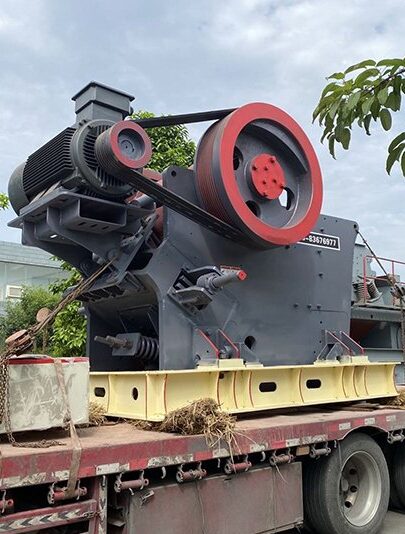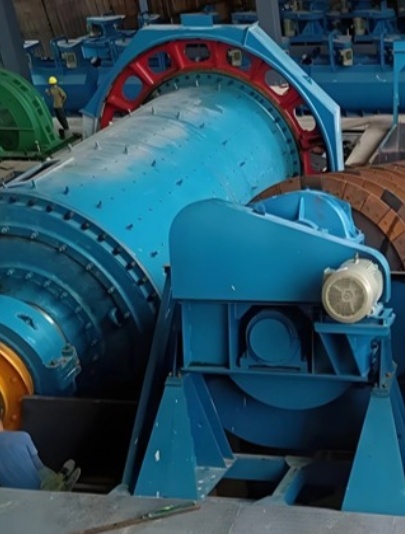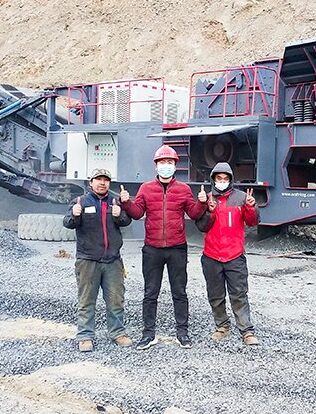

Aggregates are the backbone of the construction industry, serving as essential components in concrete, asphalt, road bases, and other infrastructure projects. The quality, particle shape, gradation, and overall output of finished aggregate heavily depend on the type of stone crusher used in the production line. This article offers an in-depth exploration of 6 mainstream stone crushers used to make aggregates, their working principles, applications, advantages, and limitations.
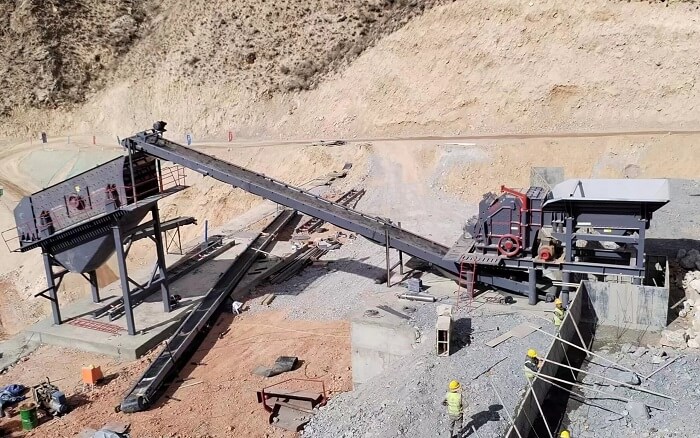
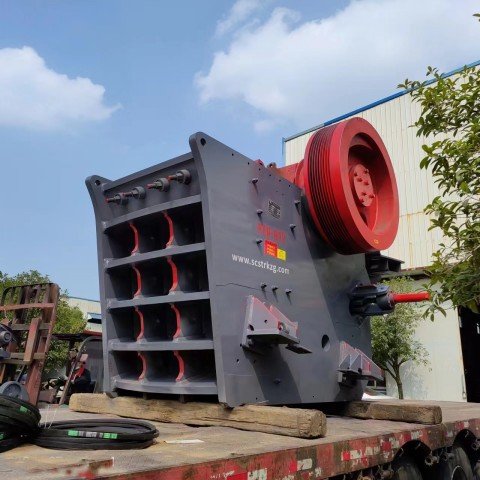
1. Jaw Crusher
1) Working Principle:
A jaw stone crusher relies on the mutual extrusion, bending and grinding motion of the movable jaw plate and fixed jaw plate to crush bulk stones. The materials are squeezed and broken in the crushing cavity, and discharged after reaching the qualified particle size.
2) Applications:
It is the core equipment for primary coarse crushing in aggregate production lines, widely used for crushing hard and abrasive materials such as granite, basalt, and quartzite. They are also suitable for softer materials like limestone and recycled concrete.
3) Advantages:
- Simple design and reliability: Low maintenance costs.
- High throughput: Suitable for high-capacity operations.
- Versatile: Can handle wide size ranges and different types of rock.
4) Limitations:
Size Reduction: Limited to producing coarser aggregates, with further processing required for finer gradations.
Fixed Discharge: Can sometimes lead to uneven wear and less flexibility in output sizes.
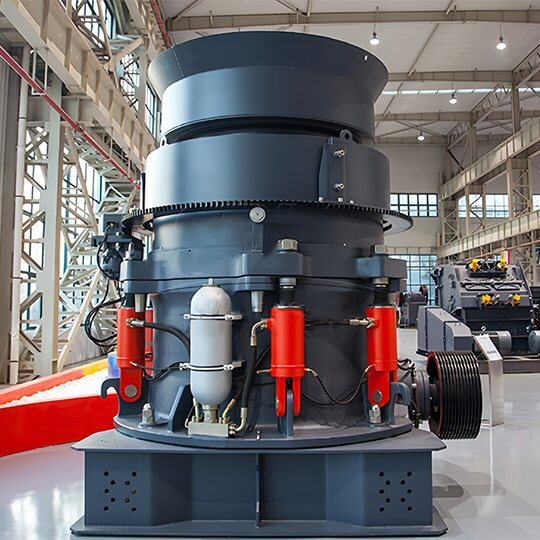
2. Cone Crusher
1) Working Principle:
The cone rock crusher uses the eccentric rotation of the crushing cone to continuously squeeze, impact and crush materials between the crushing wall and the rolling wall, realizing layered crushing of stones.
2) Application:
Cone crushers are preferred for their ability to produce fines and well-shaped aggregates. They are utilized for medium to fine crushing of materials such as stone, gravel, and recycled concrete.
3) Advantages:
- Superior Product Quality: Uniform finished aggregate particle size.
- Adjustable Settings: Operators can control output size by adjusting the crusher’s settings.
- Efficient Crushing: High crushing efficiency, large output.
- Stable operation for long-term continuous production.
4) Limitations:
High equipment cost, complex structure.
Strict requirements for material feeding, and not suitable for sticky and soft materials.
Setup and adjustment are complex and require precise setup for optimal operation.
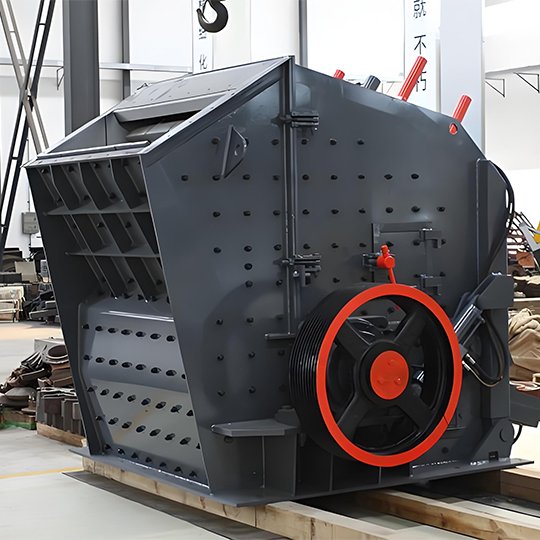
3. Impact Crusher
1) Working Principles:
When the impact crusher is in operation, driven by the high-speed rotating blow bars, the material is subjected to continuous impact, crushing, and rebounding between the rotor and the impact plates, thereby simultaneously achieving material crushing and particle shaping.
2) Applications:
It is special equipment for medium and fine crushing and aggregate shaping, focusing on improving the cubic shape of finished stones.
3) Advantages:
Uniform fineness size, good particle shape, high purity.
4) Limitations:
Low output compared.
High requirements for feed particle size, and suitable only for fine processing.
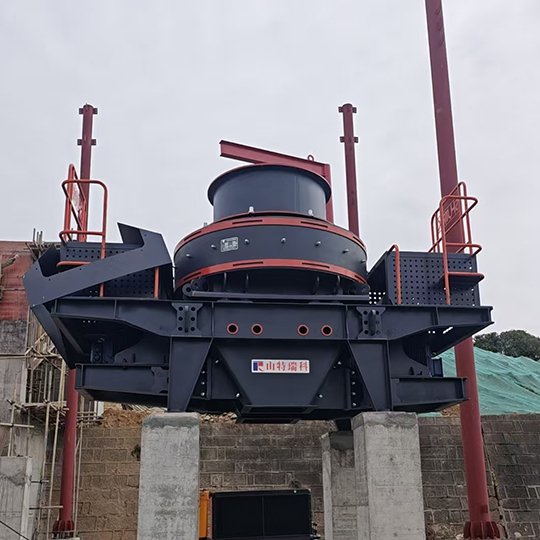
4. VSI Sand Making Machine
1) Working Principle:
The vertical shaft impact crusher (VSI) adopts the principle of stone hitting stone. The high-speed rotor accelerates materials, which collide and crush against the material lining in the crushing cavity, achieving ultra-fine crushing and sand shaping.
2) Applications:
VSI crushers are used when a high-quality end product is essential, particularly for producing fine-grade aggregates like manufactured sand.
3) Advantages:
- Cube-Shaped Product: Produces superior-shaped aggregates.
- Customizable Output: Operators can adjust settings for different applications.
- Ideal for Sand Production: Efficiently produces fine materials and high-grade sands.
4) Limitations:
Energy Consumption: Higher energy usage compared to some crushers.
Capacity Limits: Less suitable for high-capacity applications without proper modifications.
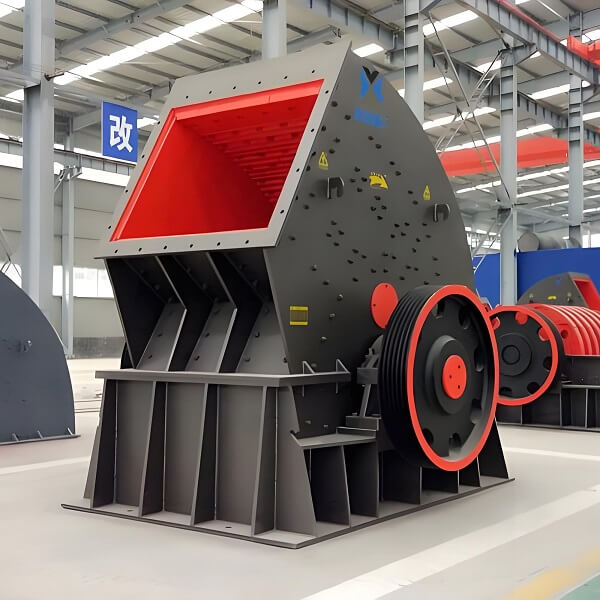
5. Hammer Crusher
1) Working Principle:
The high-speed rotating hammer head impacts materials to realize one-time crushing. The crushed materials fall on the sieve plate, and qualified particles are discharged, while unqualified materials are hammered again.
2) Applications:
Typically used in mining, hammer crushers are effective for processing ores, coal, and similar raw materials.
3) Advantages:
Simplicity: straightforward design and easy operation.
Cost-Effectiveness: Generally lower installation and maintenance costs.
Flexibility: Can process a wide range of materials.
4) Limitations:
Wear Rates: High wear rates due to repeated hammer impact.
Limited Size Reduction: More suited to soft rock applications and secondary crushing.
6. Mobile Crusher
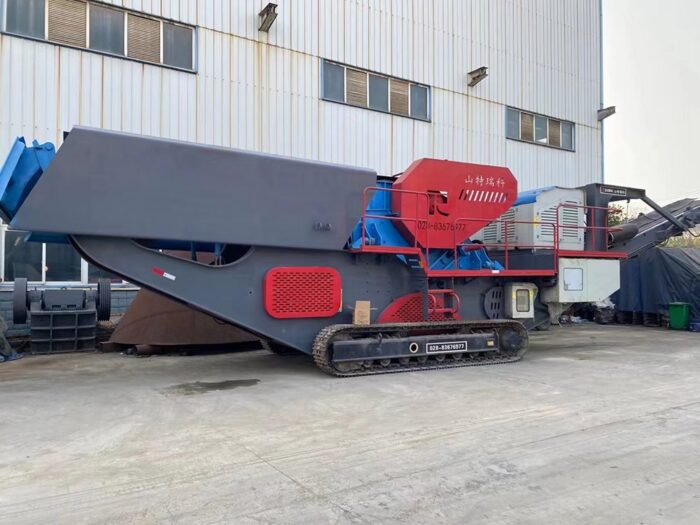
1) Working Principle:
The mobile crusher integrates crushing equipment, feeding equipment, screening equipment and a mobile chassis into one unit. It realizes free walking and on-site crushing without fixed installation.
2) Application:
Flexible on-site crushing and mobile aggregate processing projects.
3) Advantages:
No need for fixed foundation installation, flexible movement, saving material transportation costs, and fast project deployment.
4) Limitations:
Slightly higher unit operating cost than fixed equipment, limited single-machine output, and not suitable for super-large-scale fixed production lines.
Sandreck, a manufacturer of stone crushing equipment, offers a wide range of equipment tailored to meet the specific needs of various aggregate production applications. Whether you are looking for jaw crushers, cone crushers, impact crushers, or VSI crushers, we can provide reliable, efficient, and durable machinery and manufacturer-direct pricing.