x
Send Your Inquiry Today
Quick Quote

What is Marble?

Marble is an important raw material in the mining industry,and also a high-end natural decorative material used in the construction industry. As the head of a mineral processing plant, you need to be able to crush it efficiently while also protecting its structure and texture to create high-value products.

We will present you with a complete guide on marble, covering its sources, uses, and processing equipment. We hope this will serve as a practical reference for you.

Ⅰ.What is marble?

From a geological perspective, marble is a metamorphic rock. Limestone/dolostone within the Earth’s crust undergoes high temperature and pressure, crystallizing to form marble. Its density is higher than that of limestone, and its crystal structure is denser and harder.

Composition: Its main components include calcium carbonate (CaCO₃), magnesium carbonate, silicon dioxide, iron oxide, and other associated minerals. The calcium carbonate content is over 50%.

Density: 2.7-2.9 g/cm³.

Hardness:2.5 – 4.

Refractive index:1.486-1.658. The higher the calcite content, the closer the refractive index is to 1.486; when the dolomite content is higher, the refractive index can reach 1.658.

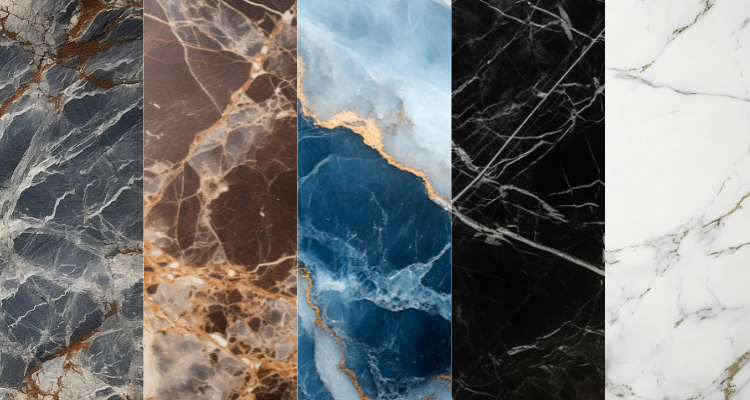
Color: Marble comes in a wide variety of colors, like white, black, gray, green, yellow.

Ⅱ.The Formation Process of Marble

1.Formation

First Stage: Parent Rock Deposition. Calcium carbonate in seawater and marine biological remains settle on the seabed, forming thick dolomite strata.

Second stage: Metamorphic crystallization. The movement of the Earth’s crust places carbonate rocks in high-temperature (300~500℃) and high-pressure (over 10 times atmospheric pressure) environments. All the rocks undergo recrystallization reactions, and the particles rearrange themselves. Then, it forms a metamorphic rock with a uniform structure and dense crystals, which is what we refer to as marble.

Third stage: Structural deformation. The pressure generated by tectonic movements causes the metamorphic rock to deform, ultimately forming the unique textures and patterns of marble.
2.Why do marble colors vary?

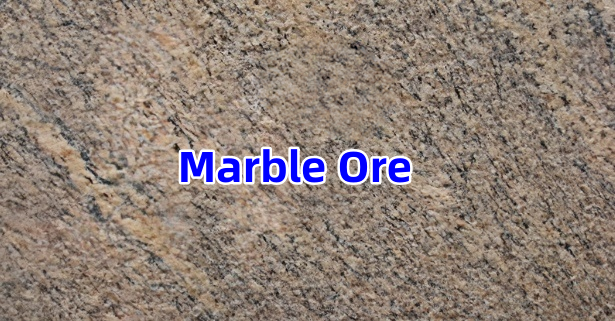
Trace impurities mixed into carbonate rock sediments affect the color of marble. During the recrystallization process, impurities will accompany the rock as it recrystallizes into metamorphic rock. Pure calcium carbonate forms pure white marble. The following are the colors formed by different impurities:

MineralColor
Iron oxide, manganese oxide, pyriteRed, yellow
Carbon , graphiteBlack
Serpentine, tremoliteGreen
Clay mineralsGray, beige

 Ⅲ.The World’s Top Six High Quality Marble Producing Countries

According to data from the United States Geological Survey (USGS) “2025 Minerals Commodity Summary,” the global proven marble resources amount to approximately 15 billion tons. Although marble resources are widely distributed, high-quality marble is only concentrated in a few countries.

Turkey

Turkey’s marble reserves are approximately 12 billion cubic meters, accounting for nearly 20% of the total. It is also the world’s largest exporter of marble. Turkish marble is primarily beige and light gray. Rich colors, unique textures, and high cost-effectiveness are the reasons why Turkish marble is highly popular in global markets.

Italy

Italy is the core production area for high-end marble. Its marble texture is pure and fine-grained. The white marble from the Carrara region is the most famous. The preferred stone for high-end global architecture and art sculptures comes from here. Michelangelo carved the statue of David using this type of stone.

China

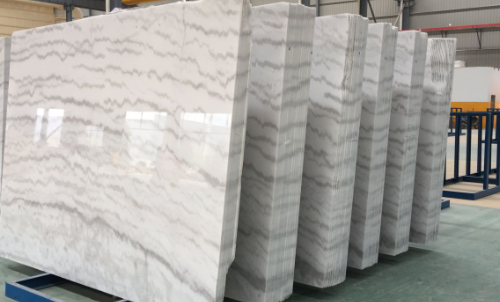
China has nearly 400 varieties of marble, such as White Jade and Dandong Green. It is also the world’s largest marble processing and consuming country. China’s marble resources are mainly concentrated in the three major production areas of Fujian Province, Guangdong Province, and Shandong Province.

Spain

Spain is rich in high-purity white and gray marbles. This type of stone is hard and durable, making it suitable for outdoor architectural decoration. Its marble is mainly distributed in the regions of Extremadura and Andalusia.

Greece

Greece is the fourth largest marble exporter in the world. In ancient Greece, the marble produced in Paros and Naxos was used for architecture and sculpture. The Parthenon and the Temple of Zeus were built using this marble.

India

Indian marble is rich in color, has unique patterns, and offers great value for money. It is an important stone supplier in Asia and Africa. The most famous is the white marble from the Makrana region.

Ⅳ.Uses of Marble

Marble combines beauty and durability. It is an indispensable decorative material in the construction industry. Understanding its uses can help your mineral processing plant quickly clarify the direction of product processing:

* Indoor decoration: ① Marble is used for indoor decoration in homes, such as walls, floors, columns, etc. Interior decoration: ① Marble is used for home interior decoration, such as walls, floors, columns, etc. The use of marble not only showcases its natural beauty but also elevates the space’s quality. ② Marble is used in commercial buildings, such as high-end hotels, office buildings, and exhibition centers. Marble is associated with nobility and prestige, conveying a brand image of “high-end, professional, and reliable.” The naturally formed, unique textures bring an artistic sense and uniqueness to commercial buildings. In addition, marble has a long lifespan and does not require regular replacement, meeting the long-term operational needs of commercial buildings.

* Outdoor decoration: The marble used for outdoor decoration mainly includes varieties like white marble that are resistant to weathering and corrosion. For example, the ground of squares, monuments, and sculptures. Outdoor decoration: The marble used for outdoor decoration mainly includes varieties like white marble that are weather-resistant and corrosion-resistant. For example, the ground of squares, monuments, sculptures, etc. Using this type of marble is both durable and can showcase the solemnity of the architecture.

* Other uses: Marble powder can be used as a cement mixture; high-purity calcium carbonate marble can be used as a metallurgical flux and as a raw material for glass production. Other uses: Marble powder can be used as a cement mix; high-purity calcium carbonate marble can be used as a metallurgical flux and as a raw material for glass production.

Ⅴ.Marble Processing Steps

You can process the extracted marble according to the following steps:
Step 1–Rough Processing. Using a jaw crusher for coarse crushing of raw stones yields 30-120mm-sized fragments while effectively removing impurities.

Step 2–Fine finishing. First, use a vibrating screening machine to filter out the qualified materials. If you need to make sand or shape it, then choose the VSI sand making machine. If you’re in the market for marble powder, a Raymond mill is the way to go for grinding.

To keep production running smoothly and ensure your final products are qualified, consider adding auxiliary equipment like conveyors and dust removal systems.

Ⅵ. Suggested Equipment for Marble Powder Processing

Turning marble from raw blocks into fine powder involves several steps: crushing, screening, sand-making, and grinding. We recommend the following three core processing equipment for your mineral processing plant.These machines strike a balance between efficiency, quality, and cost.

1.Jaw Crusher

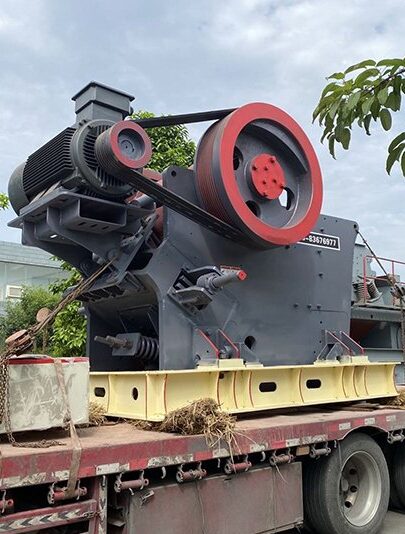
It is the first key equipment in the processing of marble in mines. Mainly used for the coarse and medium crushing of marble ore, it crushes large blocks of marble ore (feed size 125-1200mm) into smaller pieces.

Reasons: The jaw crusher has a simple structure and is easy to operate and maintain. Its discharge range is adjustable, capable of meeting different processing needs. Deep cavity crushing design, high crushing efficiency. It uses high manganese steel jaw plates, which have a long service life. It is suitable for a production range of 5-1100T/H and can be flexibly selected based on the scale of the mine.

2.VSI Sand Making Machine

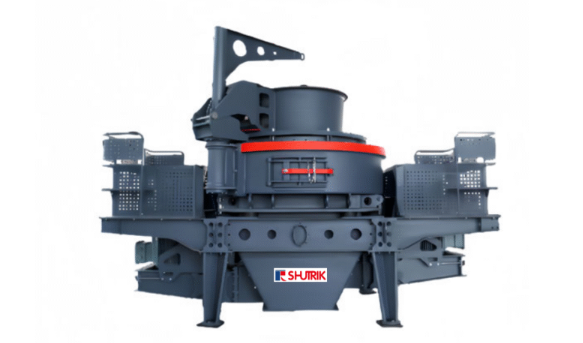
The VSI sand making machine is mainly used in the sand-making process of marble. It uses the “stone hitting stone” or “stone hitting iron” impact crushing principle for sand production. This step is crucial in determining the quality of the marble powder.

Reasons: It can be used to shape the broken marble pieces as well as for marble aggregate shaping. The finished product has a good particle shape and a reasonable gradation. It has a large processing capacity, low wear part consumption, and stable output. It operates with low noise and minimal dust emissions.

3.Raymond Mill

The Raymond mill is mainly used in the grinding process of marble. It is the core equipment for the deep processing of marble. It can adjust the fineness according to the requirements, processing small pieces of marble into powders.

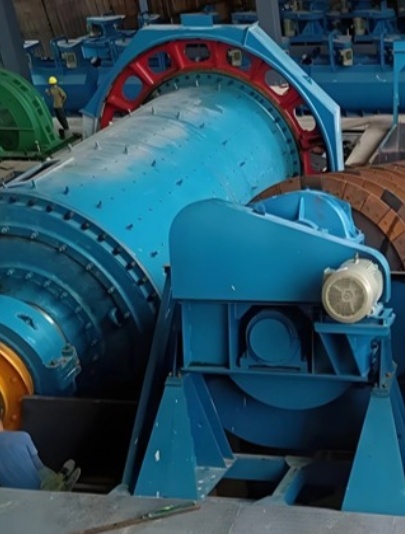
Reasons: Its grinding efficiency is high, and its energy consumption is over 60% lower than that of similar ball mills. The main parts are made of wear-resistant materials, resulting in minimal equipment wear and a long service life. The fineness of the finished product is adjustable, meeting the needs of different fields.

Summary

Marble not only plays an important role in architecture and industry, but it also brings more profit opportunities to the mining machinery industry. I hope this article on marble-related knowledge can help you gain a comprehensive understanding of it and provide references for your actual production.

If you are processing marble, contact Sandreck. We will recommend the most suitable processing equipment for you.
FAQs

Q: What’s the distinction between marble and granite?

A: Marble is a metamorphic rock, mostly made up of calcium carbonate, and it’s softer. Granite, on the other hand, is an igneous rock, primarily composed of quartz and feldspar, and it’s much harder. Because marble isn’t resistant to acids, it’s better suited for interior applications. Granite, however, can withstand both acids and bases, which makes it a good choice for outdoor use and for countertops.

Q: Is marble harmful to people?

A: Natural marble has tiny amounts of radioactive elements, but they are much lower than the national standards. Because it is a Class A decorative material, you can process and use it without worrying about radiation.

Q: How can marble waste be reused?

A: Marble waste can be crushed into building aggregates or ground into powder. The paint, plastic, and artificial stone industries have a high demand for it. You can both meet environmental protection requirements and increase additional revenue.

Scroll to Top