
Today, manufactured sand has become an important raw material for industries such as construction, chemicals, and road construction. Among many raw materials, limestone-based manufactured sand production is the most cost-effective. How can you maximize profits for your mineral processing plant?
Sandreck, as a professional ore processing equipment manufacturer, will guide you through the production of limestone manufactured sand in this article and share how to produce high-value-added products.
1. Advantages of Limestone Sand Production
1) Raw Material Advantages
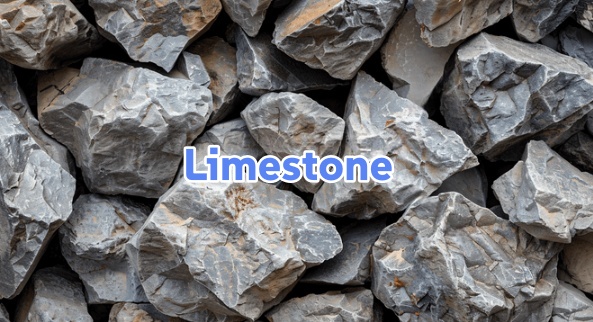
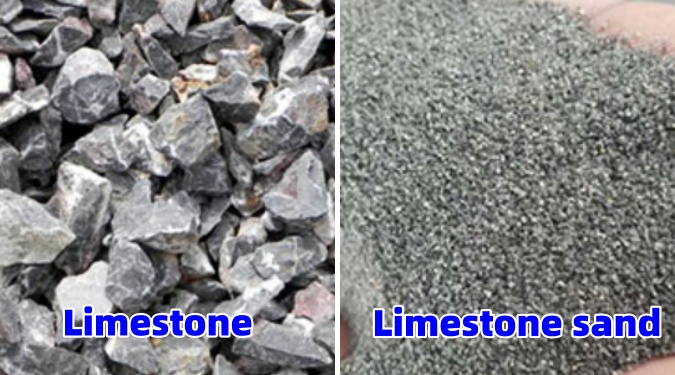
Limestone is widely distributed, with a stable and readily available supply. Its stable chemical and physical properties ensure the reliability of sand quality. Compared to granite or other ores, limestone is easier to process and consumes less energy. To maximize economic benefits, limestone waste generated from steel mills and chemical plants can also be used for sand production.
2) Environmental Benefits
Limestone is naturally non-toxic. Wastewater and dust generated during sand production can be recycled and reused. Mechanical production of limestone sand reduces dependence on natural river sand, promoting sustainable development.
3) Ease of Processing
Limestone sand production does not require complex mining machinery or mineral processing equipment. Its modular design can meet various needs from small-scale operations to large mines. The sand production process is adaptable to various engineering scenarios, and the production line is easily reconfigurable, exhibiting strong adaptability.
4) Market Advantages
Limestone sand can be used not only as building aggregate but also to meet substantial industrial demands. High-quality limestone powder is an ideal absorbent for wet flue gas desulfurization and a commonly used filler in the plastics, rubber, and coatings industries. Further processing limestone into high-value-added products can expand profit models and significantly increase revenue.
2. Limestone Sand Production
1) Limestone Crushing
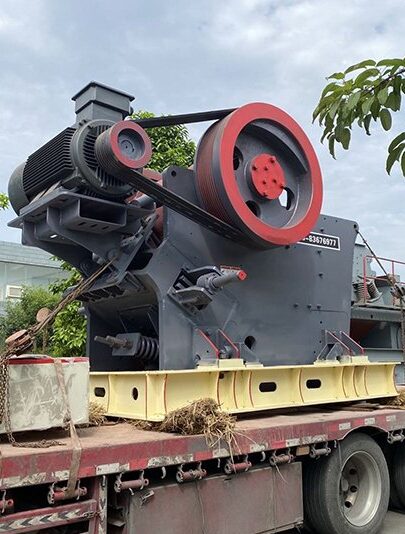
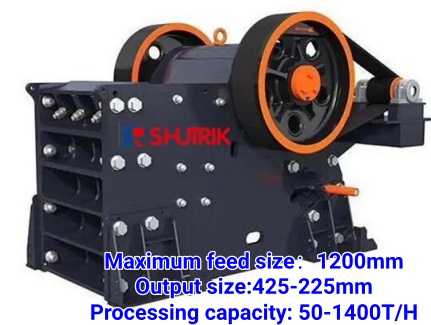
For primary crushing, a jaw crusher is recommended. Jaw crushers are simple in structure, have a large feed capacity, and high output, making them suitable for primary limestone crushing in various situations.
For medium- and fine-grinding, an impact crusher can be used. Impact crushers have a built-in “shaping” function, producing well-shaped discharge particles. Cone crushers can also be used for medium and fine crushing. Although cone crushers produce less uniform discharge particle shape and require a narrower feed particle size distribution, they have lower operating costs and more stable output.
2) Limestone Sand Making
Before using a sand-making machine, use a vibrating screen to remove extremely fine materials, reducing energy consumption.
We recommend using a vertical shaft impact (VSI) sand making machine. It can precisely control the fineness of the finished sand by adjusting the rotor speed and feed rate, thus producing well-graded limestone manufactured sand.
3) Limestone Screening
The crushed and sand-making limestone needs further grading. To achieve multi-level grading and adapt to different application needs, vibrating screens with double or triple layers of screens of different sizes can be used.
4) Sand Washing
The main purpose of sand washing is to remove dirt, contaminants, and excess stone powder from the surface of sand and gravel, thereby improving the purity and quality of the finished limestone sand and meeting high-end technical specifications. In addition, sand washing can recover lost fine sand, reducing waste. Bucket wheel sand washing machines are suitable for washing medium and fine sand, while spiral sand washing machines are suitable for washing coarse sand or materials containing silt.
3. Applications of Limestone with Different Particle Sizes
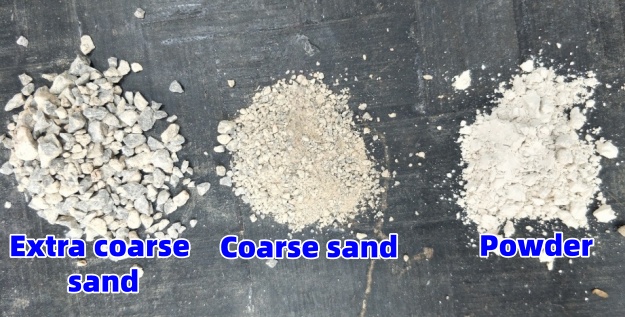
1) Extra Coarse Sand (5-10 mm)
This crushed stone can be used as filler for railway ballast or building foundations. It is suitable for large infrastructure projects and has the lowest processing cost.
2) Coarse Sand (2-5 mm)
This sand is commonly used for road base courses and subbases. It can be mixed with fine sand to make concrete aggregate. It is ideal for large construction projects, road and bridge construction, etc. Its market demand is stable and its production volume is huge.
3) Medium Sand (0.5-2 mm)
It is a high-quality aggregate for mortar and concrete.
4) Fine Sand (0.1-0.5 mm)
This particle size of sand can be used as a raw material in the paper industry, and can also be used in cement mortar, tile adhesives, and wall leveling.
5) Powder (particle size < 0.1 mm)
This powder can be used as a plastic filler, desulfurizer, and cement raw material. It can also be used as a filler in toothpaste and cosmetics. Products with this particle size are a source of high value-added products.
4. High Value-Added Limestone Products
The production of limestone sand not only produces basic aggregates but also processes limestone into high value-added products (quicklime and hydrated lime), thereby significantly improving overall profitability.
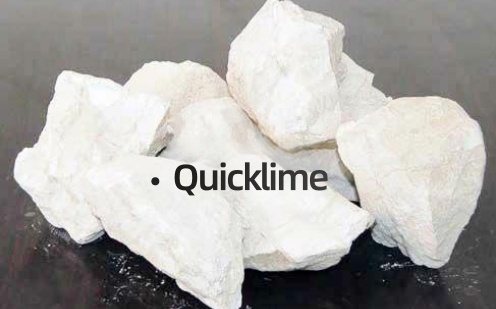
1) Calcination to produce quicklime (calcium oxide, CaO).
This process involves feeding limestone with uniform particle size (typically 40-80 mm) into a rotary kiln or vertical kiln. Calcination at 900-1200°C decomposes the limestone, producing carbon dioxide and white, lumpy quicklime.
Quicklime is an important raw material for the steel industry, calcium carbide production, and environmental remediation (wastewater treatment). Its market price is typically many times higher than that of raw limestone ore.
2) Hydration to produce hydrated lime (calcium hydroxide, Ca(OH)₂).
Quicklime is mixed with water for a “digestion” process, producing powdered calcium hydroxide. Limestone is processed into hydrated lime powder with a purity exceeding 90% (325 mesh), which is priced 5-10 times higher than the raw ore. The application of quicklime is becoming more specialized and high-end.
The above covers all the relevant information about limestone sand making. If you are interested in starting a limestone sand making business, please contact us. Sandreck is a specialized supplier of sand making equipment.