
Limestone has an extremely wide range of applications, from construction and steel manufacturing to everyday life. However, many mineral processing plants still lack sufficient understanding of limestone and fail to fully realize its value. This seriously affects the profitability of mines.
As a professional manufacturer of mineral processing equipment, Sandreck possesses extensive experience and technology in ore mining. This article will introduce limestone from multiple aspects, including its formation, characteristics, distribution, mining, and processing equipment, to help you better understand limestone and improve the economic efficiency of mining and processing.
1. How is Limestone Formed?
Limestone is primarily formed through two processes: biological deposition and chemical precipitation.
Biological deposition: After marine organisms die, their bones accumulate on the seabed. Over hundreds or even thousands of years, through compression and calcification, limestone is eventually formed.
Chemical precipitation: When the carbon dioxide content in seawater decreases or water evaporates, the solubility of calcium carbonate decreases, causing it to precipitate directly from the water in crystal form and settle on the seabed, forming crystalline limestone.
2. Limestone Characteristics and Distribution
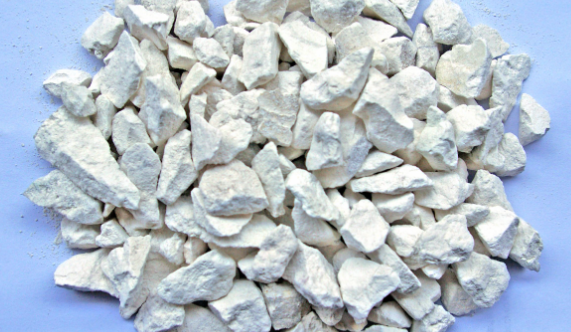
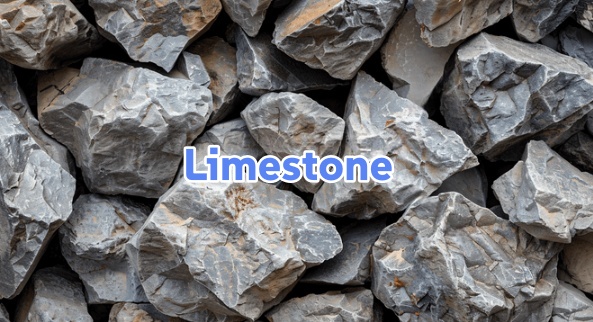
Limestone is primarily composed of calcium carbonate (CaCO₃) and typically forms in shallow marine environments.
Physical Characteristics: Medium hardness, usually gray, grayish-white, or light yellow.
Chemical Characteristics: Reacts readily with dilute hydrochloric acid, producing bubbles, which is the simplest method for identifying limestone in the field.
Limestone Distribution:
Limestone is widely distributed, accounting for approximately 10% to 15% of the total area of sedimentary rocks globally. Limestone reserves are abundant, mainly concentrated in shallow water areas between 30°N and 30°S latitude.
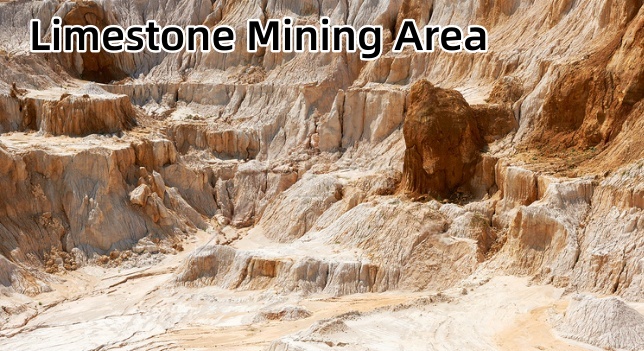
China is the world’s largest producer of limestone, with major production areas located in Guangxi, Guizhou, and Yunnan provinces. Limestone in these regions is mostly mined using large-scale open-pit mining. The Midwestern United States and Rajasthan, India, are also high-quality limestone producing areas. In addition, Russia, Brazil, and Australia also possess considerable limestone reserves.
3. Limestone Mining and Processing Equipment
Limestone resource acquisition involves a process from physical crushing to fine grinding.
1) Limestone Mining
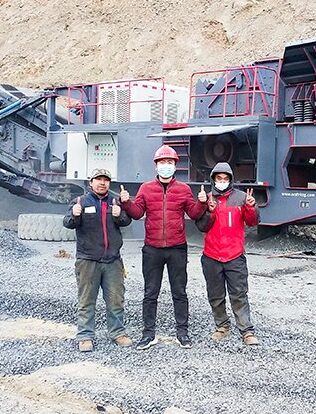
Limestone deposits are mostly mined in open-pit mines, a highly efficient and centralized process. Hard rock is broken up through drilling and blasting, and then large excavators and mining trucks are used to transport the stones to the crushing station.
2) Limestone Processing Equipment
The processing of limestone mainly aims to change its physical form (particle size) to meet the needs of different industries. Based on the processing depth, the equipment is mainly divided into two categories: crushing and grinding.
(1) Crushing Production Line (Manufacturing Building Aggregates)
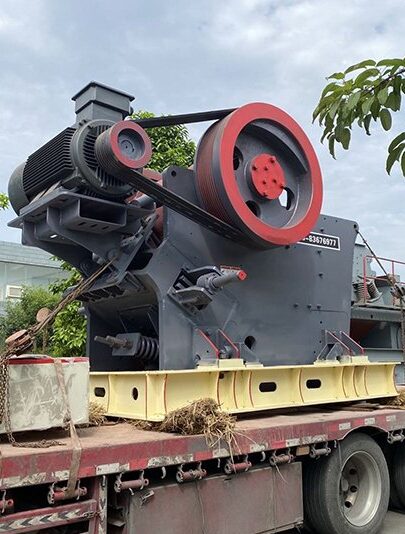
Jaw Crusher: Responsible for the “first-stage coarse crushing,” breaking large pieces of raw ore to a diameter of approximately 10-20 cm.
Impact Crusher: This is the core equipment for limestone processing. Due to the low toughness and high brittleness of limestone, the impact crusher utilizes high-speed impact energy to break it along natural cracks, producing finished particles with rounded shapes (high proportion of cubic shapes), best suited for high-standard concrete.
VSI Crusher: Further processes finely crushed stone into manufactured sand.
(2) Grinding Production Line (Manufacturing Industrial Fillers)
If limestone is used in papermaking, coatings, rubber, or desulfurization, it needs to be ground into fine powder.
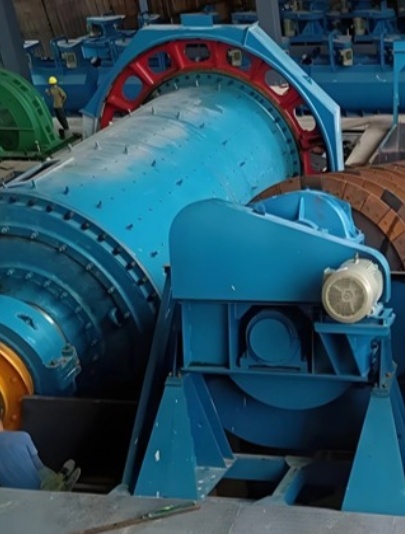
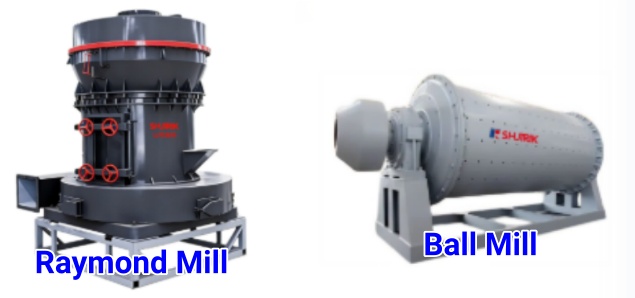
Raymond Mill: A classic grinding mill suitable for processing limestone powder of 80-325 mesh.
Ultra-fine Vertical Mill: High production efficiency, capable of processing limestone into finer nano-scale powder for high-end chemical fillers.
4. Uses of Limestone
| Application Areas | Processing Forms | Specific Applications |
| Construction Industry | Crushed Stone, Manufactured Sand | Concrete aggregate, roadbed subbase |
| Cement Manufacturing | Raw Meal | Core raw material for manufacturing silicate cement (approximately 80%) |
| Metallurgical Industry | Fluorescent Lime | Slagging agent in iron and steelmaking, removing impurities |
| Environmental Protection | Desulfurization Powder | Flue gas desulfurization in thermal power plants, reducing acid rain emissions |
| Agriculture | Quicklime/Powder | Adjusting soil pH |
Limestone, though seemingly ordinary, actually holds immense business opportunities. Your understanding of limestone and your choice of equipment directly determine the profitability of your mine. We hope this article will provide guidance for your limestone processing and help you increase profits.
Sandreck offers high-quality ore processing equipment, including stone crushers, sand making machines, grinding mills, gravity separation equipment, and flotation equipment. Please contact us if you have any needs.