
Dolomite is an important calcium-magnesium mineral resource on Earth, with abundant reserves. It plays a vital role in nature and human life. The industrial value of dolomite is particularly prominent, and its processed products can be applied to numerous industries.
Sandreck is a supplier of ore processing equipment, possessing professional experience and technology in ore processing. This article will introduce dolomite from four key aspects to help you fully understand its resource value and applications.
1. What is Dolomite?
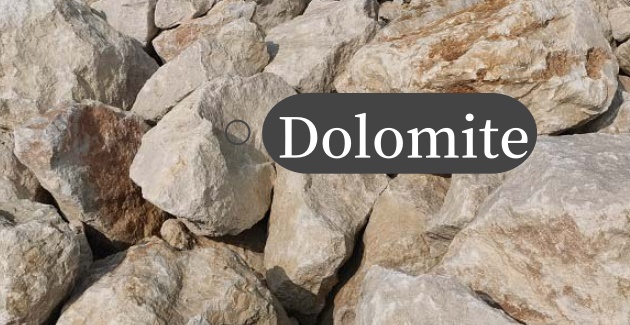
Dolomite is a mineral or rock primarily composed of calcium magnesium carbonate [CaMg(CO₃)₂].
Dolomite’s color can vary from white and gray to pink depending on impurities. Unlike limestone, which is mainly calcium carbonate, dolomite contains both calcium and magnesium, giving it unique chemical and physical properties.
A simple way to distinguish it from limestone is by using dilute hydrochloric acid. Dolomite will bubble, but much slower than limestone, due to the milder reaction of magnesium with acid.
| Major Components | Accompanying Minerals | Color | Hardness | Crystal Shape |
| Calcium (Ca) Magnesium (Mg) Carbon (C) Oxygen (O) | Calcite 、Chalcopyrite、Galena、Persilite、Gypsum、Quartz、Feldspar, etc. | Colorless 、White、Gray Pink、 Brown, etc. | 3.5-4 | Trigonal system、 Rhombohedral |
2. How is Dolomite Formed?
The formation process of dolomite is called “dolomitization,” which involves chemical changes in the material. Its main formation methods are as follows:
1. Primary sedimentation: In high-temperature, high-salinity seawater (such as tropical lagoons), dolomite can be formed directly by precipitation from water. However, this is relatively rare.
2. Secondary formation: This is the most important way dolomite forms.
Initial sedimentation: Limestone or limestone mud is deposited in a marine environment.
Magnesium enrichment: Magnesium-rich fluids (usually seawater) seep into the limestone.
Chemical reaction: Magnesium ions replace calcium ions in the carbonate structure.
Crystallization: Crystallization forms dolomite.
3. Microbial activity: Recent studies have shown that certain bacteria and microorganisms can promote the formation of dolomite.
Dolomite resources are found worldwide, with famous mines in the Midwestern United States, Ontario, Canada, Switzerland, Mexico, and Pamplona, Spain. Furthermore, the famous Dolomites Mountains in Italy are also composed of dolomite.

3. Dolomite Processing Methods
Dolomite processing transforms natural ore into products suitable for various downstream applications.
1) Crushing and Screening
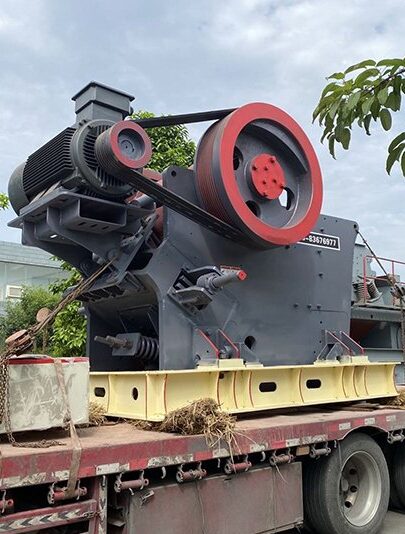
After mining, large pieces of dolomite ore are crushed to suitable particle sizes using equipment such as jaw crushers and impact crushers. Then, vibrating screens are used to classify the crushed material, producing gravel of different sizes to meet the needs of subsequent processing or direct application.
2) Grinding and Sorting
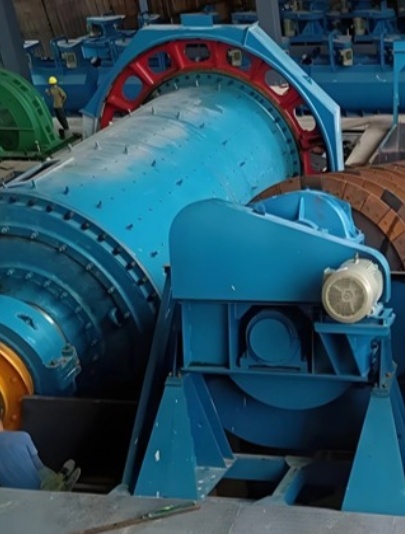
If you require fine powdered dolomite products (for agriculture, glass, etc.), the screened crushed stone can be fed into grinding equipment such as Raymond mills and ball mills for grinding. Then, iron impurities are removed by magnetic separators, and other minerals such as quartz and clay are separated by flotation and secondary separation methods, thereby improving the purity and whiteness of the product.
3) Calcination Process
Dolomite calcination is a crucial step in producing high-value products from mines. High-temperature heating alters the chemical composition and physical properties of dolomite, producing highly reactive calcined dolomite.
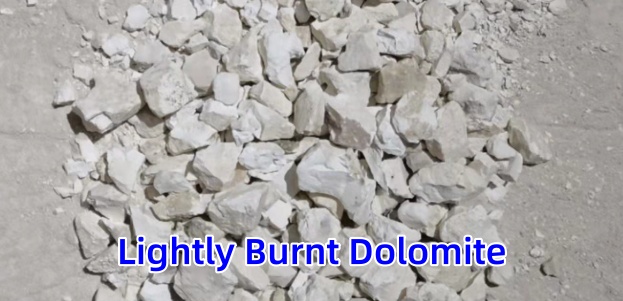
High-grade dolomite blocks or pellets are placed in a rotary kiln or vertical kiln and calcined under controlled temperature conditions of 900-1100℃. The resulting product is called calcined dolomite or “lightly calcined dolomite.” Its main components are a mixture of calcium oxide and magnesium oxide, and it has extremely high reactivity.
If calcined at a higher temperature (approximately 1500-1800℃), high-temperature calcined dolomite can be obtained. High-temperature calcined dolomite has a dense structure, volume stability, and good resistance to hydration, and is mainly used in high-grade refractory materials.
4) Storage
The calcined product will absorb moisture and deteriorate if exposed to humid air. Therefore, it needs to be stored in a dry and ventilated environment to prevent loss of its efficacy.
4. Uses of Dolomite
1) Construction Industry
- It can be used directly as building stone.
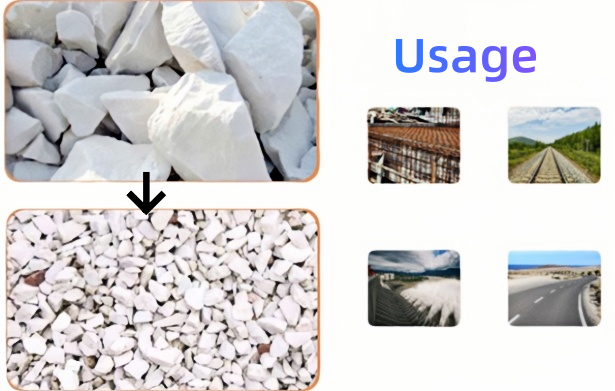
- It can be crushed into aggregate for concrete and asphalt.
- It can be polished for flooring and wall decoration.
- It can be added to cement to make magnesium dolomite cement. It has advantages such as fast setting and hardening speed, high compressive strength, good elasticity, and strong wear resistance.
2) Industry
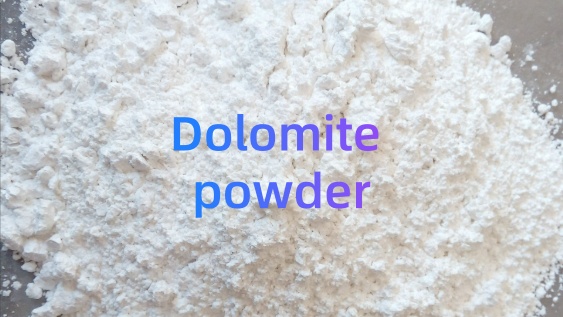
Dolomite powder can be used as a refractory material and flux in steel production to improve the hardness and toughness of steel. It can also be used in the smelting of copper, aluminum, and other non-ferrous metals, playing a role in desulfurization, dephosphorization, and protecting furnace linings.
3) Agriculture
- Fertilizer: Provides calcium and magnesium for crop growth, increasing yield.
- Feed Additive: Purified dolomite powder can supplement calcium and magnesium in livestock feed, promoting bone development.
- Soil Improvement: Adjusts soil pH, increasing crop yield by 15% to 40%.
4) Glass Products
Dolomite is rich in magnesium oxide, which can be used to reduce the cost of glass manufacturing. Dolomite powder acts as a flux, improving the strength and stability of glass.
5) Ceramic Products
Used in ceramic bodies and glazes, it replaces talc and calcite. It helps lower the firing temperature of the body while improving the transparency of the finished product. Furthermore, dolomite glazes reduce smoke and crystallization, ensuring firing stability.
6) Food and Pharmaceuticals
- Food Additives: High-purity dolomite powder can be used as an anti-caking agent and acidity regulator in food, in seasonings, baked goods, etc.
- Pharmaceutical Raw Material: It can be used in the production of calcium and magnesium supplements in health products or pharmaceuticals, and also as a filler in drug formulations.
Dolomite’s value stems from its unique composition and properties. Whether in mining, industrial production, or agricultural applications, a deep understanding of dolomite’s core principles allows for a fuller realization of its resource potential and the creation of greater economic value.
If you require dolomite processing solutions or technical consultation tailored to specific scenarios, please contact Sandreck. We are a professional manufacturer of mining processing equipment with many years of experience in this industry.