
As the owner of a mineral processing plant, you are well aware of molybdenum’s core value in industry. It is heat- and corrosion-resistant, and even small amounts can significantly improve material performance. However, mistakes at any step of the process, from mining to finished product processing, can squeeze your profit margins.
Sandreck, as a supplier of mineral processing equipment, has extensive experience in molybdenum mining and processing. This guide will outline the entire molybdenum processing flow from mining to finishing, helping you improve product recovery rates and grades.
Clarify Molybdenum’s Uses and Purity
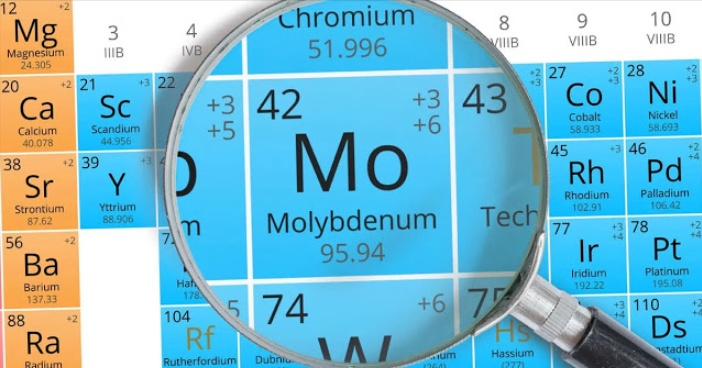
Before commencing mining and processing, you need to identify the core applications of molybdenum. This will directly impact your control over the grade of the finished product.
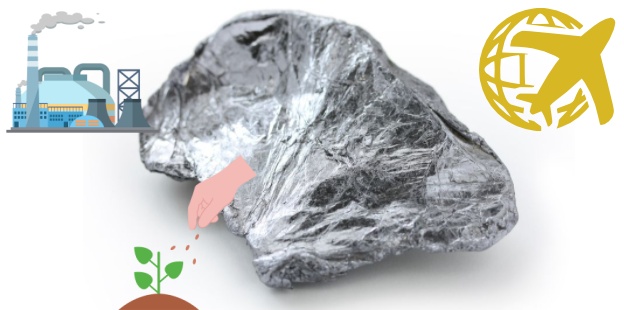
- Alloy Industry: Molybdenum steel offers higher strength, superior heat resistance, and corrosion resistance, making it an ideal material for construction, automotive, and military equipment. This requires a molybdenum concentrate grade of at least 45%.
- Chemical Industry: As a catalyst, it can improve refining efficiency. Higher purity is required for the molybdenum concentrate, necessitating strict control over impurity content.
- High-End Manufacturing: Industries such as aerospace, semiconductors, and new energy require high-purity molybdenum powder and wire. This necessitates advanced molybdenum purification processes to obtain high-grade, low-impurity finished products.
- Agriculture: Molybdenum is an essential micronutrient fertilizer for plants. Higher purity is also required for molybdenum.
Molybdenum Mining Stages
1. Identifying Molybdenum Ore Types
To develop a reasonable mining strategy and process flow, and to avoid additional costs associated with future equipment modifications, you need to understand the main types of molybdenum ore before mining begins.
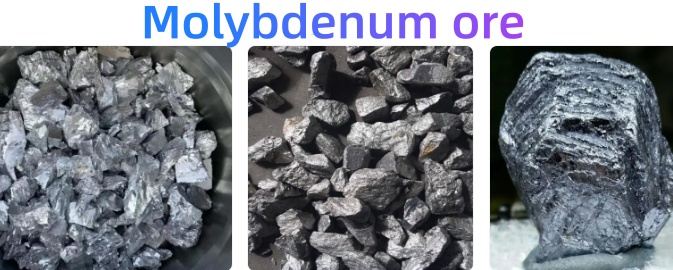
- Primary Molybdenum Ore: The main mineral is molybdenite (MoS₂), typically with high grades. Beneficiation processes are relatively simple, and profit margins are relatively stable.
- Associated Molybdenum Ore: Often found alongside copper, tungsten, and tin ores, with lower molybdenum content. Beneficiation requires consideration of the recovery rates of both primary and associated ores to avoid wasting mineral resources. This places higher demands on subsequent flotation separation processes.
- Secondary Deposits: Relatively few in number and usually small in scale, with low mining profits.
2. Mining Strategies for Different Locations
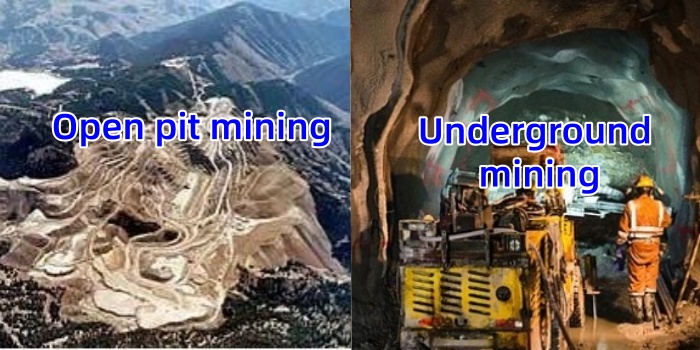
When the deposit is close to the surface, open-pit mining is the best option. This mining method is highly efficient and requires relatively low equipment investment. It allows for large-scale stripping of surrounding rock and ore, and is suitable for primary molybdenum ore deposits with large reserves and relatively uniform grades. In open-pit mining, careful planning of drainage and soil and water conservation are crucial to prevent environmental problems from impacting production efficiency.
If the ore body is deeply buried and the surface conditions are complex (e.g., crossing mountains or residential areas), underground mining is necessary. Underground mining requires highly sophisticated ventilation, support, and drainage systems, leading to increased safety investment. It is essential to prevent accidents such as collapses and water seepage, while optimizing transportation processes to minimize ore loss.
Backfilling method: Suitable for mines with high-value ore bodies. This method offers high recovery rates but is also more expensive.
Avalanche method: Utilizes the ore body’s own gravity and stress to cause it to collapse naturally. Suitable for large, low-grade deposits, but surface subsidence occurs.
Regardless of the method chosen, a trade-off must be made regarding: initial investment, operating costs, recovery rate, safety risks, and environmental impact.
Molybdenum Extraction and Processing
Step 1: Crushing
The purpose of crushing is to break the large ore pieces into smaller pieces for subsequent grinding. A three-stage closed-circuit crushing process can be used:
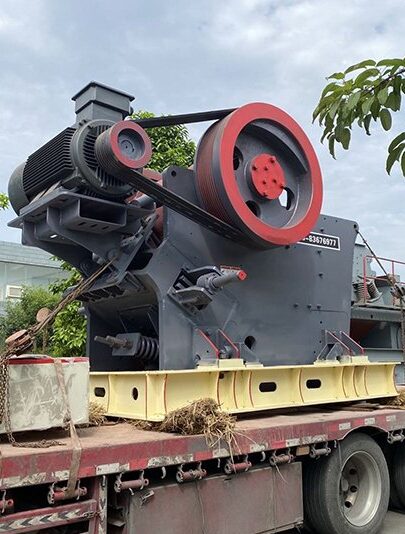
(1) Coarse crushing: Use a jaw crusher to crush the ore to 10-20 cm.
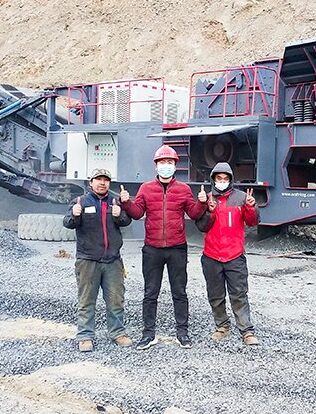
(2) Medium crushing: Use a cone crusher to crush the ore to 2-5 cm.
(3) Fine crushing: Use an impact crusher or sand making machine to crush the ore to 12-15 mm.
Finally, the unqualified ore is returned to the medium crushing stage for further processing via screening equipment.
Step 2: Grinding
Grinding is a crucial step in determining flotation efficiency. Only when the ore is ground to a certain fineness can the useful minerals be fully exposed from the vein and accurately separated in the subsequent flotation process. A two-stage closed-circuit grinding process can be used.
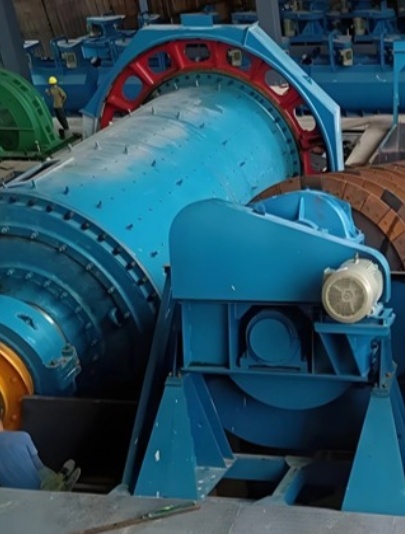
(1) Place the crushed ore into a ball mill. The ore is ground into a slurry using the impact and grinding action of the steel balls.
(2) After being screened by a classifier, the qualified slurry (fineness is usually -200 mesh, 60%-80%) is sent to the flotation process. The unqualified slurry is returned to the ball mill for re-grinding.
Step 3: Flotation
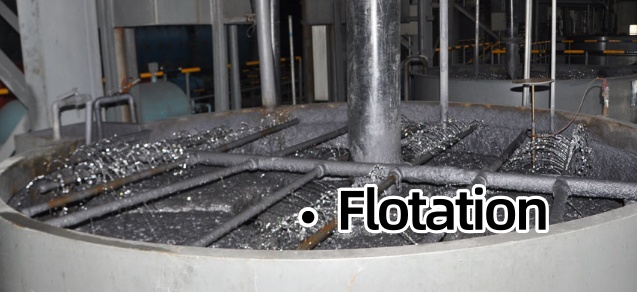
- Pulp Conditioning: Adjust the pH of the pulp (usually 7-9) and add regulators to suppress gangue (e.g., lime to suppress pyrite, water glass to suppress silicate gangue).
- Flotation Reagents: Add collectors (commonly kerosene, diesel, etc.) to make the molybdenum ore surface hydrophobic, making it easier for it to adhere to bubbles.
- Flotation Machine: Finally, add a frother. Stable bubbles are generated, bringing the molybdenum ore to the pulp surface, forming a frothy product.
- Scum Collection: Scrape off the molybdenum-rich scum to obtain a rough molybdenum concentrate.
Step 4: Roasting
The rough molybdenum concentrate obtained from flotation contains a large number of impurities (e.g., sulfur, carbon, arsenic, etc.) and needs further purification through roasting.
- Traditional Roasting: Place the rough molybdenum concentrate in a multi-furnace/rotary kiln and oxidize MoS₂ to industrial-grade molybdenum calcinate (MoO₃) at a temperature of 500-650°C to obtain a higher-grade molybdenum concentrate. Roasting produces sulfur dioxide (SO₂). Therefore, proper exhaust gas treatment is necessary to prevent excessive emissions of harmful gases and environmental problems.
- High-pressure autoclave oxidation: Suitable for processing low-grade or complex concentrates. Environmentally friendly, but with higher input costs.
- Chlorination roasting: Produces molybdenum trichloride. Used to produce high-purity molybdenum products.
Against the backdrop of energy transition and a new technological revolution, the importance of molybdenum is growing daily. Beneficiation plants that can supply this critical material sustainably and efficiently will be well-positioned in future markets.
If you have any questions about new projects or wish to optimize existing beneficiation processes, please contact Sandreck. Our professional team is dedicated to solving your problems.