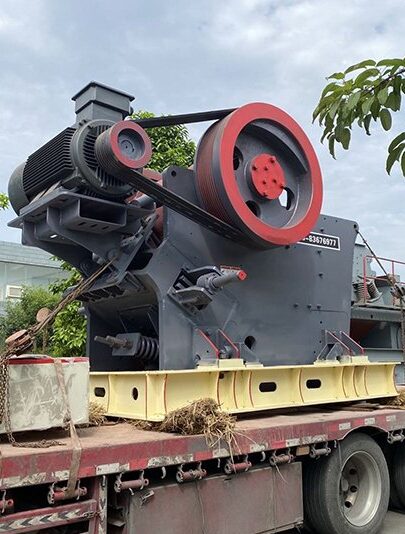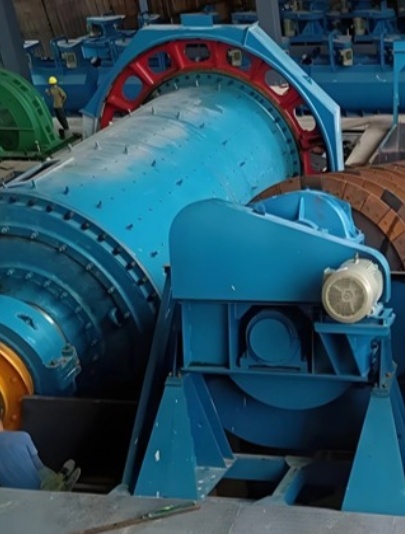

Stone grinding mills serve as core equipment in industries such as mining, metallurgy, and building materials. Fundamentally, they utilize a rotating shell and grinding media to reduce large ore lumps to a target particle size (typically 0.074–0.4 mm), thereby achieving the liberation of valuable minerals from the gangue and preparing the material for subsequent beneficiation.
Working Principle of Stone Grinding Mill
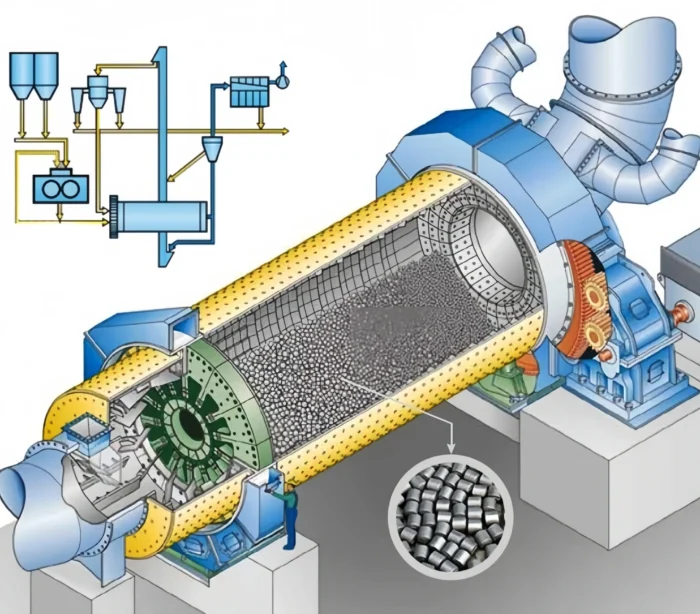
The cylindrical shell rotates horizontally, driving the internal grinding media (steel balls, steel rods, or the ore itself) into motion.
Impact: The media are lifted and then dropped, crushing the ore.
Grinding: The media slide and roll, abrading the ore into fine particles.
Wet / Dry Methods: Wet grinding involves adding water to form a slurry (the mainstream method, offering dust suppression and high efficiency). Dry grinding relies on airflow to carry away the fine powder.
Main Types of Stone Grinding Mill
1. Raymond Mill
The Raymond mill is a vertical ring-roller mill utilizing pneumatic conveying and an integrated classification system. It simultaneously performs drying, grinding, and classification operations on a variety of materials, including limestone, clay, and ores. The equipment is widely used to process non-flammable, non-explosive materials with a Mohs hardness below 7 and a moisture content below 6%, including limestone, talc, quartz, gypsum, marble, wollastonite, bentonite, manganese ore, phosphate rock, ilmenite, mica, kaolin, rare earth, and dolomite. The resulting powder features uniform fineness, achieving a 99% pass rate.
2. Ball Mill
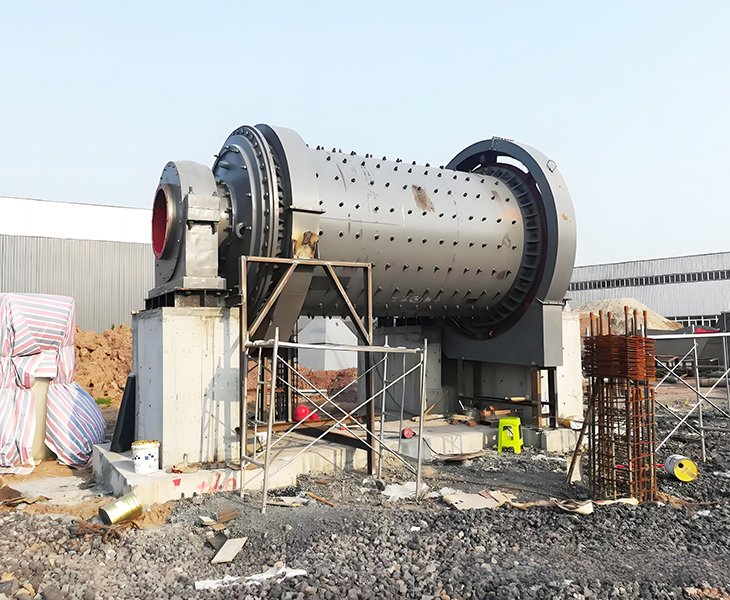
The ball mill is a key piece of equipment for secondary grinding following the initial crushing stage. It is characterized by a high reduction ratio, simple structure, strong adaptability, ease of replacing wear parts (such as liners), mature technology, and reliable operation.
Grinding Media: Steel balls (diameter: 25–150 mm).
Features: High adaptability, large reduction ratio, uniform product fineness.
Discharge Type: Grate type (coarse grinding, high capacity) / Overflow type (fine grinding, simple structure).
Applications: Fine grinding of metallic ores (iron, copper, gold) and non-metallic ores (quartz, limestone).
3. Rod Mill
Rod mills are primarily used for coarse grinding, mineral liberation, or particle shaping of ores and other materials. As the mill rotates, steel rods impact and grind the material, producing fine particles. Rod mills are generally suitable only for dry grinding operations.
Grinding Media: Steel rods (50–100 mm in diameter, slightly shorter than the mill shell).
Features: Line contact, minimal over-grinding, and more uniform particle size distribution.
Applications: Gravity separation of tungsten and tin ores, construction sand production, and cement clinker processing.
4. Vertical Roller Mill
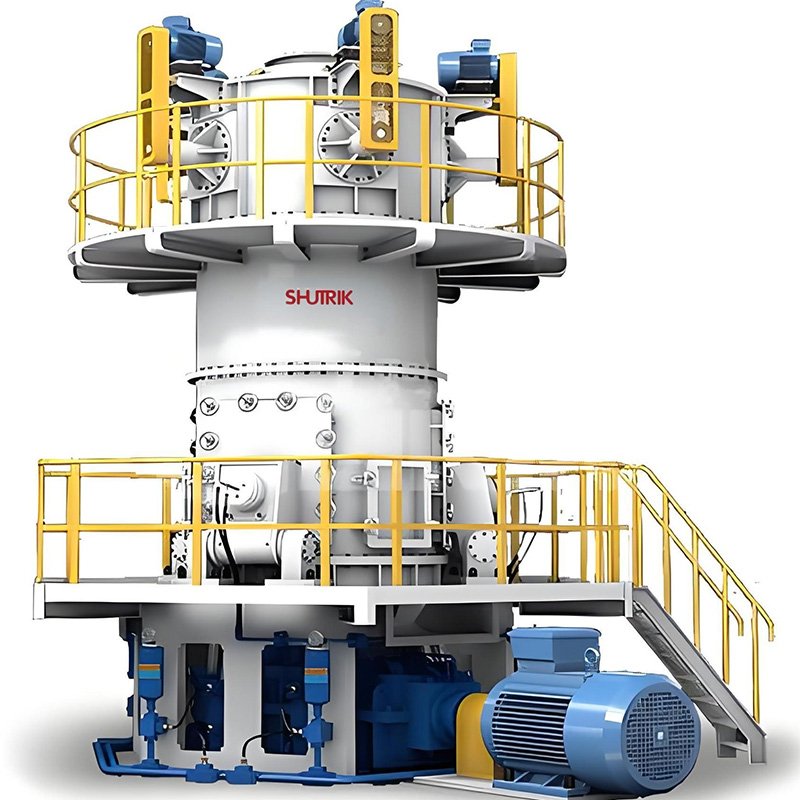
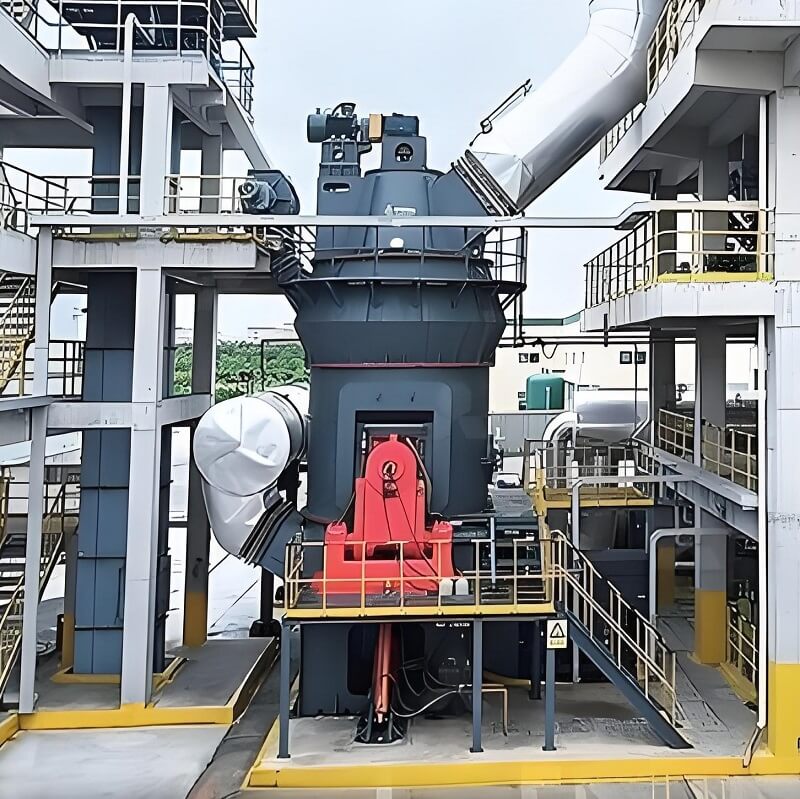
The vertical roller mill utilizes the relative motion between grinding rollers and a grinding table to pulverize materials. This equipment is characterized by a streamlined process flow, a compact footprint, low investment costs, high efficiency, and energy-saving, eco-friendly performance. It is primarily used for processing cement raw meal, slag, coal, limestone, and various non-metallic ores. Depending on the fineness of the finished powder, vertical roller mills are classified as standard or ultra-fine.
5. Ultrafine Grinding Mill
The ultrafine grinding mill is designed to produce ultrafine powders or micron-sized particles for industries such as construction, metallurgy, mining, chemicals, cement, fertilizers, and ceramics. It is primarily used to process non-flammable, non-explosive, and brittle materials with a Mohs hardness below 6, such as calcite, limestone, dolomite, barite, and phosphate rock. The fineness of the finished product can reach up to 3,000 mesh.
Advantages of Stone Grinding Mill
- High efficiency. Adopt advanced grinding technology to achieve high-efficiency, low-energy grinding.
- Adjustable fineness. The stone grinding machine can adjust the discharge particle size, with both coarseness and fineness adjustable.
- Easy maintenance. The important parts have good wear resistance, long service life and low maintenance cost.
- Reduce noise. Dust collectors and sound insulation are used to reduce dust emissions and noise pollution.
Application of Stone Grinding Mill
1. Mine Mineral Processing (Core Application)
1) Metal Mines
Iron, copper, gold, silver, lead-zinc, tungsten-tin, and manganese ores, etc. Grinding run-of-mine ore and separating valuable minerals through processes such as flotation, magnetic separation, gravity separation, and cyanidation (for gold) are essential steps in mineral processing.
2) Non-metallic Mines
Quartz sand, feldspar, fluorite, phosphate rock, talc, kaolin, graphite, barite, etc., are processed into industrial powders for use as raw materials.
2. Building Materials Industry
Cement: Grinding limestone, gypsum, and clinker to produce cement raw materials and finished products.
Crushing and powder production for sand and gravel aggregates, ceramic raw materials, refractory materials, and glass raw materials (silica).
3. Metallurgical Industry
Raw material preparation for iron, steel, and non-ferrous metal smelting; grinding of sinter, flux, and slag; processing of smelting tailings, steel slag, and slag micro-powder.
4. Chemical and Powder Industries
Grinding of chemical ore raw materials, fillers, pigments, and desulfurization limestone powder for use in chemical production, flue gas desulfurization, coatings, rubber, and plastic fillers.
5. Coal / Power Industry
Pulverised coal preparation (fuel for power plant boilers and industrial kilns) and fine grinding of coal slime; also used for powder production in the comprehensive utilisation of coal gangue.
Sandeck is a well-known stone-grinding mill manufacturer in China. We have various grinding mill types and can provide professional solutions for our customers. We want to be your trusted, long-term partner. If you have any needs, please contact us!