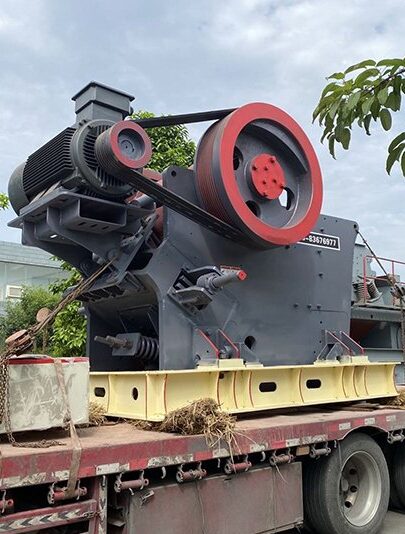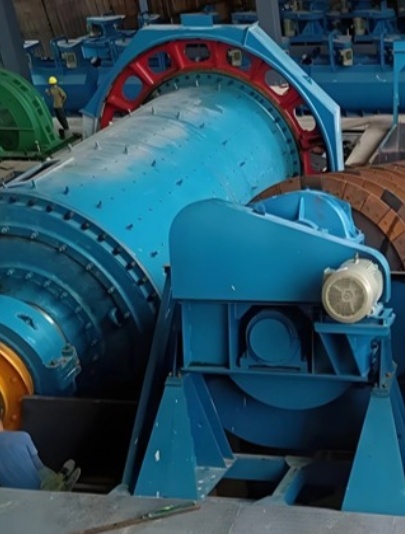

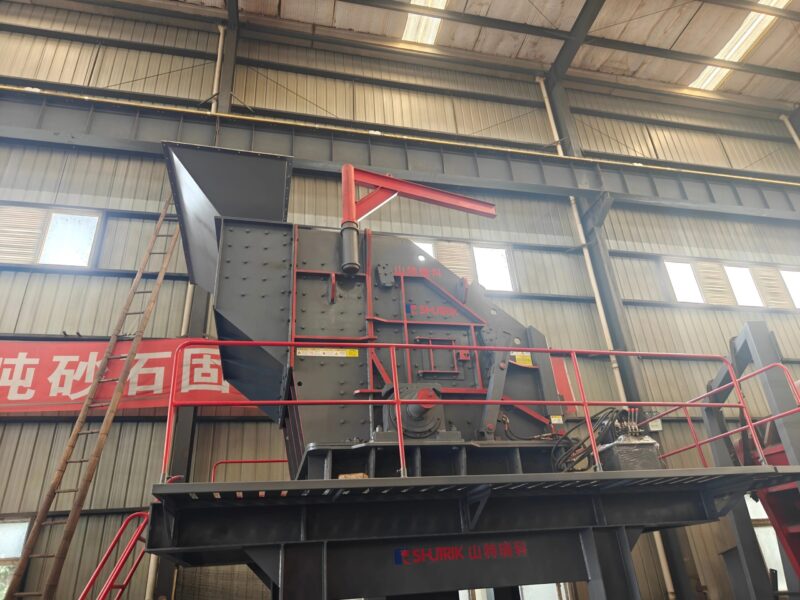
The impact crusher is a common piece of equipment used for medium-to-fine crushing of rocks, aggregates, and other materials. Sandreck is a professional manufacturer of crushing machinery. In this article, we will provide a detailed introduction to the working principles and operational process of the impact crusher, enabling you to gain a precise understanding of how it crushes rocks.
Working Principle of the Impact Crusher
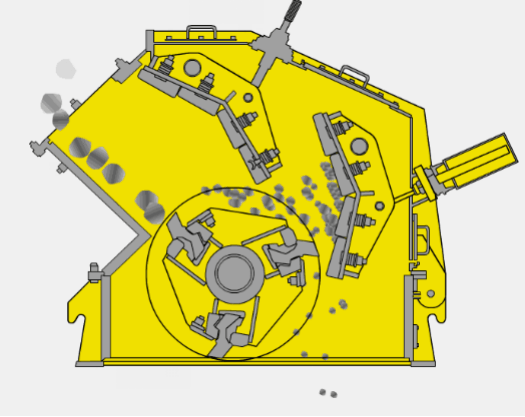
It primarily relies on impact energy to crush materials. Once material enters the crushing chamber, the crusher’s high-speed rotating blow bars exert intense impact forces upon it, rapidly shattering it. Subsequently, the shattered material is thrown upward into the impact chamber.
Working Process of the Impact Crusher
Let us examine the specific operational sequence of the impact crusher in detail. This constitutes a cyclical process comprising four distinct steps. By harnessing high speed, impact forces, and repetitive action, it is capable of crushing even the hardest rocks (such as granite, limestone, or basalt).
Step 1: Feeding
Raw rock is fed into the impact crusher through the feed inlet. The rock material is typically transported via a conveyor belt, and its dimensions must comply with the specifications of the crusher’s feed opening. During the primary crushing stage, the diameter of the feed material can reach up to 1 meter (3 feet).
The impact crusher is fully capable of processing large and irregularly shaped rocks.
Step 2: Crushing
The kinetic energy of the rotor is transferred to the rock material, causing it to fracture into smaller fragments. As the rotor spins at high velocity, the blow bars (also known as impact blocks) mounted upon it strike the rock material with immense force.
The magnitude of the impact force depends on the rotor’s rotational speed and the weight of the blow bars. The higher the rotational speed and the heavier the blow bars, the greater the resulting impact force—thereby enabling the crushing of harder rock materials.
Step 3: Secondary Crushing
Under the influence of the rotor’s centrifugal force, the stones being crushed are thrown outward. Subsequently, these stones strike the stationary impact plates (crushing plates) located within the crushing chamber. In some instances, the stones rebound back toward the rotor, where they are struck once again by the impact hammers. This repetitive cycle of impact and rebound ensures that the stones are crushed into particles of uniform size.
Step 4: Discharge
Once the stones have been crushed to a size small enough to pass through the discharge gap, they exit the crushing chamber. Since the discharge gap is adjustable, operators can utilize this feature to control the particle size of the final product.
An impact crusher is a powerful and highly efficient piece of equipment. It utilizes the principles of high-speed impact and collision to crush stone materials. Consequently, a high-quality crusher can also help you achieve significant savings on operating costs.
Whether you are utilizing a mobile impact crusher at a construction site or deploying stationary equipment in a quarry, gaining a thorough understanding of its crushing principles will enable you to operate more efficiently and produce finished materials of the highest quality.
We are a manufacturer of stone crushers based in China. We offer high-quality impact crushing equipment backed by extensive manufacturing experience. Should you have any requirements, please do not hesitate to contact us at any time.