
Limonite is a weakly magnetic iron ore resource widely distributed in the Earth’s crust, with reserves second only to hematite and magnetite. After processing, limonite can provide high-quality iron ore resources for the steel industry, possessing significant industrial value.
Although limonite is easy to mine, it has high water content, fluctuating grades, and weak magnetism. Using unsuitable beneficiation processes not only results in low iron ore extraction rates but also high overall costs. Sandreck, as a professional manufacturer of mining processing machinery, will detail in this article how to use suitable machinery to maximize iron extraction from limonite.
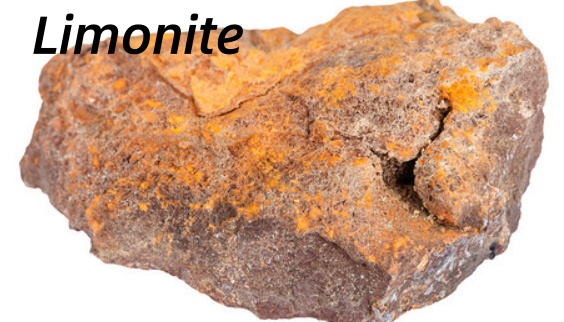
Limonite Overview
Composition: Limonite contains 35%–55% iron. The raw ore contains various minerals (such as acicular ferrite, fibrous ferrite, silica, and clay), resulting in a complex composition and making extraction difficult.
Characteristics: The ore is loose and porous, easily forming mud in water. Its physical properties are unstable, hindering separation. The ore has very weak magnetism, leading to low extraction rates with conventional magnetic separation. The ore grade fluctuates greatly, making it difficult to select a suitable beneficiation process.
Origin: Large limonite deposits are distributed in China, Russia, the United States, Australia, Brazil, India, and other regions.
Uses: After processing and extraction, limonite has the following uses.
① It can be directly smelted, or used as a metallurgical additive to reduce production costs.
② It can be used in the production of pigments and magnetic products.
③ It is an important raw material for manufacturing abrasives and refractory materials.
④ It can be used in agriculture to improve soil structure.
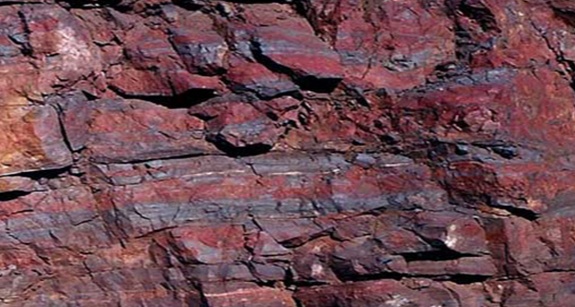
How to Extract Iron from Limonite
Due to the low grade and complex composition of iron ore, a combined beneficiation method can significantly improve the recovery rate of limonite. The specific operating steps are as follows:
Step 1: Pre-treatment of Impurities
Limonite is mostly found in swamps and wetlands, containing a large amount of moisture, silt, and other impurities, making direct processing very costly. Pre-treatment to remove impurities can improve the recovery rate.
Natural Drying: Limonite easily turns into mud when exposed to water. In-ore drying can reduce its moisture content, facilitating subsequent processing.
Pre-screening: Use a vibrating screen to remove larger gangue and impurities, reducing ineffective beneficiation.
Dewatering: Use a drum dryer to control the moisture content of the limonite to below 12%.
You can use a vibrating screen and hydrocyclone to process heavily turbid materials to reduce the loss of valuable minerals.
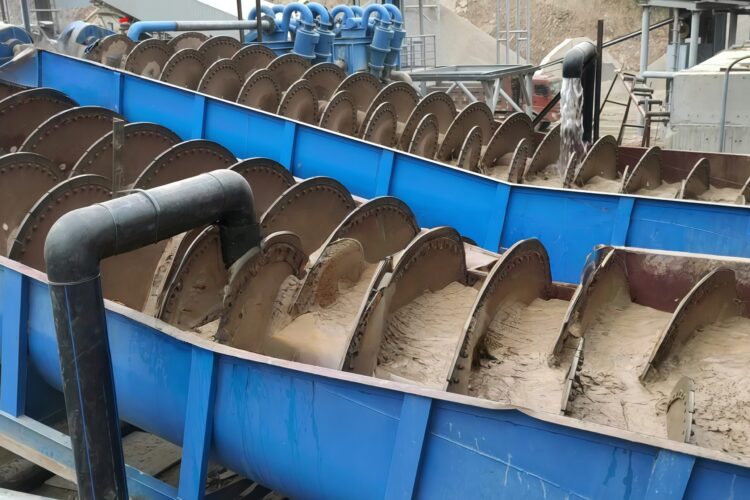
Step 2: Limonite Crushing
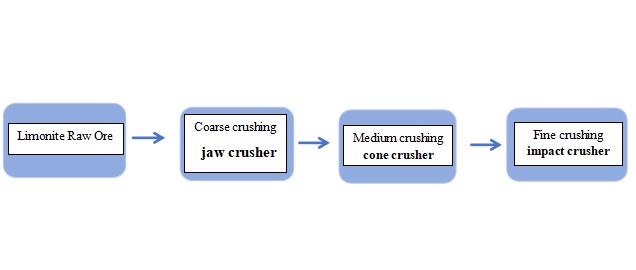
Although limonite has a loose structure, it is relatively tough. Crushing limonite refines the pre-treated ore, ensuring uniform particle size and improving subsequent processing efficiency. A three-stage closed-circuit crushing system can achieve the desired particle size.
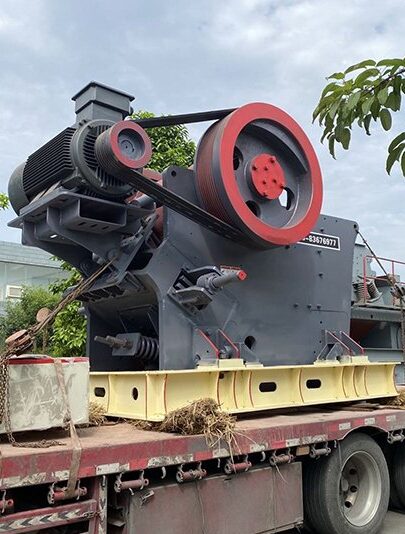
Coarse Crushing: The pre-treated limonite is fed into a jaw crusher via a vibrating screen and crushed to 10-15cm.
Medium Crushing: A cone crusher is used for further crushing to 2-5cm.
Fine Crushing: An impact crusher is used for crushing to 5-15mm.
Finally, the desired particle size is determined by classifier equipment. Unqualified particles are returned to the crusher for secondary crushing. If you have higher requirements for the quality and powder content of the finished product, a double-roll crusher can meet your needs.
 Step 3: Magnetizing Roasting
Among various mineral processing techniques, magnetizing roasting combined with magnetic separation is an effective method for processing low-grade, complex-composition limonite and is a core step in limonite processing. This process enhances the magnetism of limonite, creating conditions for subsequent magnetic separation.
The crushed material is fed into a rotary kiln, a reducing agent (anthracite) is added, and a suitable amount of air is introduced. At this point, the limonite will be reduced to magnetite, and the moisture content will also decrease. After roasting, the material is ventilated and cooled to room temperature to prevent it from combining with carbon dioxide in the air, thus reducing its magnetism.
The rotary kiln roasting process can be adjusted according to the needs of most mineral processing plants, but attention must be paid to the amount of reducing agent, roasting temperature, and time. We recommend a reducing agent dosage of 3%-5% of the raw ore mass, a roasting temperature of 800-850℃, and a roasting time of 60-90 minutes.
Step 4: Grinding
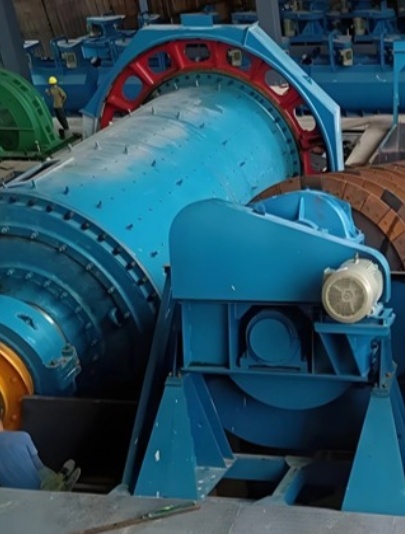
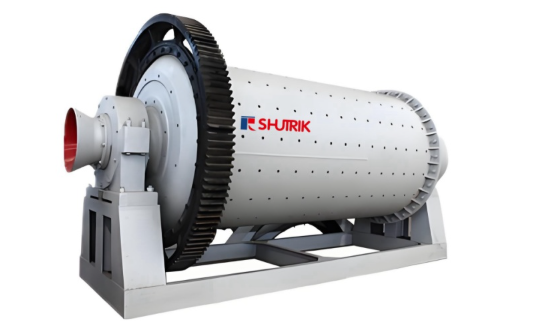
Grinding the roasted limonite using a ball mill allows for complete dissociation of the iron ore particles, releasing more magnetically separable iron minerals.
The ball mill lining is made of wear-resistant material, resulting in low maintenance costs. Different sized steel balls can be selected according to the desired product particle size; finer steel balls result in higher magnetic separation recovery rates. However, it is also important to control the grinding time and equipment speed to avoid increasing energy consumption and damaging valuable minerals.
The ground mineral powder can be screened to remove coarse particles, and then ground again.
Step 5: Magnetic Separation
The grade of iron ore obtained by the magnetic separator is closely related to the final yield. During the magnetic separation process, you can obtain iron ore concentrate with a grade of 62.94%. If the initial grade is below 60%, a second magnetic separation with increased magnetic field strength is required. The tailings from the magnetic separation, after dewatering, can be used in projects such as brick making and mine backfilling to maximize resource utilization.
Note: Each deposit has its own unique characteristics. Before determining the final beneficiation plan, we recommend that you conduct a beneficiation process flow test to ensure the scientific validity of the process.
There are many difficulties in limonite processing, but combining the ore characteristics and parameters, choosing the right process and equipment, you can almost realize the double improvement of iron grade and recovery rate.
As a professional mining processing machinery supplier, we not only provide equipment, but also provide technical support for the whole process of mineral processing. If your mine has the same problem, feel free to contact Sandreck.