
I. Introduction
In fields such as mineral mining, sand and gravel production, and construction waste disposal, choosing the right crushing equipment is crucial to the success of a project.
When faced with two mainstream options—Fixed Crushing Plants and Mobile Crushers—many investors often struggle to make a decision. This article will provide an in-depth analysis from multiple dimensions to help you make the most informed choice.
II. Core Characteristics of Each Option
(A) What Is A Stationary Crushing Plant?
1. Definition: A Complete Fixed Production System
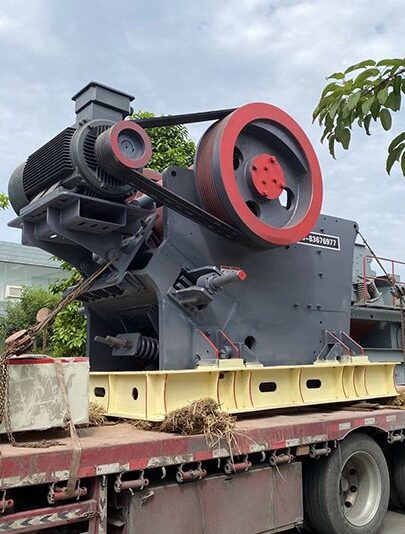
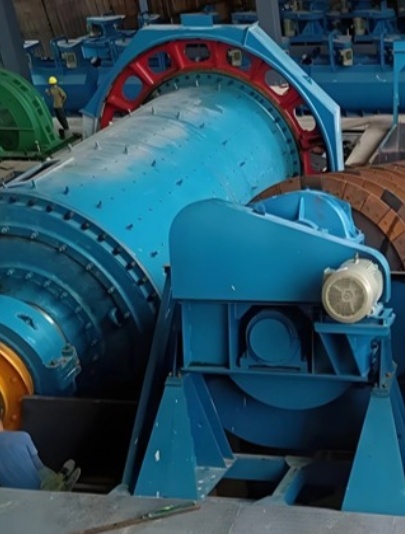
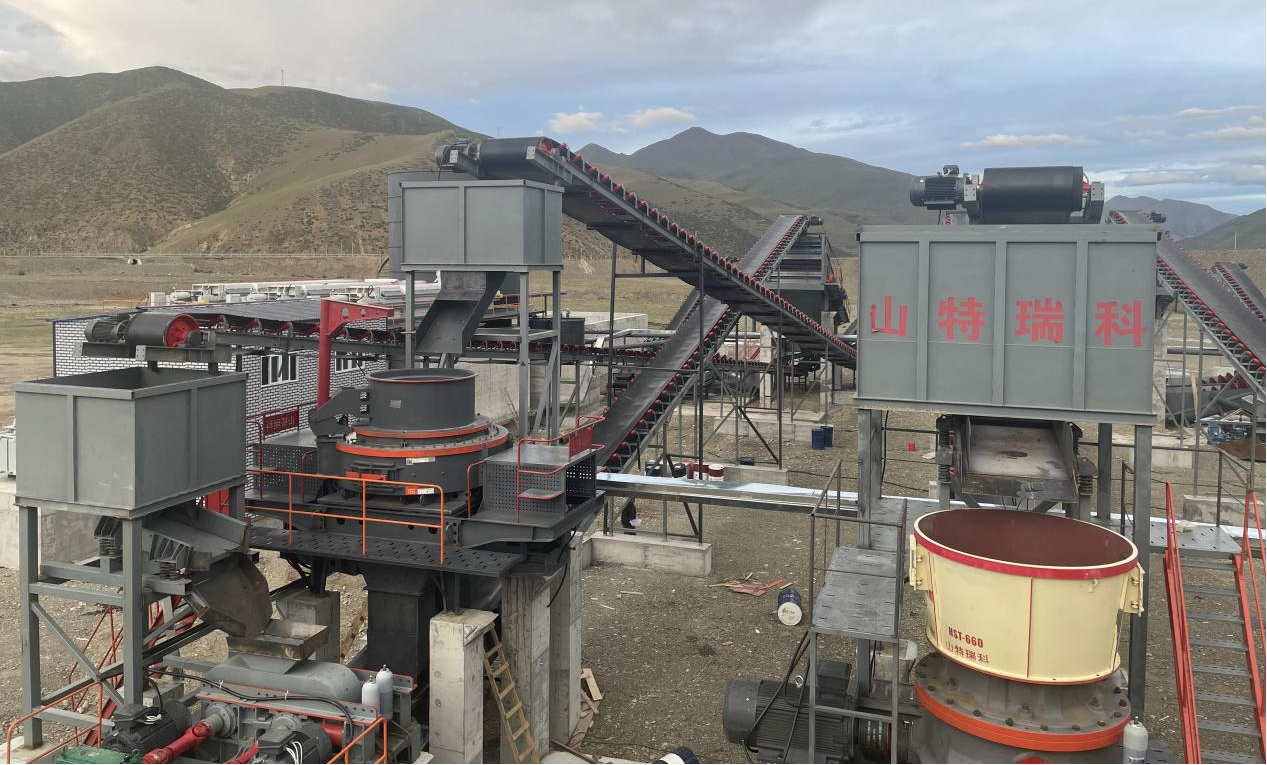
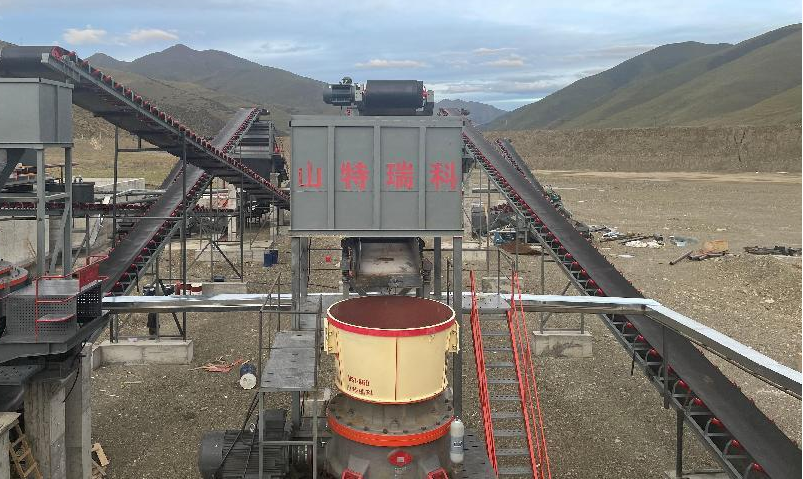
A fixed Crushing Plant is not a single piece of equipment, but a complete production system composed of multiple Fixed Crushers (such as Jaw Crushers, Cone Crushers, and Sand Making Machines) and auxiliary equipment including Feeders, Conveyors, Vibrating Screens, and Sand Washers.
2. Installation Requirement: Fixed Site + Infrastructure Construction
It requires us to construct concrete foundations or workshops on a selected fixed site, then install equipment and lay pipelines in accordance with the production process. Once completed, it operates like a “small factory,” running stably in the same location for a long time.
3. Core Advantages & Applicable Scenarios
Advantages: Its core advantages lie in “systematization” and “fixation,” making it highly suitable for long-term, stable, and large-scale material processing.
Typical Scenarios: Ore processing in large mines, sand and gravel production in large building material factories.
(B) What Is A Mobile Crushing Plant?
1. Definition: An Integrated Mobile Operation Unit
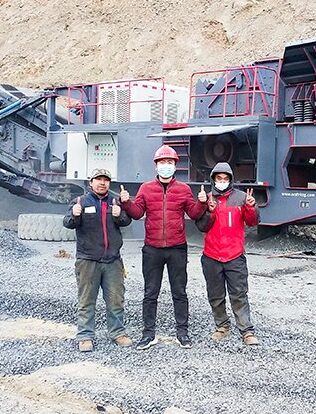
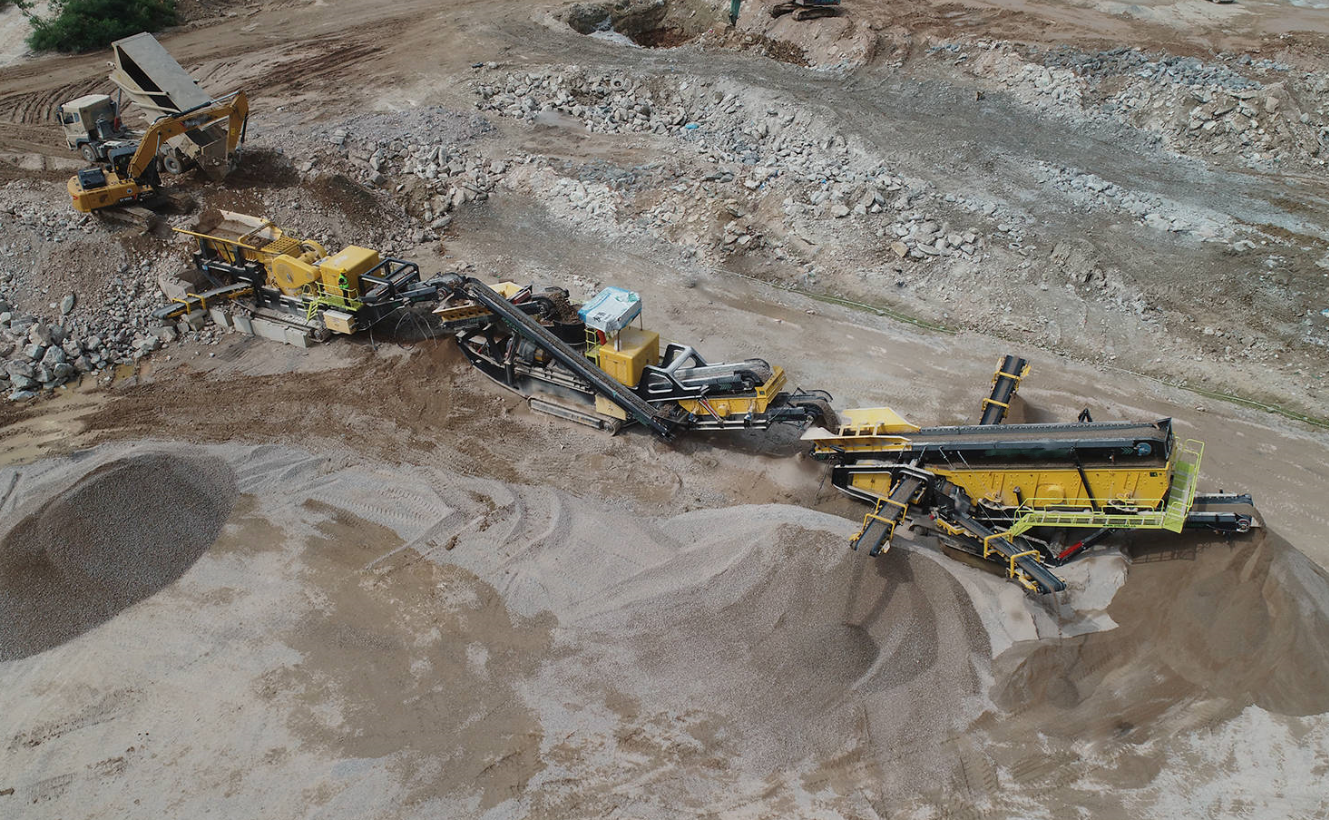
A Mobile Crusher is an “integrated mobile operation unit”. It highly integrates Crushers, Feeders, Vibrating Screens, Conveyors, and even dust removal devices onto one or more movable frames (Wheel-crusher or Track-crusher).
2. Installation Requirement: No Infrastructure, Direct Deployment
We do not need to carry out complex foundation construction; instead, we can directly transport it to the job site. Usually, it can be put into production after debugging for no more than 48 hours. After the task is completed, it can quickly move to the next construction site, offering extremely high flexibility.
3. Core Advantages & Applicable Scenarios
Advantages: Its core value lies in “portability” and “immediacy,” making it ideal for scattered and temporary crushing needs.
Typical Scenarios: Stone crushing for highway maintenance, resource utilization of construction waste at urban demolition sites.
III. A More Detailed Comparison of the Main Differences
A. Site and Infrastructure Requirements
| Type | Requirements | Key Details |
| Fixed Crushing Plants | High Requirements | – Need open sites with good transportation, far from habitations.- Require large investment in foundations, workshops, and water/electricity lines.- Infrastructure cycle: 1-3 months.- Once erected, unmovable. |
| Mobile Crushers | Low Requirements | – Only need the equipment to reach the site (track-mounted models adapt to rough terrain).- No infrastructure needed; put into operation immediately upon arrival.- Relocation: Transported by trailer; full process takes 1-2 days. |
B. Cost of Investment
1. Fixed Crushing Plants: Three-Part Cost Structure
- Equipment Cost: Lower unit price compared to mobile crushers.
- Infrastructure & Supporting Cost: Accounts for 30%-50% of total investment (foundations, workshops, etc.).
- Long-Term Cost: Relatively low maintenance costs, but expansion/relocation = new investment.
2. Mobile Crushers: Equipment-Focused Cost Structure
- Equipment Cost: Price of an integrated mobile crushing plant is 2-3 times that of fixed production line equipment with the same capacity.
- Long-Term Cost: Slightly higher maintenance costs (due to high integration), but no infrastructure or long-term site rental fees.
- Key Advantage: Total early-stage investment is more controllable; no relocation costs.
C. Capacity and Efficiency
1. Fixed Crushing Plants: Large-Scale Stable Output
- Automation Level: Fully automated whole-process operations (raw material → crushing → screening → finished product).
- Daily Capacity: Small plants: 500-1000 t/s; large plants: over 5000 t/s.
- Operation Mode: Supports 24/7 continuous operation, suitable for scenarios with stable long-term orders.
2. Mobile Crushers: Medium-to-Small-Scale Flexible Adaptation
- Capacity Limitation: Constrained by equipment size and integration; daily capacity ranges from 100-500 t/s.
- Key Advantage: Fits the “on-demand production” model, effectively avoiding equipment idleness during project gaps.
- Suitable Scenarios: Projects with limited processing volume or scattered operation locations.
D. Applicable Scenarios: “Long-Term Bases” vs. “Mobile Operations”
1. Fixed Crushing Plants: For Long-Term, Fixed Planning
Ideal Conditions:
- Projects with a cycle of 10+ years (e.g., long-term mine operation).
- Fixed production bases supplying stable clients (e.g., a plant in a building material area supplying concrete mixing plants long-term).
Core Value: Maximizes high capacity and scale benefits via “fixed customer base + fixed site.”
2. Mobile Crushers: For Scattered, Changing Projects
Ideal Conditions:
- Businesses with frequent site changes (e.g., construction waste recycling companies following demolition projects).
- Small-scale mining in mountainous areas (multiple small mines with limited reserves; building fixed plants is uneconomical).
Core Value: Adapts to changing sites and avoids waste from idle fixed equipment.
IV. How to Choose?: Focus on These 4 Key Points
(a) First: Evaluate Project Cycle & Capacity Requirements
| Selection Criterion | Recommended Equipment |
| Project cycle ≥ 3 years + daily capacity ≥ 1000 tons | Fixed Crushing Plant |
| Project cycle ≤ 1 year + daily capacity ≤ several hundred tons | Mobile Crusher |
(b) Second: Assess Site Conditions & Flexibility Needs
- Choose Fixed Crushing Plant: If you have a fixed, spacious, flat site that allows infrastructure construction.
- Choose Mobile Crusher: If your site is unfixed, terrain is complex (mountainous areas, narrow urban corners), or you need frequent relocation with project progress.
(c) Third: Calculate Cost Account – Short-Term Investment vs. Long-Term Returns
Fixed Crushing Plant: Suitable for Long-Term Cost Optimization
- Requirement: Sufficient budget + ability to accept 1-3 months of infrastructure cycle.
- Benefit: Lower long-term operating costs + obvious scale benefits.
Mobile Crusher: Suitable for Rapid Start-Up & Budget Constraints
- Requirement: Limited budget + need for quick start-up to recover funds.
- Benefit: Saves infrastructure costs; rapid commissioning offsets higher equipment prices.
(d) Fourth: Consider Material Characteristics & Environmental Requirements
1. Fixed Crushing Plant: For High-Hardness, Single-Composition Materials
- Ideal Materials: Granite, iron ore (bulk materials with high hardness and single composition).
- Advantage: Can be flexibly equipped with professional crushing equipment (e.g., cone crushers) for higher efficiency and better finished particle shape.
2. Mobile Crusher: For Complex Materials & Strict Environmental Scenarios
- Ideal Materials: Construction waste containing steel bars (complex materials requiring on-site impurity separation).
- Environmental Advantage: Equipped with basic dust removal devices; simpler approval process, suitable for urban operations with strict environmental and site restrictions.

V. Conclusion
In the end, there’s no absolute “better option” between fixed crushing plants and mobile crushers, but simply the “more suitable for you.”
If you are left weighing up the balance between fixed and mobile solutions, please do not hesitate to contact us. With abundant project experience and a professional team, we would be glad to offer you a full range of services—from equipment selection and scheme design to installation and maintenance—securing your crushing operations are trouble-free and profitable!