
As a mineral processing plant owner, you must be well aware of the core value of molybdenum in industry – it is resistant to heat and corrosion, and with only a small addition, it can significantly enhance the properties of materials. But you’re also inevitably plagued by the questions: How should you mine different types of molybdenum ore? How can you improve recovery and grade in the flotation process?
From the mine to the finished product, mistakes at every step of the process can squeeze your profit margins. This guide will help you address these challenges by providing an overview of the entire molybdenum process, from mining to processing.
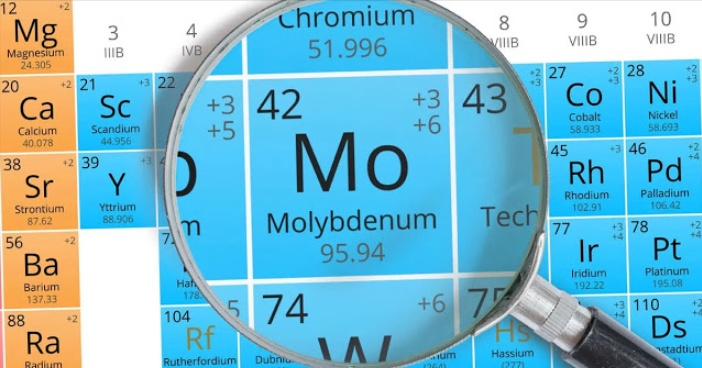
Molybdenum uses: Why this metal is so important
Before you get down to the business of mining and processing, you need to identify the core application scenarios for molybdenum, which will have a direct impact on your control of the finished grade.
Alloying: Molybdenum steel is stronger, more heat- and corrosion-resistant, making it ideal for construction, automotive and military equipment. This requires you to process molybdenum concentrates with a grade of at least 45%.
Chemical industry: as a catalyst to improve the efficiency of oil refining. The purity of your molybdenum concentrate is more demanding and impurity levels need to be controlled.
High-end manufacturing: Aerospace, semiconductor, new energy and other industries need high-purity molybdenum powder and wire. This requires you to increase the molybdenum purification link to get the finished product with high grade and less impurities.
Agriculture: Molybdenum is an essential trace element fertilizer for plants. The purity requirement for it is also higher.
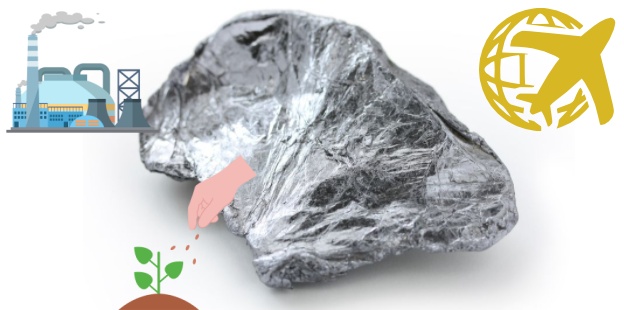
Molybdenum Mining Stages
1. Classification of Molybdenum Ore
The main types of molybdenum deposits you need to know in order to develop mining strategies and processes, and to avoid the increased costs of retrofitting equipment later.
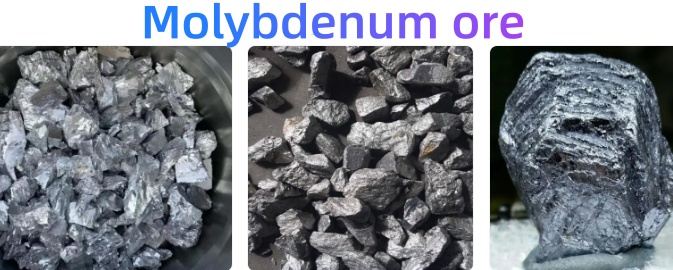
Primary Molybdenum Ore: Molybdenite (MoS₂) is the main mineral, usually of high grade. The beneficiation process is relatively simple and the profit margin is more stable.
Accompanying molybdenum ore: mostly coexisting with copper ore, tungsten ore and tin ore, with lower molybdenum content. It requires you to take into account the recovery of the main ore and the associated ore when beneficiation, to avoid the waste of mineral resources, which is more demanding for your subsequent flotation separation process.
Secondary deposits: relatively few, usually small in scale and not very profitable to mine.
2. Mining strategies for different locations
When your deposit is close to the surface, open pit mining is the optimal choice. This method of mining is highly efficient and has a relatively low investment in equipment. It can strip the surrounding rock and ore on a large scale and is suitable for primary molybdenum ores with large reserves and more uniform grades. When open pit mining, attention should be paid to proper drainage planning and soil and water conservation, so as not to affect production and efficiency due to environmental issues.
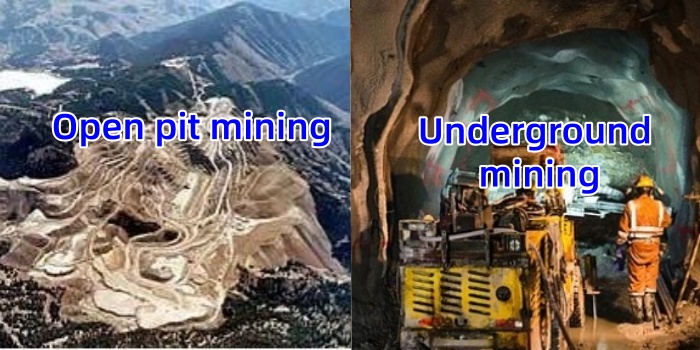
If your mine’s ore body is deeply buried and the surface conditions are complicated (e.g., crossing mountains, residential areas), underground mining is required. Underground mining requires extremely high ventilation, support and drainage systems, and safety investment will increase. You need to avoid safety accidents such as collapse and water penetration, and at the same time optimize the transportation process to reduce the loss of ore.
Filling method: Suitable for mines with high value of ore body. This method has a high recovery rate, but is also more costly.
Avalanche method: Using the ore body’s own gravity and stress to make it break naturally. It is suitable for large-scale low-grade deposits, but the surface will sink.
Whichever method you choose, you need to balance: initial investment, operating costs, recovery rates, safety risks and environmental impact.
Molybdenum extraction and processing: Turning ore into value
From the ore to the molybdenum concentrate, there are four major steps: crushing – grinding – molybdenum flotation – roasting. Each of these steps has a direct impact on the grade and recovery of your final product.
Step Ⅰ Crushing: make the ore “smaller”
The purpose of crushing is to break the mined large ore into small pieces, which is convenient for subsequent grinding. You can use a three-stage closed-circuit crushing process:
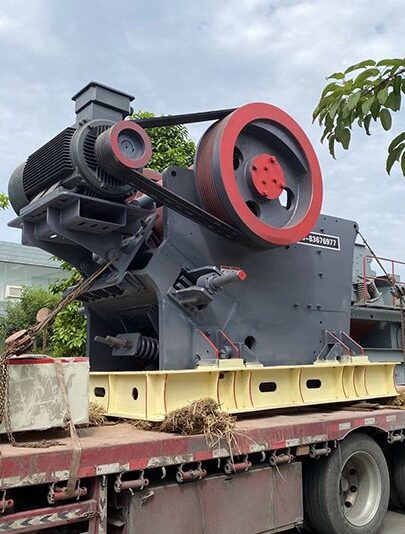
(1) Coarse crushing: use a Jaw Crusher to crush the ore to 10-20 centimeters;
(2) Medium crushing: crushing to 2-5 centimeters with Cone Crusher;
(3) Fine crushing: use an Impact Crusher or sand making machine to crush the ore to 12-15mm, and finally through the screening equipment, the unqualified ore will be returned to the medium crushing section for re-processing.
In the crushing process, you need to control the moisture content of the ore, too wet ore is easy to clog the equipment, too dry ore will produce a lot of dust. You can adjust the water spraying device and regularly check the wearing parts of the crushing equipment to ensure the production progress.
Step Ⅱ Grinding: Grinding the ore to a certain fineness
Grinding is the key step to determine the efficiency of your flotation. Only when the ore is ground to a certain fineness, the useful minerals can be fully exposed from the vein, and can be accurately separated in the subsequent flotation process. You can use “The two-stage and one-closed grinding” process.
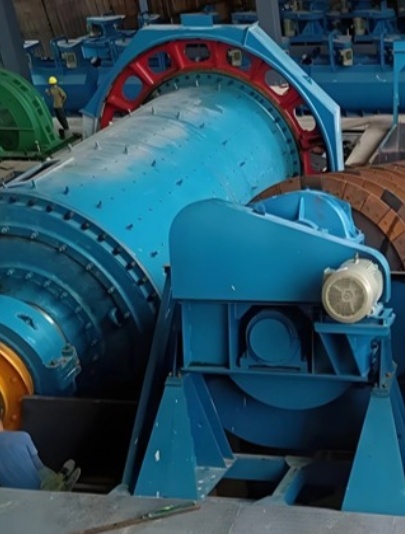
(1) Put the crushed ore into the Ball Mill, and grind the ore into slurry through the impact and grinding of steel balls.
(2) Screening with a classifier, qualified slurry (fineness is usually -200 mesh 60%-80%) is sent to the flotation process, and the unqualified slurry is returned to the ball mill for regrinding.
You need to focus on controlling the grinding fineness: insufficient fineness, the useful minerals are not fully exposed, and your recovery rate will be reduced; excessive fineness, a large amount of sludge will be generated, which will increase the difficulty of your subsequent processing. It is recommended that you regularly test the fineness of the slurry, and timely adjust the rotational speed of the ball mill and the proportion of steel balls to ensure that the recovery rate of the ore is maximized.
Step Ⅲ Molybdenum Flotation
This is the core link of molybdenum recovery, and it also relates to the high level of your benefit. The core principle of flotation is to utilize the difference in surface properties between molybdenum minerals and veinstones, and make molybdenum minerals attach to air bubbles through the action of chemicals, so as to separate from veinstones.
Slurry adjustment: adjust the pH of the slurry (usually 7-9), add adjusting agents to inhibit the vein minerals (lime to inhibit pyrite, water glass to inhibit silicate veins)
Flotation chemicals: add the capture agent (commonly used kerosene, diesel oil, etc.), so that molybdenum minerals have hydrophobic surfaces and are more likely to be attached to the air bubbles.
Flotation machine: final addition of a frothing agent to produce stable bubbles that bring molybdenum minerals to the surface of the slurry, forming a frothy product.
Froth Collection: Scrape off the molybdenum-rich froth to get the molybdenum rough concentrate.
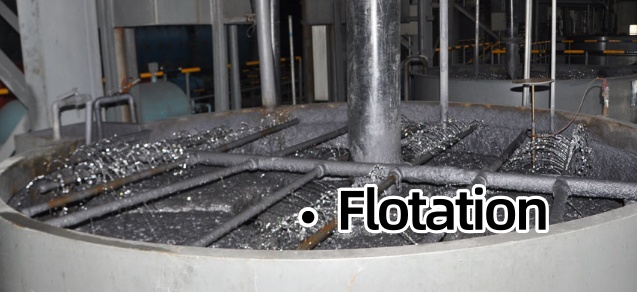
Multiple concentrates can increase your molybdenum grade (typically up to 45-57%) while reducing impurities. You also need to consider chemical dosage and cost control.
Step Ⅳ Roasting – Conversion to industrially usable form
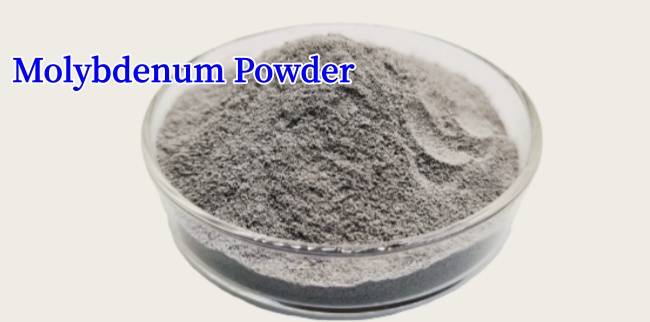
The molybdenum crude concentrate obtained from flotation contains a large number of impurities (e.g., sulfur, carbon, arsenic, etc.), which need to be further purified by roasting.
Conventional roasting: The molybdenum crude concentrate is put into a multi-hearth furnace/rotary kiln to oxidize MoS₂ to industrial Molybdenum Calcine (MoO3) at 500-650°C to obtain a higher grade molybdenum concentrate. Roasting will produce SO₂, so you need to do a good job of tail gas treatment to avoid harmful gas emissions exceeding the standard and causing environmental problems.
Pressure cooker oxidation: suitable for processing low-grade or complex concentrates, environmentally friendly but with high input costs.
Chlorination Roasting: Produces molybdenum trichloride, which is used for high purity molybdenum products.
Conclusion
The importance of molybdenum will only increase in the context of the energy transition and the new technological revolution. And those beneficiation plants that are able to supply this key material in a sustainable and efficient way will be well positioned in the market of the future. This means that your profits will be high and long-lasting.

If you have questions about your new project, or want to optimize an existing beneficiation process, contact Sandreck and our dedicated team will be enthusiastic to help you with these difficulties.
FAQs
Q: What are the core quality indicators that must be focused on for roasting production?
A: The core control parameters for roasting production are residual sulfur (less than 0.1%) and molybdenum content, which directly determine the grade of molybdenum oxide, its selling price, and its acceptance by downstream customers.
Q:Why does the flotation concentrate have to be roasted before it can be sold?
A:Molybdenum pyroxene concentrate (MoS₂) has a very high sulphur content and its direct use in steelmaking generates a lot of harmful gases and affects the quality of the steel. Roasting removes the sulfur and converts it into industrial molybdenum oxide (MoO₃) that can be used directly by downstream customers (e.g. steel mills, chemical plants).
Q: How to deal with sulfur dioxide (SO₂) in flue gas?
A:This is a core environmental issue and must be dealt with. Modern standard practice is to feed the high concentration of SO₂ flue gas into an accompanying acid production system to produce sulfuric acid for sale. This not only meets stringent emission standards, but also converts the exhaust gases into additional income for you.
Q: Can the associated rare metal rhenium (Re) be recovered in roasting?
A: Yes, and it is very valuable! Rhenium volatilizes as Re₂O₇ in the roasting flue gas and is much more expensive than molybdenum. You can add a specialized rhenium recovery process to your flue gas cleaning system, which is an important source of profit for you.
Q:Should I choose a rotary kiln or a multi-chamber furnace? Which is better for my mine?
A:You need to comprehensively evaluate your capacity, capital and raw material stability.
Rotary kiln: suitable for large-scale continuous production (processing more than 10,000 tons per year), high degree of automation, good economy of sulfur recovery, is the first choice for new large-scale projects.
Multi-chamber furnace: suitable for small and medium scale or handling complex and variable raw materials, flexible operation, lower investment, but poor thermal efficiency and environmental protection.