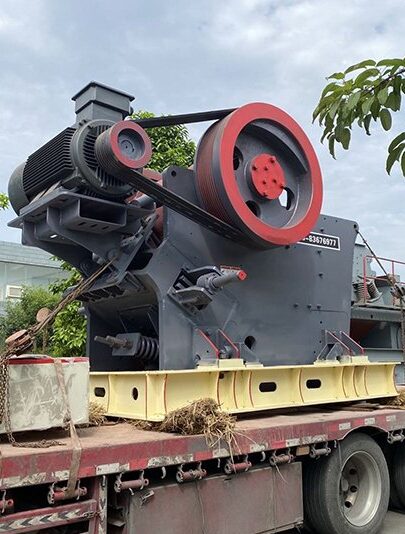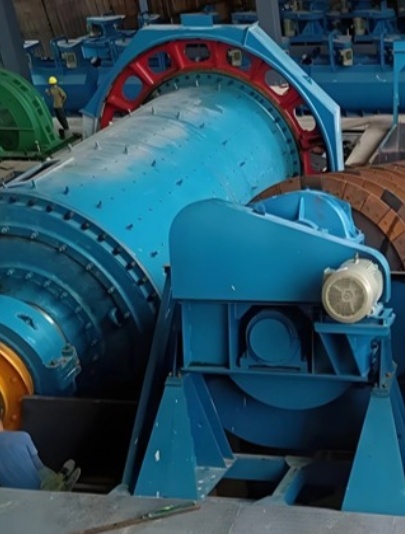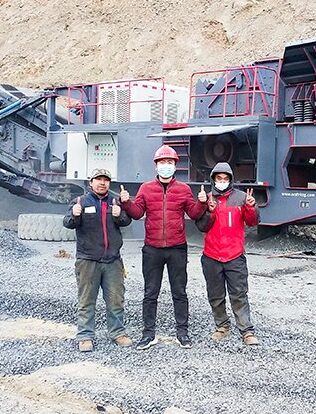

A stone crusher is a type of industrial machine used to break large‑sized rocks, ores and construction waste into small‑sized aggregates, manufactured sand and and fine rock powder. By adjusting mechanical structures and working modes, stone crushing equipment can process materials into standardized particle sizes, making raw stone resources reusable and meeting the diverse material demands of modern industrial and construction fields.
Working Principle of Stone Crushers
The working principle of a stone crusher is based on mechanical force to destroy the internal structural cohesion of stones. Most crushing equipment adopts three core force modes: compression, impact, and shearing, and these methods are used in combination; no single method is used exclusively.
Compression Crushing: The crusher applies pressure to the material sandwiched between its crushing surfaces. When the pressure exerted on the material reaches its compressive strength limit, the material fractures.
Impact Crushing: Impact by high-velocity crushing bodies on the material, impact of high-speed moving material against fixed walls, and mutual collision between moving material particles.
Shearing Crushing: The sharp edges wedge into the material, creating internal tensile stress. When the stress exceeds the material’s tensile strength, it fractures, producing fine powder at the edge-material contact points.
Main Types of Stone Crusher Machines
1) Jaw Crusher
The classic primary stone crusher for hard rock. These machines are ideal for coarse crushing and are commonly used to process hard and abrasive materials.
| Features | large feed size, capacity, simple structure | 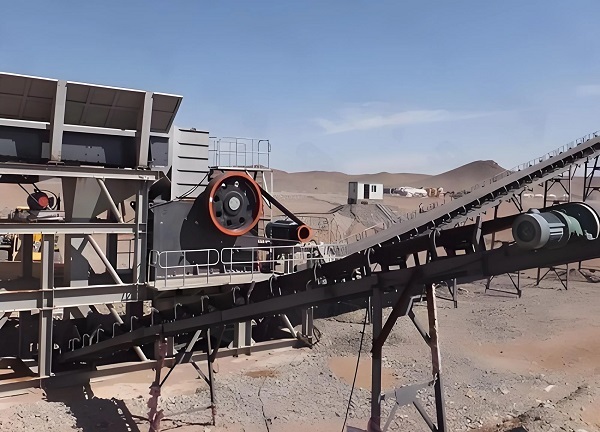 |
| Materials | granite, basalt, hard rock, iron ore |
2) Cone Crusher
Secondary‑tertiary stone crusher equipment that compresses rock between mantle and concave liners for medium‑fine crushing of abrasive, hard stone. Driven by eccentric gyration movement, material is repeatedly squeezed in the layered crushing cavity. Layer compression crushing delivers consistent particle sizing for high‑hardness ores.
| Features | high crushing ratio good cubic particle shape | 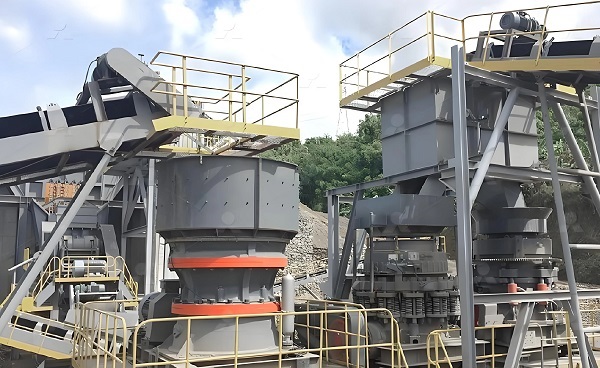
|
| Materials | granite, basalt, diabase, other high-hardness ores and rocks |
3) Impact Crusher
A versatile stone crusher for recycling construction waste, smashing materials with high‑speed hammer impact force. Rotor‑mounted blow bars strike incoming rock, throwing stones against impact liners for repeated fracture.
| Features | impact crushing, good cubic finished particles, flexible adjustment of output size | 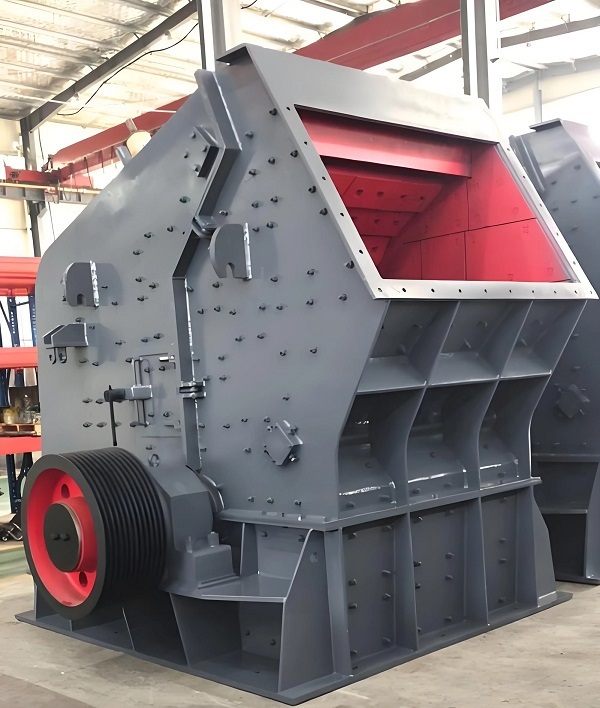
|
| Materials | limestone, concrete debris, brick, medium-hard brittle rock |
4) Hammer Crusher
A high‑speed impact‑type stone crushing machine, smashing materials by hammer head striking for one‑step coarse‑to‑fine crushing. Its biggest selling point is single‑pass complete crushing, removing the need for multi‑machine combinations for small‑budget projects.
| Features | hammer impact crushing, big crushing ratio, one-step forming, low investment cost, compact footprint | 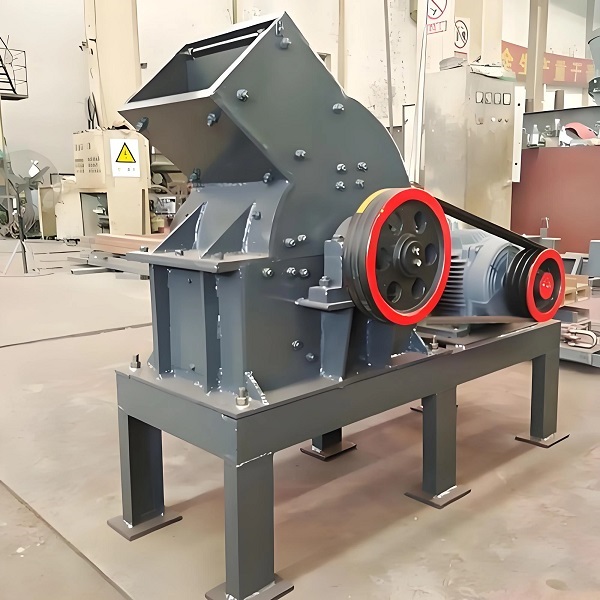 |
| Materials | limestone, coal, shale, medium-soft brittle rock |
5) Vertical Shaft Impact Crusher
Fine‑stage stone crusher for manufactured sand production, adopting the rock‑on‑rock collision principle for particle reshaping. Raw material enters the high‑speed vertical rotor, then is thrown out violently, colliding either with stone material beds or metal anvils.
| Features | impact-type grinding, excellent particle shape, rock-on-rock / rock-on-iron working modes | 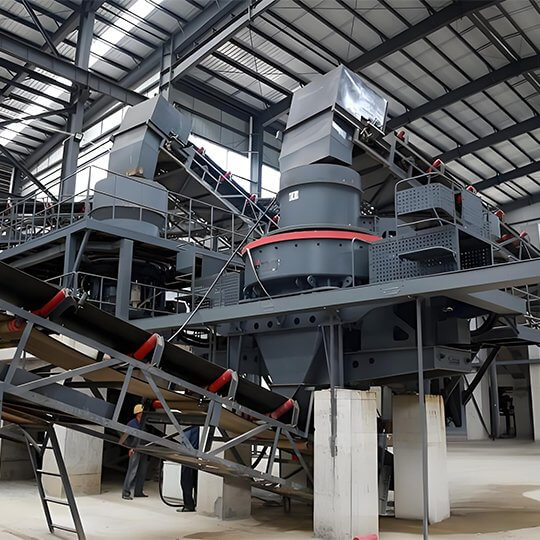
|
| Materials | river stone, granite tailings, various medium-hard stones |
6) Mobile Stone Crusher (Tracked/Wheeled)
A relocatable portable stone crusher for small quarry businesses, integrating crushing, screening and conveying onto a tracked or wheeled chassis. Two mainstream configurations exist: wheel‑mounted units for flat sites, and tracked units for rough, muddy off‑road terrain.
Features: High mobility, compact layout, one‑unit complete workflow, quick site setup, optional diesel or electric drive.
Benefits of Stone Crushers
- Increased Efficiency. Crushing large rocks into smaller pieces speeds up the handling and processing of materials. This efficiency reduces downtime and increases throughput.
- Cost Savings. By crushing stones on-site, transportation costs decrease since smaller, more manageable pieces are easier and cheaper to move.
- Versatility. Stone crushers can handle various materials, including granite, limestone, basalt, and more. This versatility makes them suitable for different projects.
- Improved Product Quality. Crushers produce consistent particle sizes, which is essential for high-quality construction materials.
Applications of Stone Crusher Machines
- Mining
- Construction waste recycling
- Cement and chemical raw material preparation
- Infrastructure and Aggregate Production
Stone crushers are irreplaceable core equipment for aggregate‑related industries. So if you have a new quarry project, please leave your contact information. Sandreck, a Chinese original manufacturer of stone crushers, can provide customized solutions with factory‑direct prices for you.