
Raymond mill is a cornerstone piece of equipment in mineral processing, renowned for its precision in producing fine powders ranging from 30-325 mesh. Sandreck is a professional manufacturer of grinding mill machinery and provides rich grinding mill knowledge. This article mainly introduces the core components, working principle, and working process.
Core Components of the Raymond Grinding Mill
1. Main Grinding System (Core Pulverizing Unit)
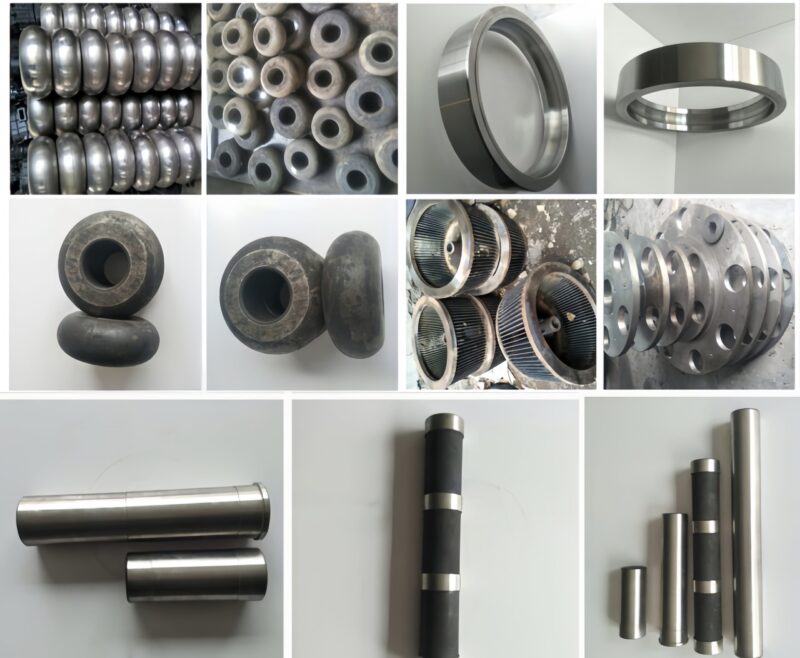
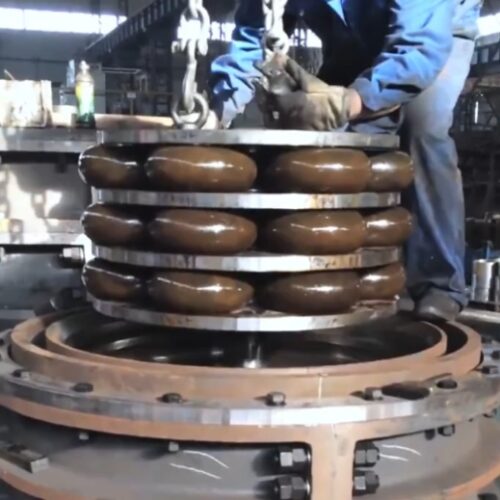
Grinding Roller Assembly: Multiple sets of suspended grinding rollers that both revolve around the main shaft and rotate on their own axes to crush and grind the material; equipped with roller shafts, bearings, and wear-resistant roller sleeves.
Grinding Ring: A ring-shaped, wear-resistant liner fixed inside the main unit housing. It forms a grinding pair with the rollers, where material is squeezed and ground in the gap between them.
Spider Frame (Hanger): Holds all grinding rollers and rotates with the main shaft, driving the rollers outward via centrifugal force to press against the grinding ring.
Main Shaft & Gearbox: Transmit power to drive the rotation of the entire spider frame assembly.
Shovel (Material Shovel): Mounted at the bottom of the spider frame, it scoops up material from the bottom during rotation and feeds it into the space between the grinding rollers and the grinding ring.
2. Classification System
Classifier: Located at the top of the main unit and equipped with a high-speed impeller, it uses airflow and rotational speed to separate coarse and fine powders. Fine powder passes through the impeller with the airflow, while coarse powder is rejected and falls back into the grinding zone for regrinding. Product fineness is controlled via variable-frequency speed regulation.
3. Air Duct & Pneumatic Conveying System
Blower: The power source for the system’s airflow; it generates a circulating airflow to transport powder and convey the finished product.
Return Air Duct & Duct Housing: Form a closed-loop air circulation system.
4. Powder Collection & Dust Removal System
Cyclone Separator (Cyclone Collector): Airflow carrying fine powder enters the unit; centrifugal force causes the majority of the finished powder to settle and be collected, with the product discharged via a bottom valve.
Pulse Dust Collector / Bag Filter: Captures ultra-fine dust that escapes the cyclone. Ensuring exhaust gas meets emission standards and prevents dust leakage.
5. Feeding & Structural Components
Electromagnetic Vibrating Feeder: Feeds material into the main unit evenly and at a controlled rate to prevent clogging.
Base Frame, Housing, Drive Motor, & Lubrication System: Support the entire machine, provide power, and ensure bearing lubrication.
Raymond Roller Mill Working Principle
A Raymond mill operates based on centrifugal rolling grinding and closed airflow circulation classification. Raw materials evenly enter the grinding chamber and are crushed between rotating grinding rollers and the grinding ring via extrusion and friction. The generated fine powder is lifted by circulating airflow and screened by a high-speed classifier. Qualified powder is collected as finished products, while unqualified coarse particles fall back for re-grinding, achieving continuous, cyclic and efficient powder processing.
Working Process of Raymond Mill
1. Feeding
Lump material is fed at a constant rate via a vibrating feeder into the bottom of the grinding chamber through an inlet on the side of the main unit.
2. Shoveling and Grinding
The motor drives the main shaft, causing the spider assembly, grinding rollers, and shovels to rotate synchronously. The shovels scoop up the material from the bottom and throw it into the gap between the grinding rollers and the grinding ring.
Centrifugal force presses the grinding rollers firmly against the grinding ring; the material is subjected to the combined forces of squeezing, crushing, and shearing, reducing it to fine powder.
3. Pneumatic Conveying and Classification
A blower continuously circulates air into the main unit, carrying the ground powder upward to the classifier at the top.
The classifier’s impeller rotates at high speed. Coarse, heavy particles strike the blades due to centrifugal force and fall back into the grinding zone for further processing.
Fine powder meeting the required particle size passes through the impeller and enters the cyclone separator with the airflow.
4. Finished Product Collection
The powder-laden airflow enters the cyclone. The swirling motion creates a centrifugal effect that causes the fine powder to settle at the bottom. It is then discharged through an airlock valve as the finished powder product.
5. Air Circulation and Dust Removal
Exhaust air containing trace amounts of dust—after passing through the cyclone—is conveyed via ducting to a bag-type dust collector, where the remaining ultrafine dust is captured by the filter bags. The purified air returns to the blower, completing a closed-loop air circulation system. Minimal air is vented externally, resulting in energy efficiency, environmental friendliness, and low dust emissions.
Sandreck provides rich grinding mill knowledge and high-quality Raymond mill machines. If you have any needs, contact us!