
As urbanization accelerates, the number of building demolition and renovation projects is on the rise, leading to an explosive increase in construction waste. How to deal with it has become a headache for the construction industry.
Only by scientifically planning the crushing process can we improve the recycling rate of construction waste and reduce capital investment costs. Sandreck is a professional crusher machine supplier. In this article, we will detail how to crush construction waste efficiently.
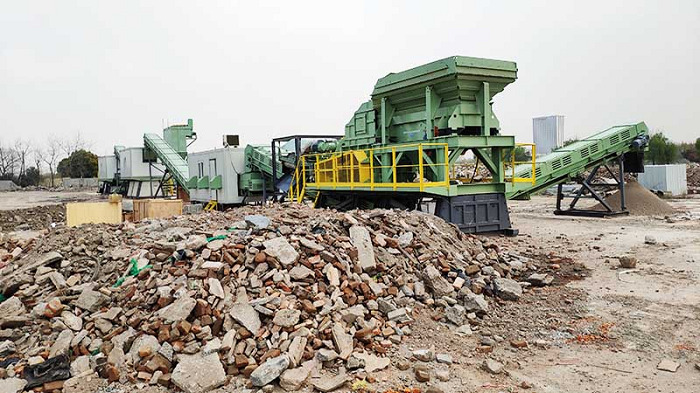
1. Preparatory Work Prior to Construction Waste Crushing
First, a “combination of manual and mechanical” methods is employed to sort and classify the materials. Workers manually sort through the construction waste to remove impurities such as steel bars, plastics, wood, and glass. Specifically, steel bars can be separated using magnetic separation equipment, while plastics and wood must be removed through manual sorting to prevent such impurities from entering the subsequent crushing machinery.
For oversized construction waste (e.g., large concrete components and thick wall sections), pre-crushing treatment using equipment such as hydraulic breakers or hydraulic shears is mandatory. This process reduces the material size to specifications that meet the feed requirements of the subsequent crushing equipment. Furthermore, waste mortar with high moisture content must undergo prior sun-drying or mechanical drying to prevent material clumping and subsequent equipment clogging.
2. Construction Waste Crushing Process Flow
2.1 Primary Crushing Stage
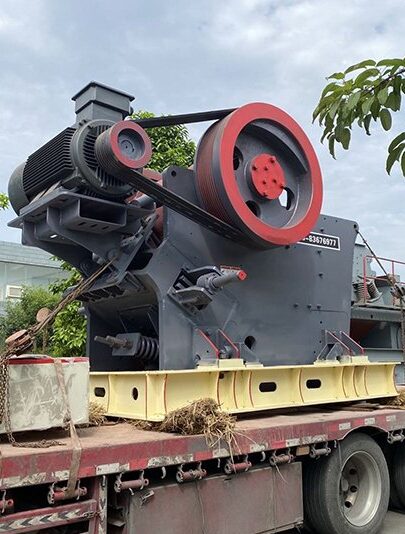
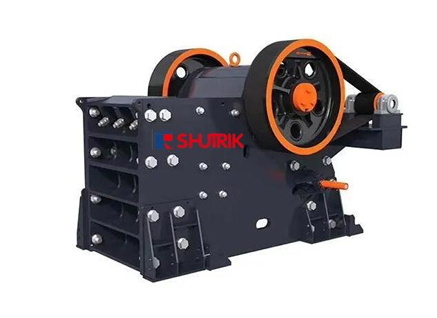
In this stage, the pre-treated construction waste is processed using a jaw crusher. The material is fed uniformly into the crusher’s feed opening, where, under the compressive and impact forces exerted by the moving jaw plate and the fixed jaw plate, it is broken down into medium-sized particles (typically ranging from 100 mm to 200 mm in diameter). Throughout this process, the particle size distribution of the material must be closely monitored, and the discharge opening gap of the crusher adjusted as necessary to ensure that the output from the primary crushing stage meets established quality standards.
2.2 Intermediate and Fine Crushing Stages
Appropriate crushing equipment should be selected based on the intended use of the processed material.
For applications such as road subgrades and foundation backfill, impact crushers are a suitable choice, as they are capable of further reducing the material to a particle size range of 50 mm to 100 mm.
If the material is intended for the production of recycled concrete, mortar, or similar materials, cone crushers should be employed to perform high-precision fine crushing operations. This reduces the material to smaller particle sizes (typically less than 50 mm), thereby ensuring the requisite fineness and uniformity of the crushed product.
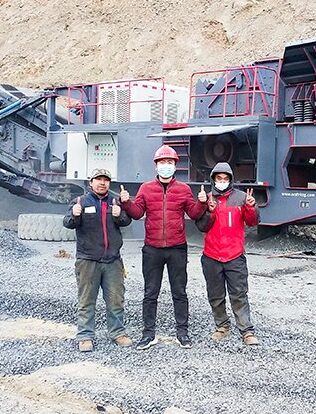
Mobile crushing stations offer the advantage of flexible mobility, making them highly suitable for work sites characterized by dispersed locations and relatively low volumes of construction waste. They facilitate on-site crushing operations, thereby helping to reduce material transportation costs. Furthermore, they can be equipped with various types of crushers to accommodate diverse and ever-changing operational requirements.
2.3 Screening and Secondary Crushing Stage
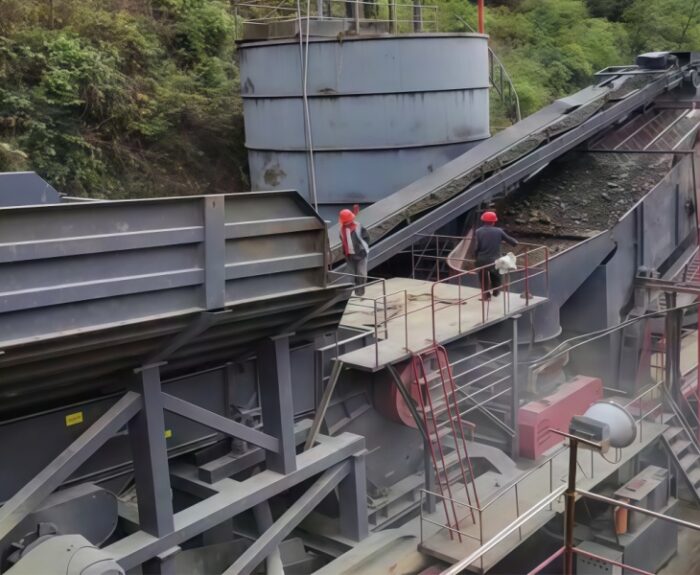
Materials that have undergone fine crushing are sorted using vibrating screens and classified into different grades—such as coarse, medium, and fine aggregates—based on particle size, in order to meet various reuse requirements.
Any finished products that fail inspection—particularly those with particle sizes exceeding specified limits—must undergo secondary crushing to ensure they meet the relevant quality standards.
Contaminants detected during the screening process, such as small steel rebar fragments, must undergo a secondary sorting procedure. This aims to further enhance the purity of the recycled aggregates and ensure their suitability for subsequent reuse applications.
3. Conclusion
To achieve the efficient crushing and processing of construction waste, it is essential to diligently implement the aforementioned preparatory measures, thereby ultimately realizing the resource-based recovery and utilization of construction waste. For more information regarding construction waste processing equipment, please feel free to contact us at any time.