
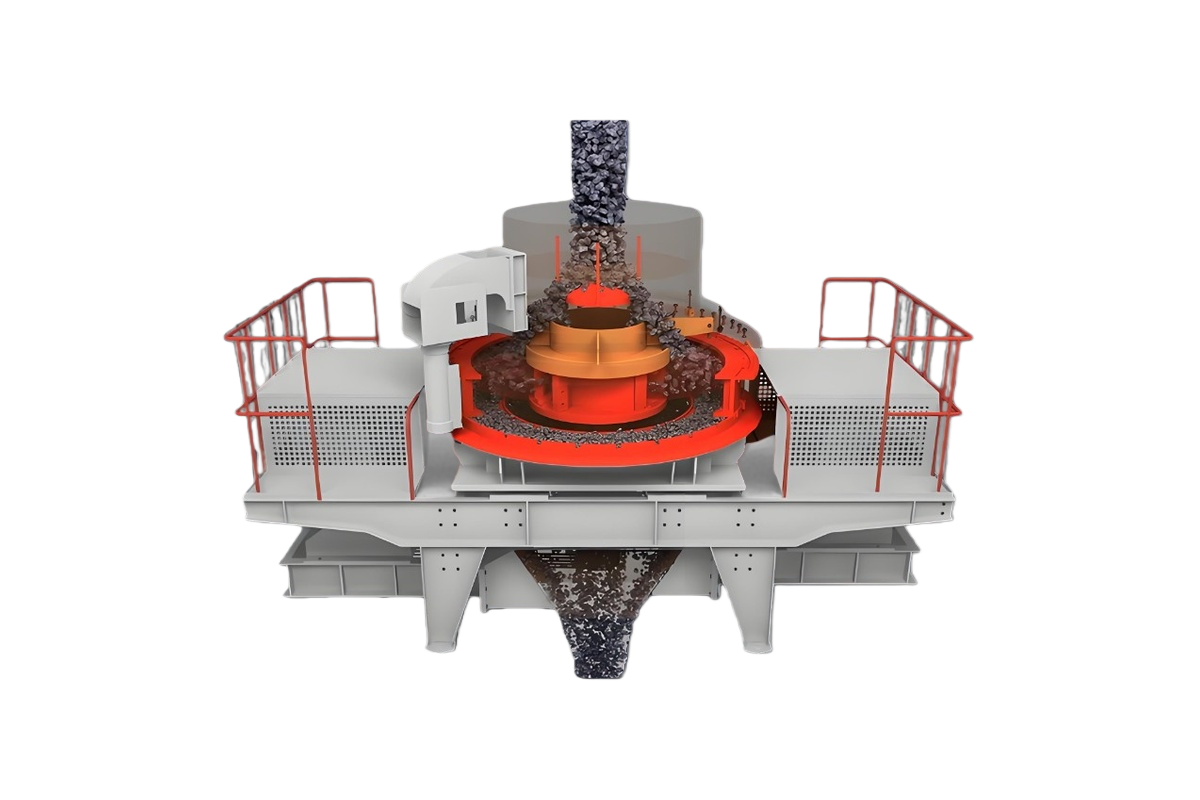
“VSI” is an abbreviation for Vertical Shaft Impact Crusher. It is a type of impact crusher. It has a vertical shaft that rotates around its own axis, forcefully feeding material into the crusher.
As a professional stone crusher manufacturer, Sandreck will provide a detailed explanation of the working principle and process of the VSI crusher in this article, helping you better understand this machine.
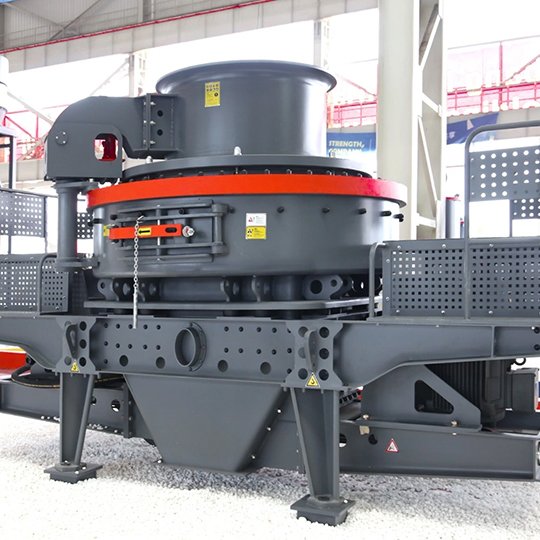
VSI Crusher Parts
To understand the internal working principle of a VSI crusher, it is best to first familiarize yourself with the main components of the VSI and their role in the “throwing and crushing” process.
1. VSI Crusher Parts
To understand the internal working principle of a vertical shaft impact crusher, it is essential to be familiar with its main components and their roles in the “ballistic crushing” process.
2. VSI Crusher Feeding Hopper
The feed hopper is the inlet for raw materials to enter the vertical shaft impact crusher. This critical component should ensure that the raw materials can flow smoothly and unimpeded into the crusher.
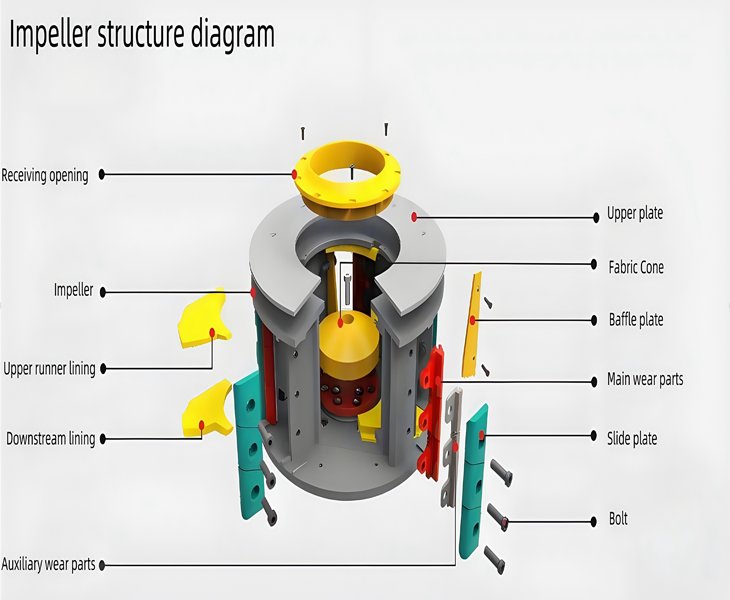
3. VSI Crusher Rotor
The rotor is the main component of a vertical shaft impact crusher. It is a high-speed rotating steel impeller with a rotational speed exceeding 60-80 meters per second.
4. VSI Crusher Impact Tips
The wear-resistant “teeth” at both ends of the rotor will throw the material in a specific direction when the rotor rotates.
5. VSI Crusher Feed Tube
This is a specially designed channel used to introduce material from the feed hopper and feed it perpendicular to the rotor axis into the center of the rotor.
6. VSI Crusher Rotor Guide Table
The guide table can be fixed or rotating. It is used to evenly distribute the material on the rotor impeller.
7. Crushing Chamber & Lid
The top cover on the crushing chamber can withstand all the impact forces generated at the bottom of the crushing chamber and control the material discharge from the crushing chamber.
8. Motor & Drive System
The power source for motors and drive systems is usually a motor with sufficient power.
Two Basic VSI Crusher Working Principles
1. Rock-on-Rock Crushing
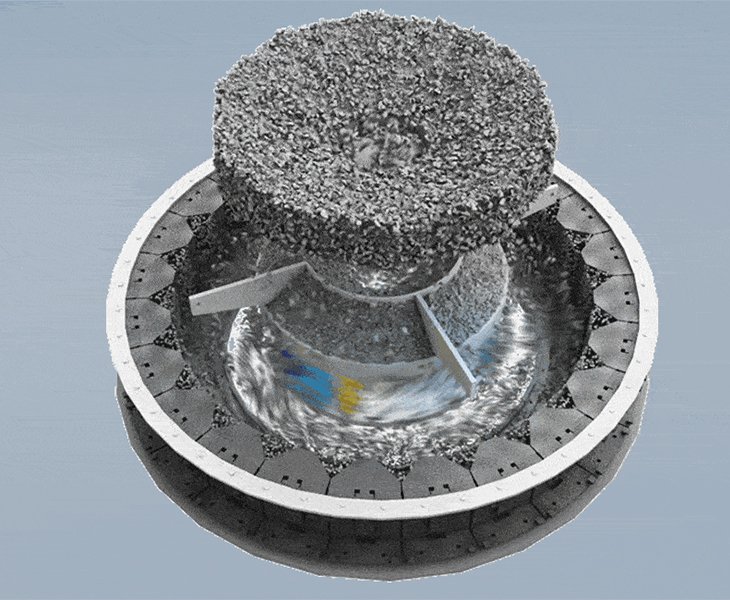
For highly abrasive materials, such as granite, basalt, and quartz, a self-grinding principle can be employed. The rotor throws the material outward, allowing it to enter a fixed bed of crushed stone located at the bottom of the crushing chamber. Each feed creates a new bed, thus achieving self-renewal and reducing wear on steel components.
2. Rock-on-Steel Crushing
For applications requiring a high crushing ratio (or processing materials with low abrasiveness, such as dolomite or limestone), the optimal mode is steel-to-rock mode.
In steel-to-rock mode, hard rock is thrown against fixed anvils around the perimeter of the crushing chamber. This causes the hard rock to almost instantly crush the softer material into very small fragments upon contact with the anvils.
This results in a significant reduction in material size from approximately 50 mm to just a few millimeters after a single pass through the crusher.
The Working Process of VSI Crushing Machine
1) Feeding
Raw materials (such as rock or ore mined from a quarry) are loaded into the feed hopper of the VSI crusher. The material then enters the crushing process. The material in the feed hopper is guided by a guide pipe and conveyed to the guide plate.
2) Acceleration
After the material reaches the guide plate, it is guided to the rotor. The high-speed rotating rotor generates centrifugal force, which pulls the material away from the rotor and towards the rotor’s impact blades.
3) Ejection
When the material reaches the far end of the rotor, the blades throw it outwards.
4) Impact
The real impact effect between material particles occurs at this instant. If the material is rock, it will collide with other rocks (rock against rock) or steel anvils (rock against steel) as it leaves the rotor.
5) Recirculation & Attrition
Not all particles reach the appropriate size on the first impact. If larger particles bounce back into the crushing chamber, they may collide again with other incoming particles or circulate around the rotor.
6) Discharge
The particles have reached the appropriate size before they “penetrate” the screen. They pass through the discharge port at the bottom of the crusher and then enter the screen for separation to remove oversized material.
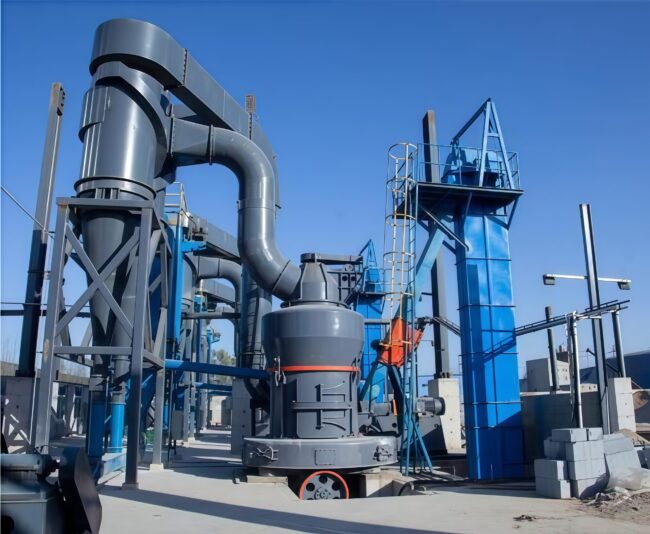
The above explains the working principle and workflow of a vertical shaft impact crusher. Sandreck not only provides professional crusher-related knowledge but also offers high-quality stone crushers, including jaw crushers, cone crushers, impact crushers, and hammer crushers.