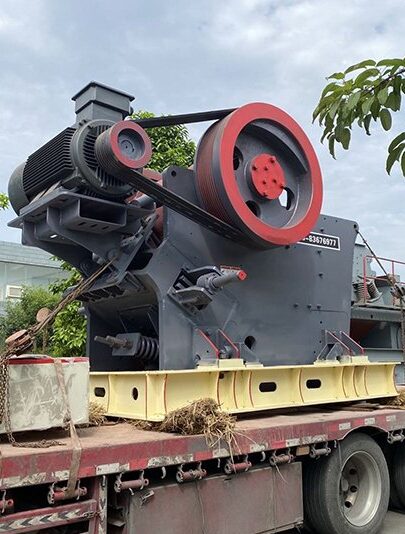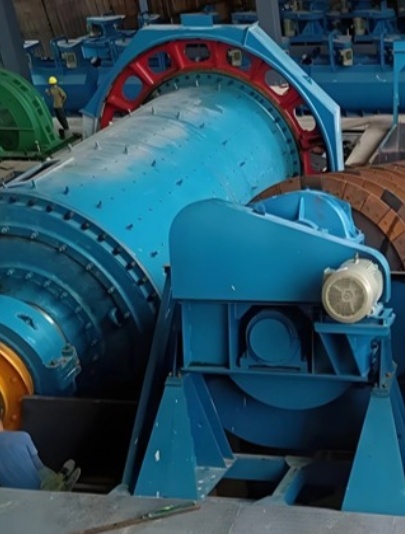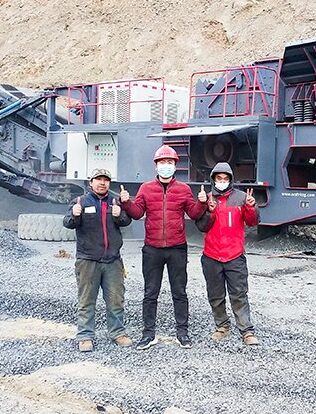

A stone crusher is a machine that uses mechanical energy to break large materials (such as ore, coal, and construction waste) into smaller particles. It is an essential piece of equipment in industries such as mining, metallurgy, construction, and highway construction. Sandreck, a Chinese rock crusher manufacturer, will provide a detailed introduction to the stone crusher types to help you choose the right crusher for your project.
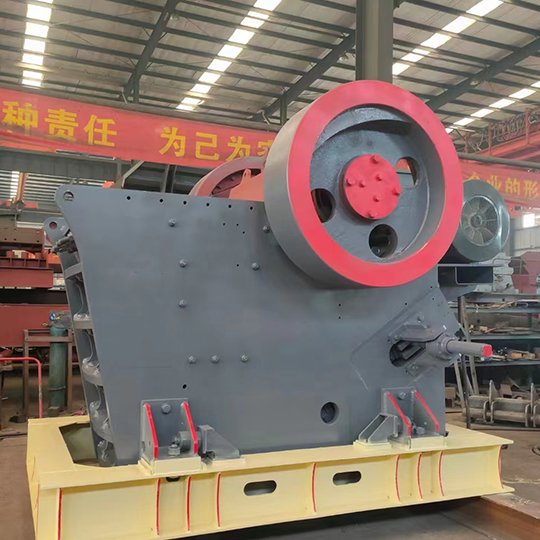
1. Jaw Crusher
Jaw crushers are the “main force” in coarse crushing operations and are essential equipment for laying bedrock in almost all crushing production lines.
Advantages of jaw crushers: Simple and robust structure, involves little attention; large feed opening for large rocks; low price, making low initial outlay necessary; adaptable to many varieties of material.
Disadvantages of jaw crushers: Crude form of product, necessitating some shaping over if form required is high; considerable vibration and noise, necessitating ordinary precaution at the site.
It works best when used in conjunction with a cone crusher or impact crusher, forming a complete and reliable crushing production line.
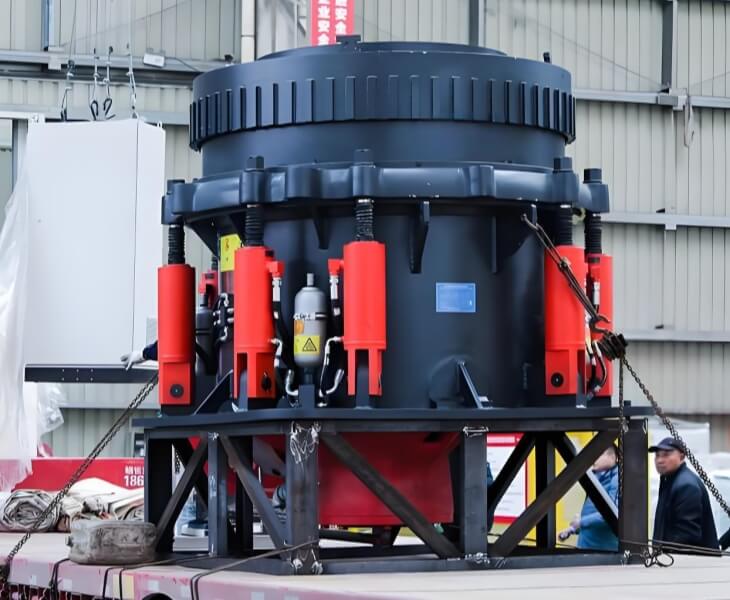
2. Cone Crusher
Cone crushers are experts in medium and fine crushing, and are especially suitable for high-hardness materials such as granite and basalt.
Advantages of cone crusher: Long-wearing parts;stable working; the infrequency of breakdowns; low consumption of energy, making operational costs more predictable
Disadvantages of cone crusher: Complicated structure; high outlay for purchase and maintenance; prone to moist materials or “claying” materials; defective in choking.
The combination of cone crusher and jaw crusher is the “golden combination” for high-yield hard rock crushing.
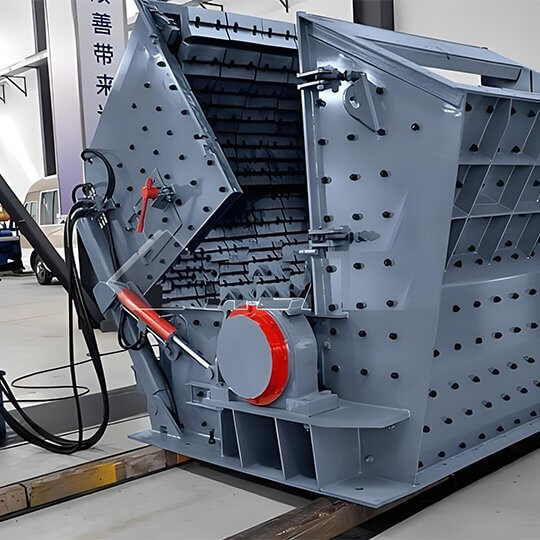
3. Impact Crusher
The impact crusher is a “dual-purpose” device that can be used for medium and fine crushing and aggregate forming. If you prioritize product shape, this will be your best choice.
Advantages of impact crusher: Excellent cubic-shaped end product, good market appeal and performance; high reduction ratio simplifies the process; easy adjustment of output size.
Disadvantages of impact crusher: Faster wear of blow bars and impact plates; higher wear part costs when processing hard materials.
The impact crusher and jaw crusher work perfectly together and are suitable for medium-hardness materials such as limestone. They can produce high-value, high-quality aggregates.
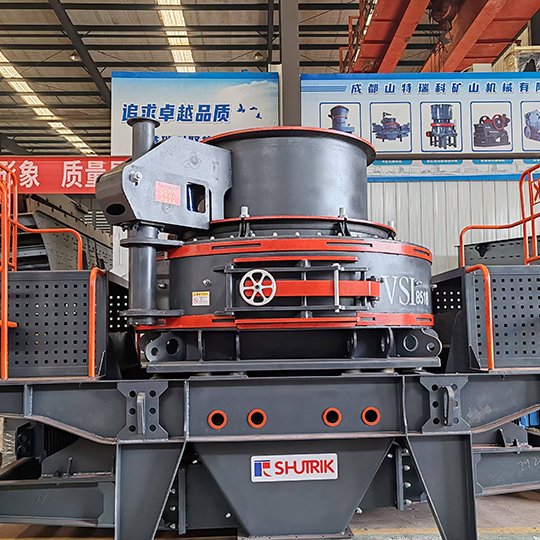
4. VSI Crusher (Sand Maker)
VIS crusher is a “three-in-one” equipment that integrates fine crushing, sand making, and molding. It is the core of all manufactured sand operations.
Advantages of VIS crusher: It can produce sand with uniform particle size and good shape to meet the requirements of construction, and at the same time improve the shape of aggregates, thereby producing higher quality products.
Disadvantages of VIS crusher: This machine is only used for fine crushing/sand making. Before use, the material needs to be subjected to primary crushing and secondary crushing.
VIS crusher is suitable for the final stage of the production process and is an important piece of equipment in professional sand making equipment.
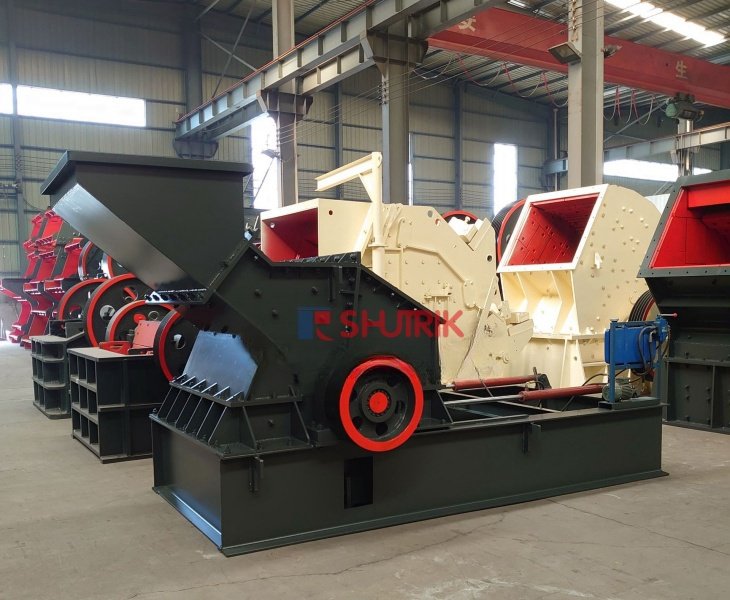
5. Hammer Crusher
Hammer crushers have excellent working performance. They can complete coarse and medium crushing in one pass, simplifying the entire operation process.
Advantages of hammer crusher: High crushing ratio-the final particle size of the material is arrived at in one pass through the machine, simplifies the whole operation with less equipment necessary, low initial cost with qualifications for tight budgets.
Disadvantages of hammer crusher:The hammers wear out fast requiring constant hammer changes; high consumption of electrical energy; unsuitable for high hard materials such as granite.
Hammer crushers are best suited for small to medium-sized projects with tight budgets, as well as for crushing medium to low hardness materials such as limestone. They offer excellent value for money.
6. Mobile Crushing Plant
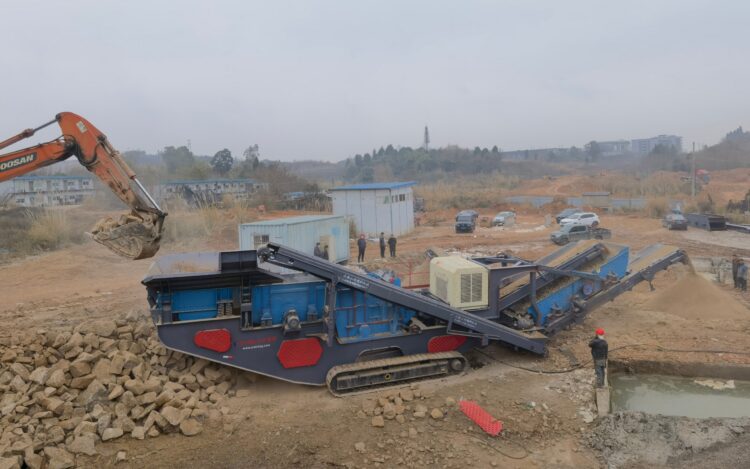
Mobile crusher plants are integrated “mobile production lines.” They integrate feeding, crushing, screening, and conveying functions into a single machine. All operations are performed on the same chassis, achieving great flexibility.
Advantages of mobile crusher: No foundations or in features necessary; quickly on the job and the operating time is not long; can work right on face giving great flexibility (i.e. demolitions or mines which are dispersed), no transport costs.
Disadvantages of mobile crusher: The equipment cost is higher than traditional equipment. Under normal circumstances, its processing capacity is lower than that of stationary equipment.
Mobile crusher plants are suitable for construction waste recycling, short-term projects, or mining operations, and are especially suitable for locations where machinery needs to be moved frequently.
7. Double Roll Crusher
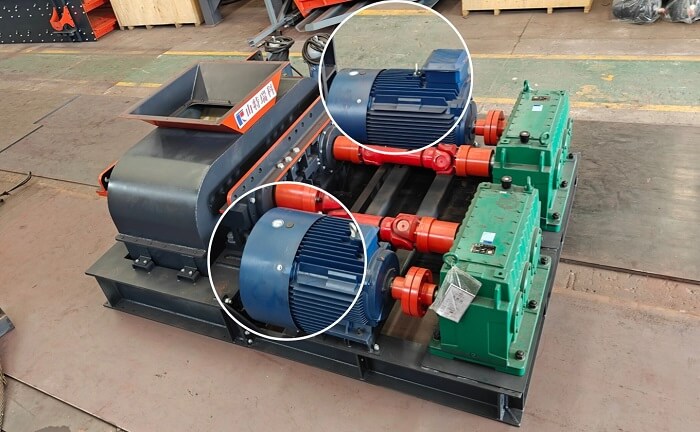
A double-roll crusher is a machine that uses compression and shearing forces to crush materials. It has a simple structure and is very suitable for processing brittle materials with a hardness of medium to low.
Advantages of double-roll crusher: Very low over-crushing, thus minimizing the waste of material; compact ideas, small in space; low dust emission making it easy to cope with the stricter health and hygiene laws; easy to look after.
Disadvantages of double-roll crusher: Processing capacity is relatively low; can’t cope with large and huge high hard sediments, hard too fastidious with the feed particle size ≤30mm).
Double roll crushers can be used to process raw materials such as limestone and river pebbles to produce standard building sand and railway aggregates. They can also be used for secondary crushing of materials such as coarse iron ore and gypsum.
These are all the types of rock crushers. Sandreck is a Chinese manufacturer specializing in stone crushers, offering various types of crushing equipment. Please contact us if you have any needs.