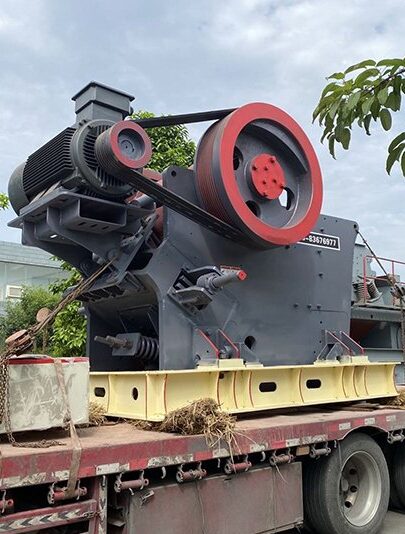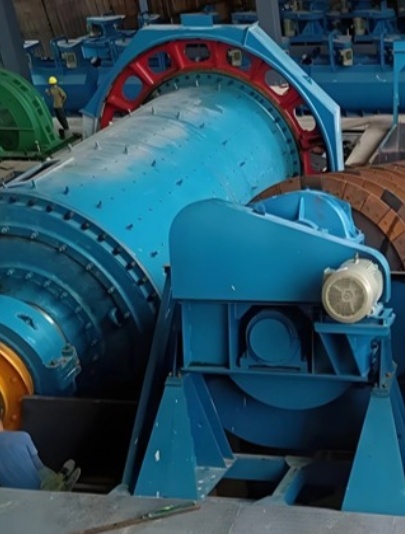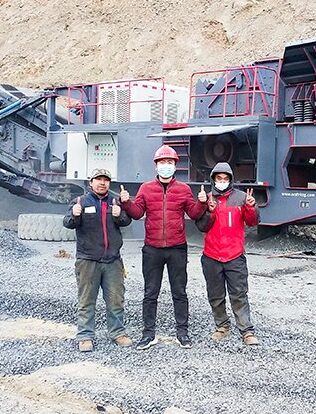

Mobile crusher means a portable integrated machine that can be easily transported from one site to execute the procedures: feed – crush – screen – convey. It will also not be necessary to create a site for working purposes, as it is possible for this equipment to travel automatically according to the area of work required. The construction of the mobile crusher is specially designed to attack the waste from trade, especially that which cannot be moved from the site.
As a professional stone crusher machine manufacturer in China, Sandreck will detail our mobile crushers in this article. From components, working principles, types, advantages, to applications, we hope this can help your business.
Components of Mobile Crusher Plant
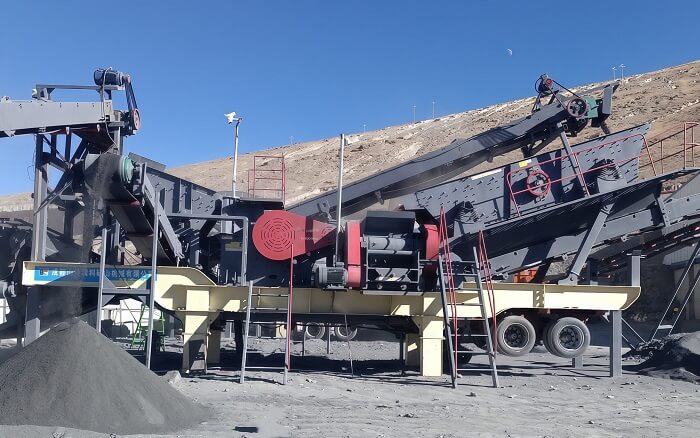
The efficient operation of mobile crushing equipment depends on the coordinated cooperation of five core systems, none of which can be missing.
- Feeding Systems: Feed construction waste evenly into the crusher to avoid machine blockage caused by improper feeding.
- Crushing System: Heart of the machine. It receives large pieces of material and breaks them into smaller pieces.
- Screening System: Separates crushed material into various classes.
- Conveying System: A machine is supplied that carries the aggregate to the place where you want it.
- Electric System: The system provides power to the entire set of equipment. Depending on the site conditions, either diesel or electric power can be selected, thus flexibly adapting to various different situations.
- Power System: Provides power to the entire system. Different power supply methods can be selected based on the actual site conditions and requirements.
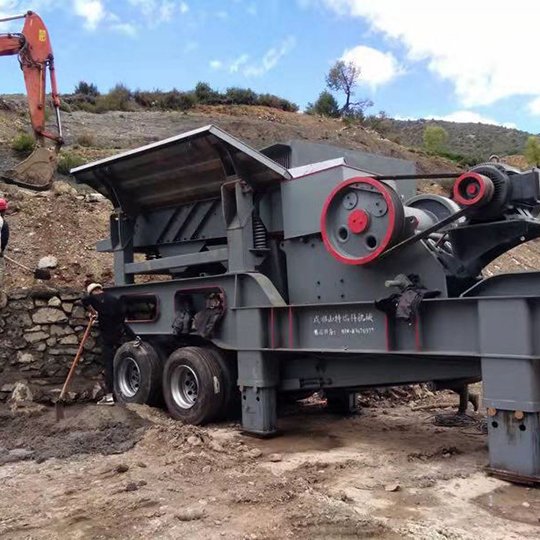
How does A Mobile Crusher Work?
Mobile crushers integrate feeding, crushing, screening, and conveying functions onto a tracked or wheeled chassis, enabling a “production line follows the raw materials” operation mode. Their core principle is to directly access the work site and utilize an onboard jaw crusher, impact crusher, or cone crusher to process large materials into stones of suitable particle size, thus eliminating the cumbersome process of transporting raw ore. They possess strong environmental adaptability and highly efficient production flexibility.
- Feeding: Construction waste is fed into the feeding system, where a vibrating feeder evenly transports it to the crushing system.
- Iron removal: A de-ironing device removes metal impurities such as steel bars and wire to ensure aggregate purity.
- Crushing: Devices are activated based on material hardness to reduce bulky material to a pre-set particle size.
- Screening: The material enters the screening system, where recycled aggregate of varying sizes is separated according to the desired particle size.
- Conveying: Qualified aggregate is transported by the conveying system to a designated location for centralized impurity treatment.
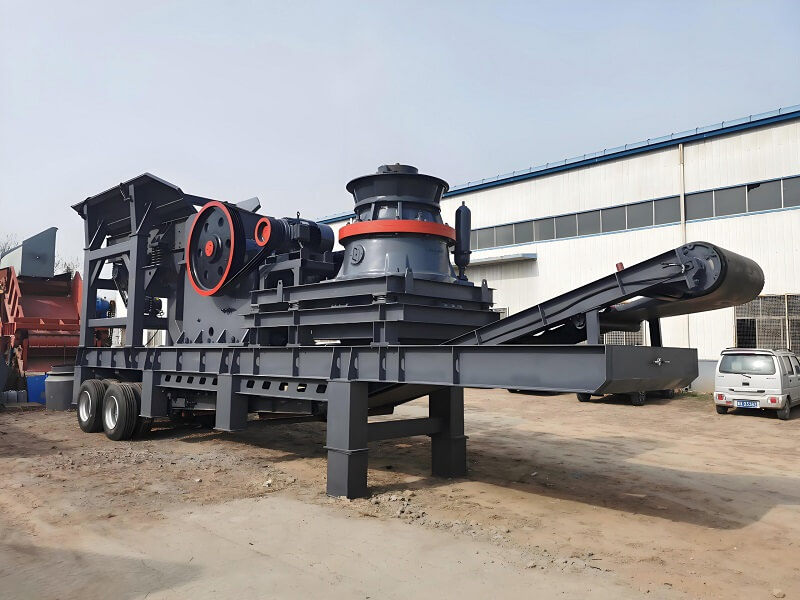
Main Types of Mobile Crushers
| Classification Dimension | Type | Processing Function | Applicable Scenarios | Core Advantages |
| By Mobility | Wheeled Mobile Crusher | Tire Movement “Feeding-Crushing-Screening” integrated | Flat terrain (Urban demolition sites, industrial parks) | Fast movement speed, flexible transitions, and convenient for frequent changes of location. |
| Tracked Mobile Crusher | Track Movement “Feeding-Crushing-Screening” integrated | Rough terrain (Mountainous regions, hilly areas, muddy sites) | Large contact area of the ground, good grip, favourable to stable operations in difficult terrain. | |
| By Processing Function | Jaw Mobile Crusher | Primary Crushing (Reduction of large materials to intermediate size) | Coarse grinding of large concrete, granite in the field of urban demolition or rough country. | Wheeled for fast transfer. Tracked for adaptation to difficult terrain. Great igneous force is available for grinding hard materials. |
| Impact Mobile Crusher | Medium & Fine Crushing (Further crushing after primary stage) | Medium and fine grinding of concrete blocks, limestone in urban demolition, industrial park, high quality recycled aggregate is produced. | Resists clogging from impurities. Produces well-shaped end products. The mobile version allows quick setup and production. | |
| Cone Mobile Crusher | Fine Crushing (Precise crushing of high-hardness materials) | Secondary/tertiary crushing of granite and basalt in mountain mining areas. | Ideal for high-hardness materials; can process mixed C&D waste + tailings; suitable for complex terrain. | |
| VSI Mobile Crusher | Sand and Gravel Aggregate Sand Making | High-standard aggregate production, suitable for motorway and road construction. | Complies with premium sand specifications for infrastructure projects, with convenient relocation. | |
| Hammer Mobile Crusher | Single-pass processing (direct crushing to target particle size) | Direct crushing of demolition waste, shale in the muddy and mountainous demolition sites. | Capable of dealing with reinforcement materials, thus cost per ton reduced, highly mobile. |
Advantages of Mobile Crushers
- On-site operation: The machine is delivered directly to the customer’s site for waste crushing, eliminating the hassle of transportation.
- Always ready to move: When one job is finished, the machine goes without loss of time to the next job, yielding no expense of installation of any kind and thus gaining a great moral boost in efficiency.
- Quick installation and ultimate efficiency: As soon as the machine is installed, operations begin on the job, yielding the benefit of the omission of the expense and time requirements of complicated fixed production lines.
- Instant producers, instant returns: Aggregates of various specifications are produced higher up the production line, immediately available for immediate use on the spot or sale.
- High adaptability: The machine is highly adaptable, even with reduced area constraints in urban demolition work.
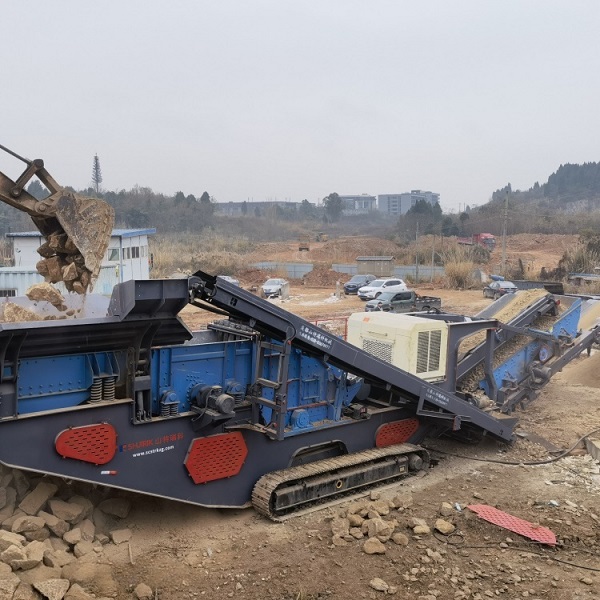
Applications of Mobile Crusher
Mobile crushers, due to their “move-as-you-go” flexibility, are widely used in fields requiring frequent relocation or on-site operations, primarily focusing on the following four core scenarios:
1. Construction Waste Recycling
This is currently the most popular application in the urbanization process.
Uses: On-site crushing of waste concrete, bricks, tiles, and stones generated during demolition.
Output: The crushed stone and recycled sand can be directly used for roadbed construction, manufacturing environmentally friendly bricks, or as concrete aggregate, achieving resource recycling.
2. Mining and Quarrying
Suitable for primary and intermediate crushing of various metallic and non-metallic ores (such as limestone, granite, and basalt).
Uses: Direct access to the mining face, eliminating the expensive logistics costs of transporting large ore blocks out of the mine.
Advantages: Particularly suitable for open-pit mines and smaller-scale “nomadic” quarries that require regular changes in mining locations.
3. Infrastructure Construction (Road and Bridge Construction)
Large quantities of subgrade stone are often required when constructing highways, railways, and water conservancy projects.
Applications: Move along construction lines to utilize locally sourced materials (processing quarry rock or tunnel debris).
Advantages: It moves and crushes simultaneously, directly supplying materials for road paving, significantly shortening the material supply radius.
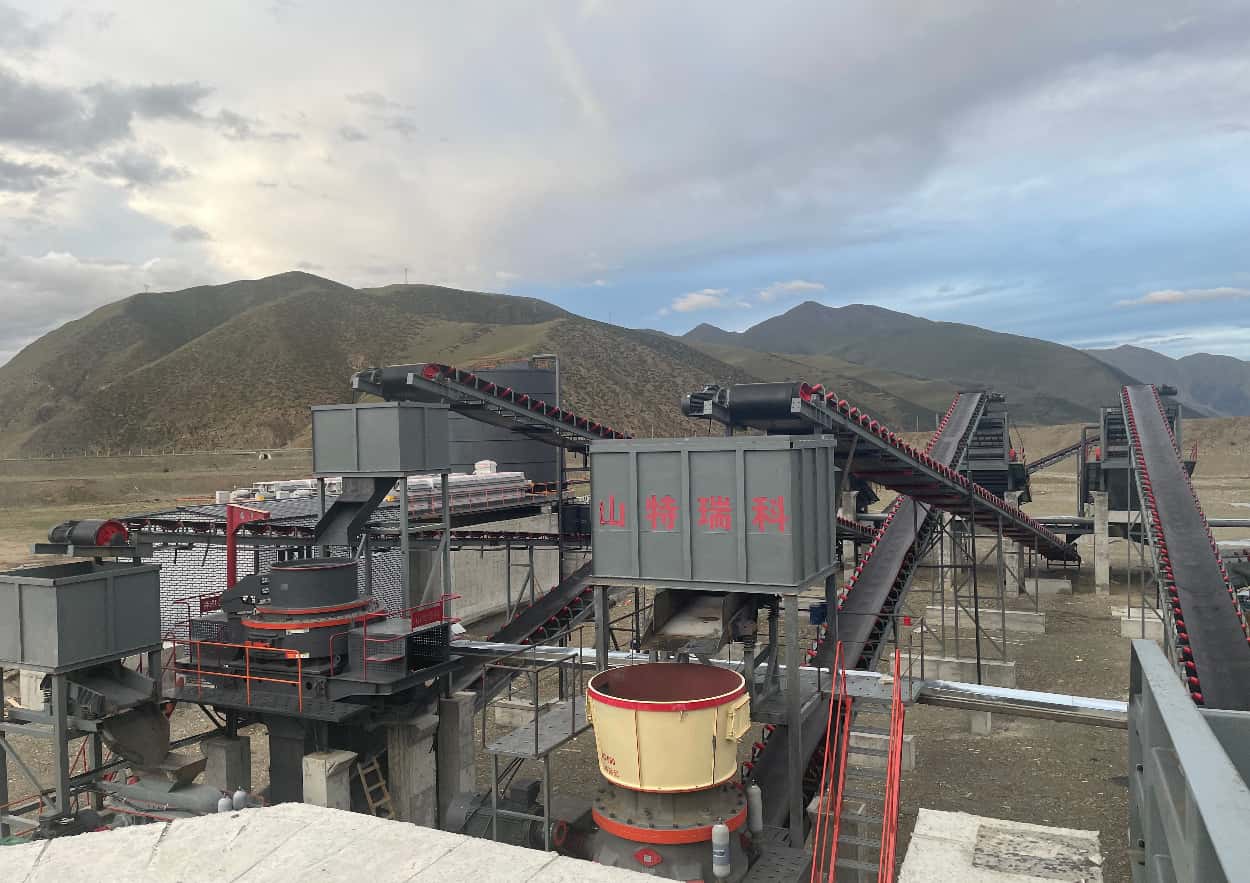
4. Landscaping and Environmental Engineering
Applications: Certain specialized models of mobile crushers are used to process waste timber, landscaping waste, or strip coal gangue.
Advantages: Capable of quickly clearing the site, converting large volumes of waste into usable fuel or landfill material.
After reading the entire article, you should now have a better understanding of our mobile crushing plants. Sandreck provides high-quality mobile crushing plants and complete mobile crushing solutions. Please contact us immediately if you have any needs.