
In construction and mining, it is essential to select the correct stone crusher for the success of the project. There are a large number of models, and one may be unsure which crushing machine is the suitable one?
As a professional stone crusher factory in China, in this article, Sandreck will detail how to choose a suitable rock crusher for your project.
1. Learn the Characteristics of the Stone Faced for Crushing
Before choosing a machine, it is necessary to know the characteristics of the stone to be crushed, which is the basis for a good choice.
1.1 Hardness and Abrasiveness
Materials with high hardness, high abrasiveness (granite, basalt, etc.) recommend jaw crushers and cone crushers. This characteristic works up to the principle of “compression crushing” with elements of greater wear resistance.
Medium to low hardness (limestone, slate) use impact crusher or hammer mills, which provide more regular shape crushed stone.
1.2 Feeding Size
Large blocks of stone (over 500 mm) must be broken using a jaw crusher at first to break the course.
Small to medium-sized stones (under 500 mm) are considered an impact machine, a cone crusher, or a hammer crusher for direct crushing.
1.3 Humidity and Clays
Materials of high viscosity or clayiness: a jaw crusher is recommended to avoid congestion.
2. Define Your Production Requirements
2.1 End-Use Determines Equipment Selection
Construction aggregate: Broken crushing + impact crusher. A “Crush+Impact” combination is recommended. For hard rock, a VSI crusher is added after the cone crusher for fine-shaping.
Sand making: A VSI crusher is required, and sand with the specified grain size will be produced when using a sand making machine paired with a sand washing machine to remove stone powder.
Mineral processing: A “Jaw Crusher + Cone Crusher” combination is preferred to reduce over-crushing.
Construction waste processing: Mobile crushing stations are the optimal solution, equipped with magnetic separators for processing steel reinforcement.
2.2 Capacity Planning
- Small capacity (under 50 tons/hour): Small equipment suited to provide for rural infrastructure.
- Medium capacity (50–200 tons/hour): Medium-sized equipment is best for medium-sized aggregate plants.
- Large capacity (over 200 tons/hour): Units to be arranged in parallel.
2.3 Design of the Crushing Stage
- One-stage crushing: A jaw or impact crusher can be used directly to get into coarsely crushed stone if the incoming size is small and the requirement from the product is necessarily very coarse.
- Two-stage crushing: A medium-sized stone gets into coarse crushed stone and then into medium or fine crushed stone.
- Three-stage crushing: A large incoming size and a fine product warrant the three-stage crushing system.
- Low capacity demands: A single hammer mill or impact crusher may be employed.
3. Learn the Type of Crushing Machine
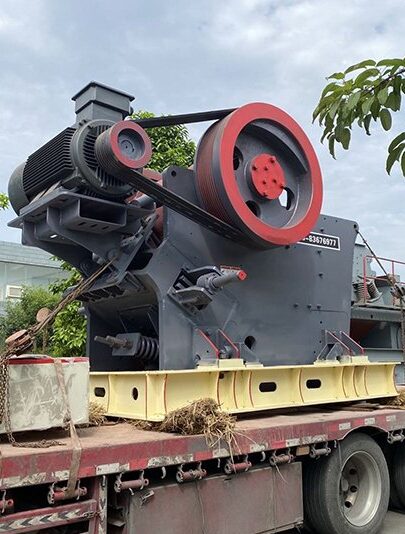
3.1 Jaw Crusher:
This is an indispensable work machine for primary crushing, with simple construction and reliability. It is suitable for the primary crushing of large quantities of material and is used in the quarries and mines.
3.2 Cone Crusher:
This is applicable for secondary and tertiary crushing of hard substances and is characterized by reliability and very small consumption of expense groups. It has a great life of its workable parts and is useful in multi-useful work in the production of hard substances.
3.3 Impact Crusher:
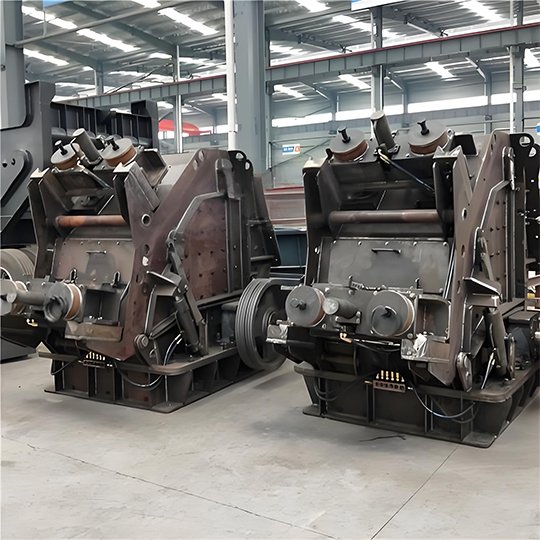
This is suited to low- and medium-hard materials and fine products. Characterized by a very great reducing coefficient, it is at present time economically from the expense point of view. The only fact that is not favorable is the fast wearing out of the hammers.
3.4 Hammer Crusher:
This has a double function, namely, primary and tertiary crushing, and has the aspect of low investments. It is suited for low quantities of the low-price kind.
3.5 VSI Crusher (Sand-Making Machine):
It is used for producing sand and shaping the sand. It produces fine-grained matter, classified into variable sizes.
4. Consider Actual Working Conditions
4.1 Site Conditions
Fixed sites: Such as stone quarries or mines – choose fixed crushers (jaw crushers, cone crushers) with buildings and conveyor belts for low long-term costs.
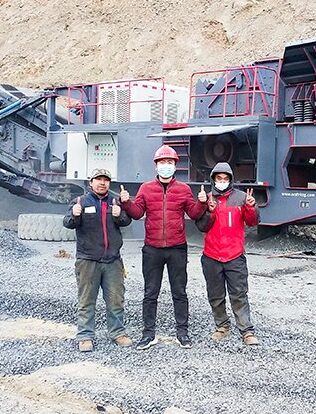
Mobile operations: Such as demolition sites or mountain mining – choose mobile crushing stations (wheeled or tracked). They can traverse muddy or mountainous roads and climb 30-degree slopes, offering great flexibility.
4.2 System Configuration
Front end: Vibrating feeder (controls volume, prevents overload) + iron remover (removes metal impurities).
Back end: Vibrating screen (number of screen layers determined by grading needs), pulse bag dust collector, and belt conveyor for material transfer.
5. Selection Recommendations for Common Scenarios
| Name of processing solution | Core processing process | Core Function | Processing Ability (t/h) | Main applications |
| Construction aggregate production Line | Jaw Crusher → Cone Crusher → Vibrating Screen | Jaw for coarse crushing, Cone for shaping, Vibrating screen for classification | 50 – 500 | Large mining, manufacture and shaker of construction aggregates for high level commercial concrete mixing plant and for various |
| Limestone sand making production plant | Jaw Crusher → VSI Crusher → Sand Washing Machine | Jaw for coarse crushing, VSI machine for sand making and shaping, sand washing machine for purification. | 30 – 200 | The match of high quality sand for various projects such as commercial concrete and mortar plants |
| Construction Wastes Processing Line Mobile Crusher | Impact Crusher → Screen → Iron removal | Impact Crusher for crushing, Screen for classification, Iron removal for steel bar adsorp | 20 – 100 | Work in the field in the confined spaces such as urban demolittion and construction waste processing sites |
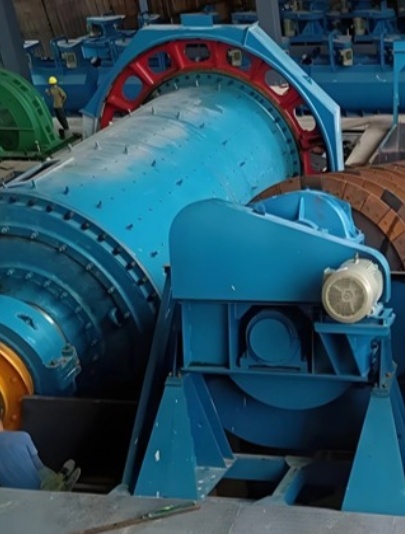
| Iron Ore Processing Line | Jaw Crusher → Cone Crusher → Ball Mill | Jaw Crusher for coarse crushing, Cone crusher for regulating the size of the crushed materials, Ball mill for regulation of grades of ore | 100 – 800 | Crushing and reduction process before processing metals in the factory medium and large. |
Choosing the right stone crusher is very important for your business. Sandreck has professional crushing equipment knowlwge and high-quality rock crushers. We possess comprehensive facilities from consultation to after-sales service, capable of delivering reliable and efficient equipment that creates significant value for your business.
If you have any needs, contact us!