


Central Drive Thickener for Sale
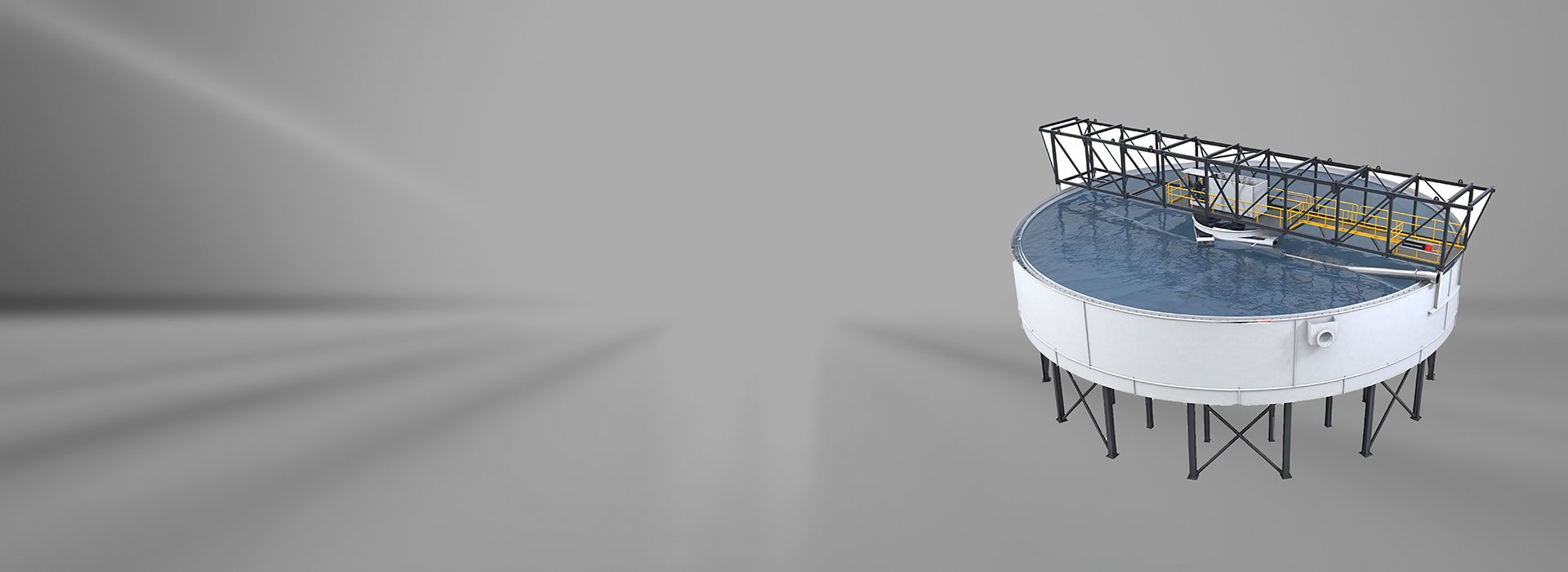
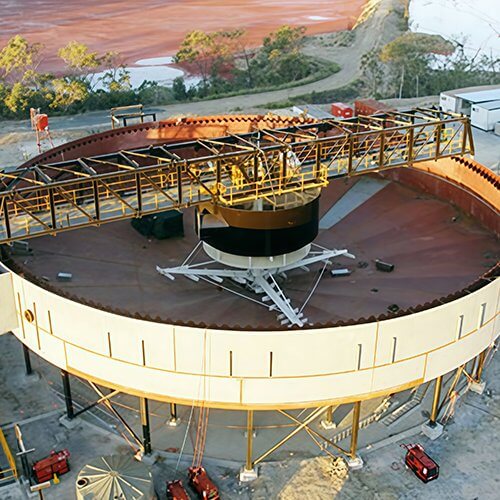
The center-drive thickener is a thickening device that utilizes a central hydraulic drive and automatic hydraulic rake-lifting technology. It is primarily used for solid-liquid separation, thickening, and dewatering; treating wastewater with high suspended solids content; solid-liquid separation in the metallurgical and chemical industries; coal slime thickening; and slurry clarification.
Sandreck’s Energy-saving Center Drive Thickener
Sandreck’s center-drive thickener utilizes cutting-edge flocculation technology, delivering a processing capacity four to eight times that of conventional equipment. It is designed for large-scale tanks with diameters exceeding 12 meters. Powered by a combination of hydraulic drive and intelligent PLC control, a single unit achieves the performance of five, resulting in annual operational cost savings of millions.
Sandreck Central Drive Thickener Advantages

Single-machine processing capacity can reach 500 m³/h, making it a strong partner for your project!

With hydraulic overload protection and electric rake lifting, our machine operates stably.

PLC automatically controls the dosage/rake lifting height, reducing labor costs by 80%.

Manganese steel scraper and modular structure, maintenance cost <20% than traditional equipment.

Sewage reuse rate 90%↑, saving millions of water and effectively protecting the environment.

The machine’s structure is very simple, making it very easy to operate.
Application of Central Drive Thickener
Center-drive thickeners are widely used to process tailings from iron, non-ferrous, and rare metal mines, as well as for clarifying coal slurry water in coal preparation plants and performing solid-liquid separation on sand-washing wastewater in aggregate plants. They are also suitable for applications in the chemical, metallurgical, and municipal wastewater treatment sectors, as well as in aggregate processing and the treatment of sludge from construction waste sand washing.
These units enable the recovery of fine, valuable minerals from the water and allow for the recycling of clarified water, thereby reducing wastewater discharge and the land footprint required for tailings ponds. Large-scale models are primarily employed for continuous, high-capacity thickening operations at large and medium-sized mineral processing plants.
More About Our Company
- Technical Parameters
Model | Concentration Tank Inner Diameter m | Pool Center Depth m | Sedimentation Area m² | Rake Frame Rotation Time min/r | Rake Height (mm) | Processing Capacity t/d | Drive Power kW |
| NZY-6 | 6 | 3~3.2 | 28 | 2.5~5 | 350 | 50~100 | 3 |
| NZY-9 | 9 | 3.5~3.8 | 63.6 | 3~5 | 350 | 120~175 | 3 |
| NZY-12 | 12 | 3.5~3.8 | 113 | 4~7 | 350 | 200~300 | 4 |
| NZY-15 | 15 | 4~4.5 | 176 | 5~10 | 450 | 350~400 | 5.5 |
| NZY-18 | 18 | 4~4.5 | 254 | 8~12 | 450 | 600~800 | 5.5 |
| NZY-20 | 20 | 4~4.5 | 314 | 8~12 | 450 | 800~1000 | 7.5 |
| NZY-24 | 24 | 4.5~5.5 | 450 | 9~12 | 450 | 1000~1300 | 7.5 |
| NZY-30 | 30 | 4.5~5.5 | 706 | 10~14 | 450 | 1500~1800 | 11 |
| NZY-38 | 38 | 6.5~8 | 1134 | 15~22 | 600 | 1800~2200 | 15 |
| NZY-40 | 40 | 6.5~8 | 1256 | 15~22 | 600 | 2200~2400 | 15 |
| NZY-45 | 45 | 6.5~8 | 1590 | 15~22 | 600 | 2400~2800 | 15 |
| NZY-53 | 53 | 6.5~8 | 2206 | 15~22 | 600 | 3000~3500 | 15 |
| NZY-60 | 60 | 7~8.5 | 2827 | 16~50 | 600 | 3500~5000 | 18.5 |
| NZY-75 | 75 | 8~10 | 4418 | 20~80 | 800 | 7500~10000 | 22 |
| NZY-100 | 100 | 8~10 | 7853 | 35~80 | 800 | 10000~15000 | 30 |
Equipped with automatic rake lifting and torque protection devices, regularly control the feeding concentration, feed materials evenly, and regularly clean accumulated sediment at the bottom of the tank to reduce the load on the rake frame.
The central drive structure offers stable operation, strong rake lifting capacity, a compact layout, and good adaptability to large-diameter pools, and it can effectively prevent rake overload damage when handling high-mud-content materials.
Central drive thickener’s transmission parts remain above the slurry, experiencing less corrosion and wear, with a service life of 15-20 years. Peripheral drive wheels and rails constantly contact the slurry, are easily rusted and worn, and last only 10-15 years.