


Air Classifiers for Sale
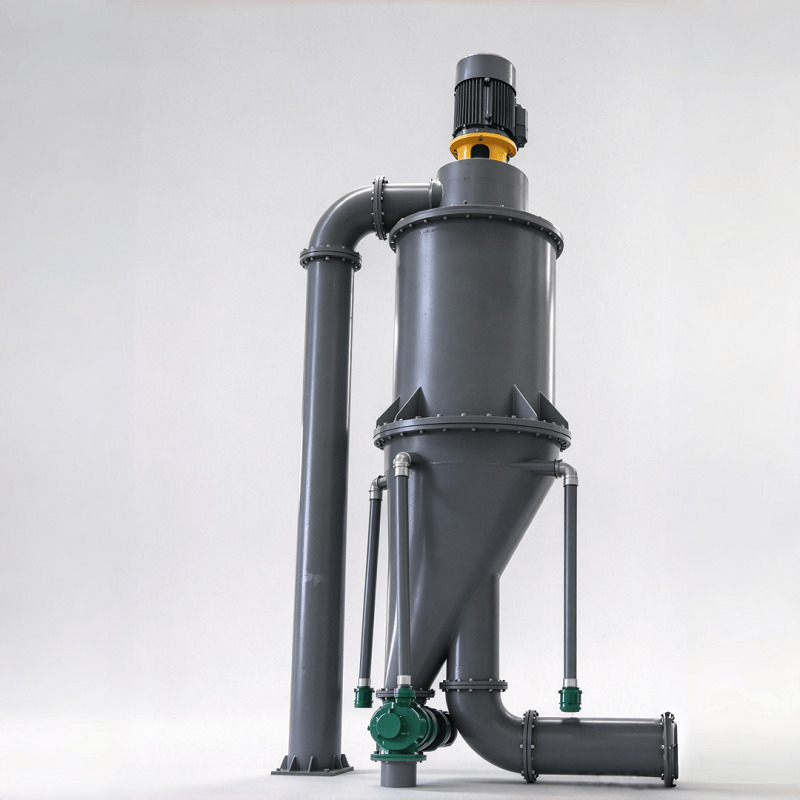
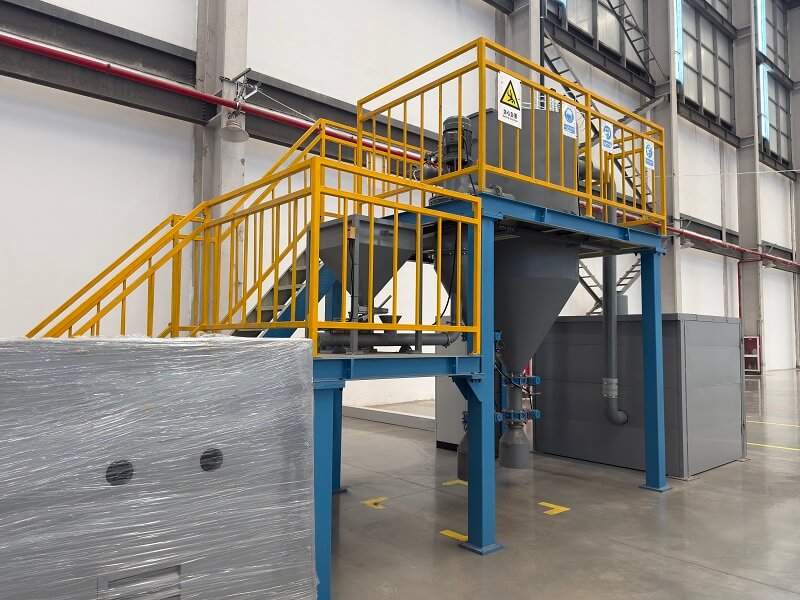
The air classifier is a centrifugal rotor-type turbine classification device. Dispensing with the screen structures found in traditional pulverizers, it utilizes a forced dispersion mechanism and operates based on the principles of negative-pressure airflow transport and high-speed centrifugal force to classify powders. Offering high classification efficiency and precision, it serves as a core component in ultrafine powder processing systems.
The system supports multi-stage series classification and allows for particle size adjustment without stopping the machine. It is compatible with various material forms and specialized operating conditions, making it widely applicable to precision powder processing across diverse industries.
Air Classifier Working Principle
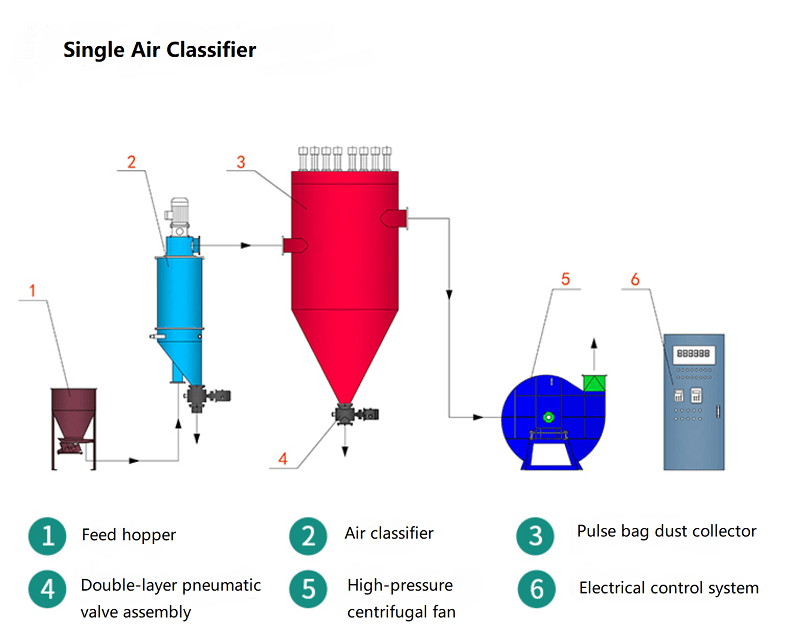
The air classification equipment utilizes negative pressure generated by a fan to establish a stable airflow field. Material enters through the bottom inlet and is evenly dispersed into the internal classification zone by the rising airflow. A high-speed rotating cage-type classification wheel generates powerful centrifugal force, separating coarse particles from fine ones.
Fine particles meeting the size specifications overcome centrifugal resistance, pass through the gaps between the classification wheel blades, and are conveyed to a cyclone separator for initial collection. For ultrafine dust, a paired pulse-jet bag filter performs secondary collection, ensuring complete recovery of fine powder with zero leakage.
Coarse particles—carrying a small amount of entrained fine particles—impact the cylinder wall, causing their velocity to drop sharply; they then fall back along the wall toward the secondary air inlet. Subjected to vigorous scouring and re-sorting by the secondary airflow, the entrained fine powder is blown back up to the classification zone for a second pass. Meanwhile, the coarse particles continue to descend and are discharged through the coarse material outlet.
Product fineness can be continuously adjusted by regulating the turbine speed in coordination with the secondary airflow rate. Particle size adjustments can be made without stopping the machine, allowing for the flexible production of powders with varying specifications. Additionally, multiple self-shunting classifiers can be arranged in series to achieve multi-stage classification, separating the material into multiple fractions with extremely narrow particle size distributions.
Our Advantages

Under the same power, the efficiency is increased by 40%, and the energy consumption is reduced by 70%.

The grinding roller and liner are made of wear-resistant materials and have a long service life.

The PLC automatic control method is adopted to accurately control the grinding pressure.

The fineness of the final products can be adjusted arbitrarily between 325 mesh and 2500 mesh.

Equipped with a double limit device to protect the equipment from impact and vibration.

The roller sleeve and liner are specially designed, which is easier to form a material layer than ordinary vertical mills.
Wide Range of Materials, Excellent Classification Precision
Utilizing a customized classification rotor structure, the system effectively classifies particles of various shapes, such as spherical, flaky, and acicular. It offers precise classification cut points and ensures uniform product particle size. Capable of simultaneously separating products into 1 to 5 distinct size fractions, the air classifier meets the requirements for precision classification.
High Adaptability to Various Operating Conditions
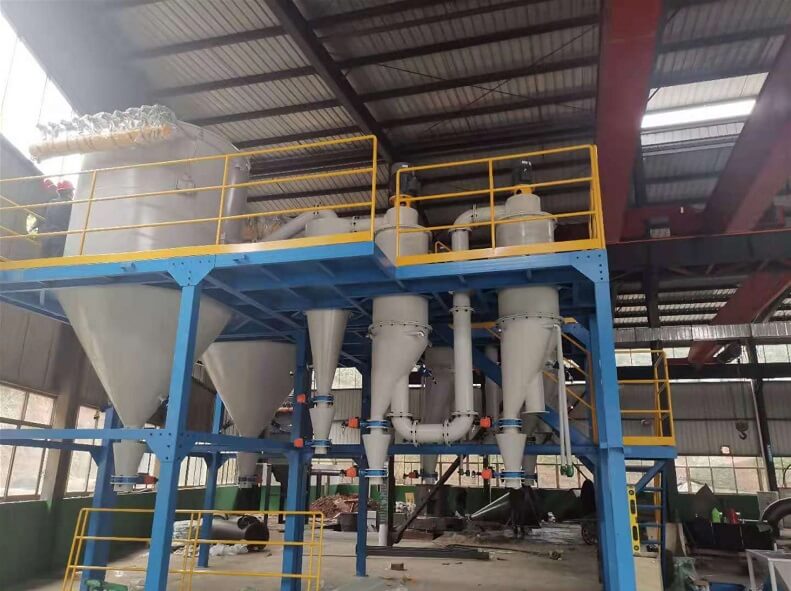
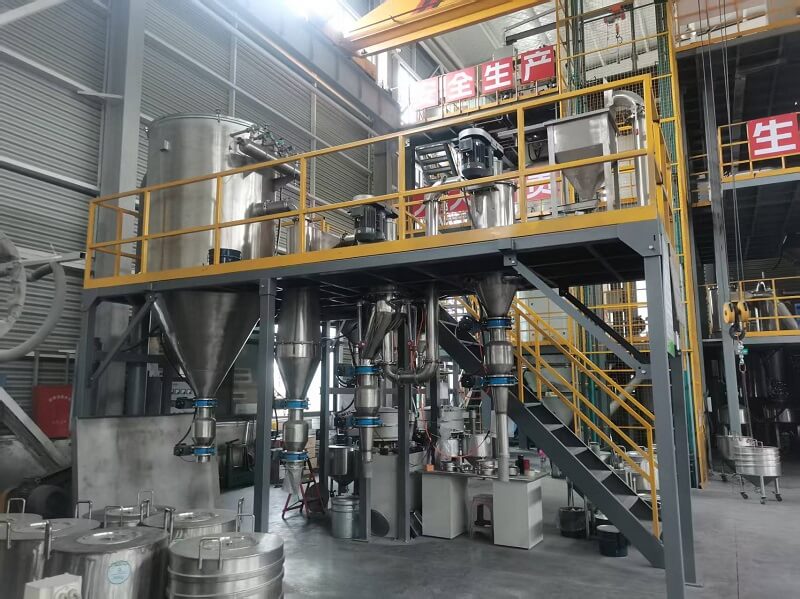
Features an innovative composite impeller design combining a vertical single-rotor and a horizontal multi-rotor configuration. Air classification equipment can be integrated with ball mills and various types of pulverizers to form a closed-circuit grinding and classification system. This optimizes the ultrafine powder processing workflow while reducing both equipment investment and operating costs. It supports inert gas protection, enabling the classification of flammable, explosive, or easily oxidizable materials.
User-friendly Operation, High Production Efficiency
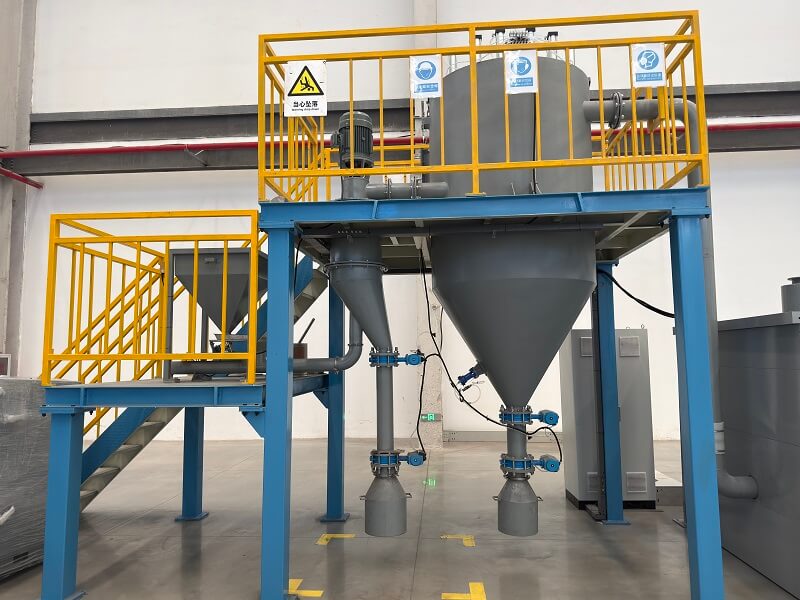
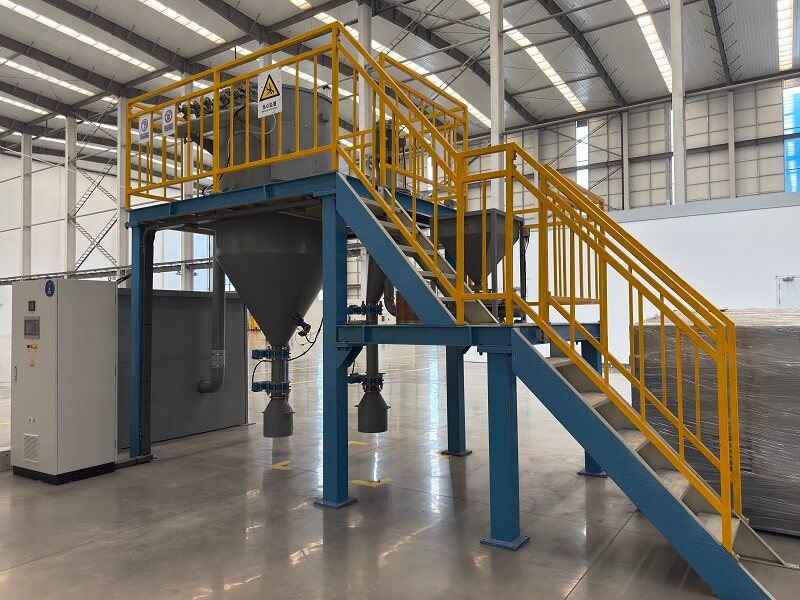
Equipped with an airflow control valve and a variable-speed drive for the classification impeller, the system allows for real-time adjustment of product particle size without the need to stop the machine. Operation is simple and convenient. The forced dispersion structure effectively breaks up agglomerated materials, significantly enhancing classification efficiency.
Eco-friendly, Easy to Maintain
The system employs a fully enclosed airflow separation process with complete powder recovery, ensuring a dust-free environment. Its streamlined structure facilitates easy disassembly, maintenance, and internal cleaning, significantly reducing long-term operating and maintenance costs.
Scope of Application
This air classification equipment is highly versatile and widely applicable to fine dry powder classification across various industries—including abrasives, non-metallic minerals, chemicals, pharmaceuticals, dyes, coatings, pesticides, metallurgy, food, tobacco, animal feed, plastics, and plant fibers—meeting the requirements of both standard and specialized powder processing operations.

More Information about Air classifier
- Technical Parameters
Model | Power (kW) | Feed particle size (mm) | Discharge particle size (μm) | Capacity(kg/h) | Note |
QLM-200 | ≤40 | ≤2 | 3-74 | 40-80 | Adjustable particle size |
QLM-400 | ≤75 | ≤5 | 3-74 | 80-150 | Adjustable particle size |
QLM-600 | ≤110 | ≤5 | 3-74 | 150-500 | Adjustable particle size |
QLM-800 | ≤160 | ≤5 | 3-74 | 400-5000 | Adjustable particle size |